609 Letters
A 609 letter template you can adapt to your own situation, with what to include, what to leave out, and how to send it.
A 609 letter is a written dispute sent to a credit bureau that asks the bureau to show what it has in your file about an account and how it verified the information. The name comes from Section 609 of the Fair Credit Reporting Act, which gives you the right to see the information in your file. The template below is a starting point you adapt to your own situation, not a form that works the same way for everyone.
Before you send any letter, get your reports and circle the exact item that is wrong. A letter that names the account, the bureau, and the specific error is far stronger than a generic one. Send it by certified mail with tracking so you have a record of when the bureau received it, and keep a copy of everything you send.
Section 609 gives you the right to disclosure: the bureau must tell you what is in your file. That is the real power of a 609 letter. It is not a magic deletion letter, and no letter forces a bureau to remove an item that is accurate and verified. What the letter does is put the bureau on the clock: once it receives your dispute, it generally has 30 days to investigate and respond.
If the bureau comes back saying the item was verified, read the response closely. Sometimes the verification is thin, or the furnisher did not actually check the records. That is where a follow-up dispute, a direct dispute to the furnisher, or a second look at the documents can matter. A letter is a tool, not a verdict.
If this guide helped, these pages go deeper on the topics that usually come up next.
These are actual results from past clients, previously shared on Instagram. Every credit file is different, so treat these as examples of what the process can look like, not as a promise of what yours will do.
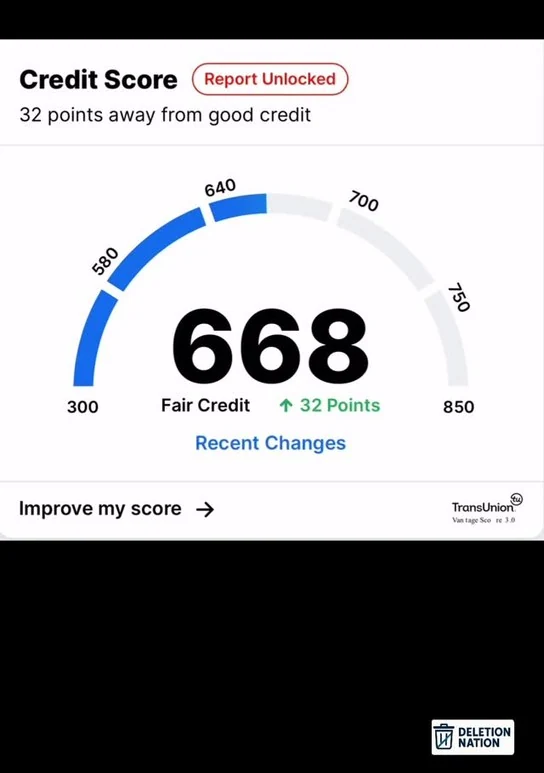
Three TransUnion clients cleared back to back in August 2025. One client had 8 inquiries deleted in a single sweep; another had Apple Card, Comenity, CareCredit, and USAA accounts removed; a third had a Synchrony account deleted. One client rose 32 points overnight, to 668.
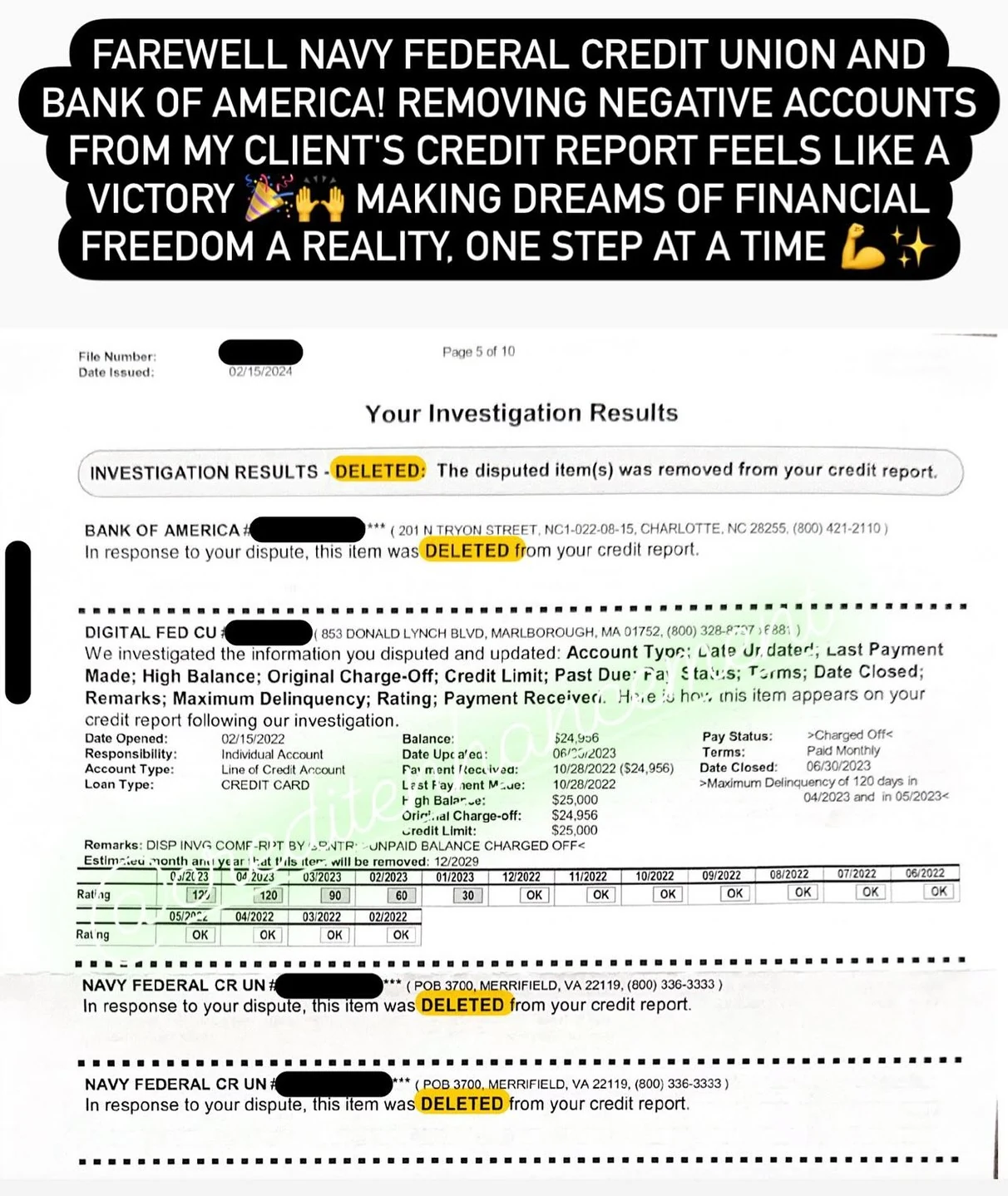
A February 2024 bureau investigation letter showing a Bank of America account and two Navy Federal accounts deleted from a client's credit report after dispute.
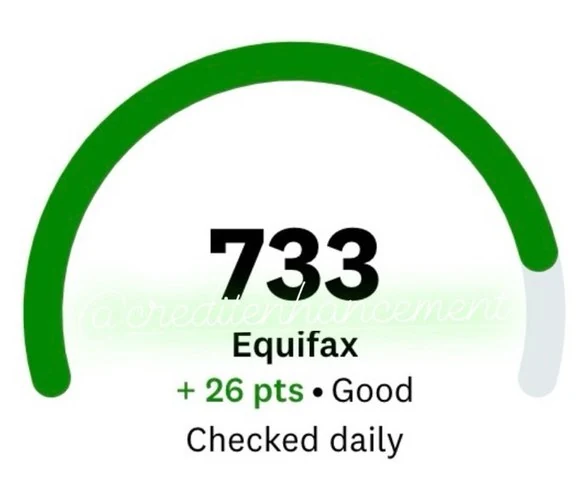
A client reached 733 on Equifax after a 26-point increase, March 2024.
Results vary from person to person and depend on what is in each credit file. Nothing here promises a particular score increase or deletion.
You can't fix what you can't see. Read your scores and entries from all three bureaus side by side and find out what is actually on your reports.
For a dollar, you can read your scores and entries from Equifax, Experian, and TransUnion before you decide what to do about them.
A dollar with MyScoreIQ opens 7 days of access to your scores, then $34.99 a month if you keep it. Cancel anytime.
609 Letters can look different from one report to the next. We help you understand the details and spot accuracy problems.
Your full name, current address, date of birth, and the last four digits of your Social Security number, so the bureau can find your file.
Name the bureau you are writing to and the account in question, including the creditor name, account number, and the item as it appears on your report.
State the error plainly: the balance is wrong, the account is not yours, the dates are wrong, or the status is wrong. One error per letter keeps it clear.
Ask the bureau to investigate the item and to send you the information in your file about it, including how it was verified.
Include a copy of your ID, proof of address, and a copy of the report page with the item circled. Sign and date the letter.
A 609 Letters entry feels personal, but on a report it is just data — dates, amounts, and a status. We help you read it as data first.
The same account can look different on each bureau. We help you check all three before you act on any one of them.
We explain dispute options, what records to keep, and practical habits that help you stay current going forward.
A letter about a single account with a single error is easier for the bureau to process than a letter listing ten problems at once.
"The balance is $4,200, not $6,800" is a dispute. "This account is wrong" is a complaint. Specifics get investigated.
Certified mail gives you proof of delivery and a start date for the bureau's investigation window.
Copy the letter, the enclosures, the mailing receipt, and the bureau's reply. You will need the paper trail if the dispute continues.
It works as a dispute, which is what it is. It asks the bureau to investigate and to disclose what it has. It does not force removal of an item that is accurate and verified.
A 609 letter goes to the bureau. You can also dispute directly with the furnisher, the company that reported the information, which is a separate step under the same law.
You can use the same structure, but send a separate letter to each bureau. Each bureau keeps its own file, and each one must investigate on its own.
Ask for the method of verification and read what the furnisher actually provided. If the information is still wrong, you can dispute again with new documentation or dispute directly with the furnisher.
Yes. Include a copy of your ID and proof of address so the bureau can confirm it is your file. Never send original documents, only copies.
Let's look at your reports together and find the moves that will actually help — and the ones that won't. Call (346) 301-6424.