Greater Houston Area
Your Credit Report Shouldn't Decide Your Future for You
Turned down for a car loan? Mortgage on hold? Paying more in interest than you should? We read your reports line by line, explain what we find in plain English, and talk through what can actually be done about it.
No obligation — you decide whether to go further.
A car loan that gets turned down, a mortgage that stalls in underwriting, an apartment application that comes back no — any of these can throw years of plans off track. And even when you do get approved, a weak credit profile can mean paying hundreds more in interest over the life of a loan. When the problem is information on your reports that isn't right, that information deserves a second look. Houston Credit Repair helps people across the Houston area see exactly what the bureaus are reporting about them, and figure out what to do next.
Everything we do happens by phone or online — there is no office to visit, and no paperwork to mail unless a dispute calls for it. We walk through your reports with you, point out entries that look wrong or unfamiliar, explain what collection accounts and charge-offs actually mean, and talk about the habits that keep your file in better shape over time. We are straight about the limits too: entries that are accurate and correctly reported generally stay, no matter how much you would rather they didn't. What we go after is information that is wrong.
Most people who call us have something specific in mind — a first house in the suburbs, a dependable truck for work, an apartment closer to the Medical Center, a lower rate on a loan they already have. Others just want to know why their score sits where it does. Either way, the first move is the same: a careful look at all three reports, line by line, so you can see what the lenders see. From there we talk about what looks inaccurate, what is accurate and will remain, and what your realistic options are. If that sounds like a useful place to start, you can start with a credit report review or get started and tell us your situation in your own words.
These are actual results from past clients, previously shared on Instagram. Every credit file is different, so treat these as examples of what the process can look like, not as a promise of what yours will do.

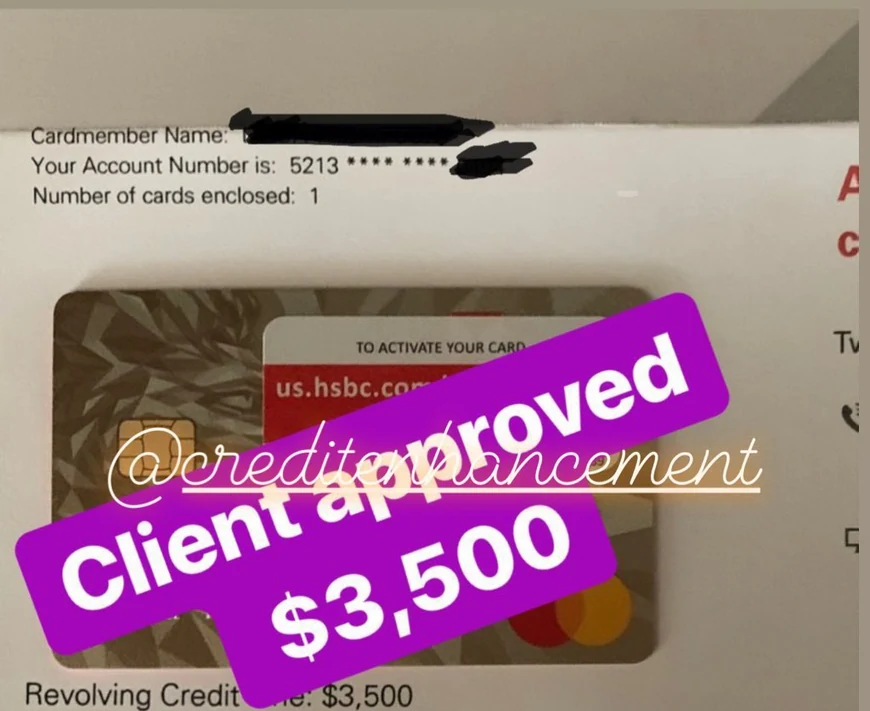
Client approved for an HSBC card with a revolving credit line of 3,500 dollars, June 2019.

Client approved for a USAA Rewards American Express card with a credit limit of 15,000 dollars, June 2019.

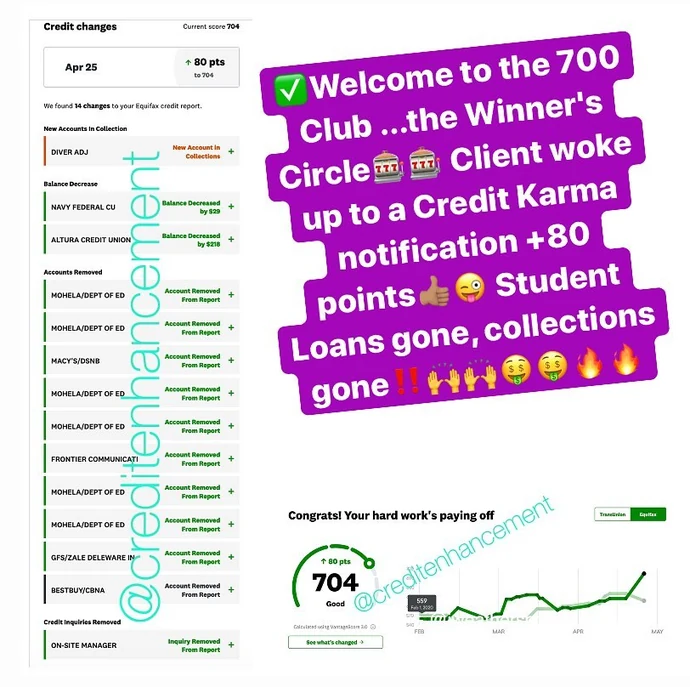
Equifax score up 80 points to 704, with six MOHELA student loan accounts and other entries removed, April 2020.
Results vary from person to person and depend on what is in each credit file. Nothing here promises a particular score increase or deletion.
A denial rarely comes with an explanation — and neither does a rate that costs you hundreds more than it should. The bureaus are reporting something about you, and the only way to know what is to look. For a dollar, you can see your scores from all three bureaus — Equifax, Experian, and TransUnion — and read what's actually on your reports before your next application. No hiring anyone, no commitment — just the information, so your next move is based on facts instead of guesswork.
Offered through MyScoreIQ — $1 for a 7-day trial, then $34.99 a month if you keep it. Cancel anytime.
Three steps. No jargon, no pressure, and no obligation at any stage.
We go through what Equifax, Experian, and TransUnion are reporting about you and explain it in plain language — what is helping your profile, what is hurting it, and what looks wrong. You see everything we see, and we answer your questions before anything else happens. Learn about the review →
Where entries look inaccurate, incomplete, or unsupported, we prepare disputes aimed at the specific problem — a wrong balance, a wrong date, a duplicate entry, an account that isn't yours. Every dispute names what is wrong and why. Learn about error correction →
While disputes are underway, we help you put habits in place that protect your progress: paying on time, keeping balances manageable, and understanding how your credit actually works. The goal is a file you understand — and can keep in good shape yourself. Learn about credit building →
All of it happens by phone and online. There is no office to visit, and no paperwork to mail unless a dispute requires it — if it does, we walk you through exactly what is needed. Get started with step one.
On your first call, we ask what you are working toward and what has already happened — a denial, a rate quote that was too high, a collection notice, or a score that doesn't look right. Then we explain what a review of your reports would cover. That first look is a starting point, and you decide whether to go further. Nothing gets filed, disputed, or changed without your say-so, and you can stop at any point. Most people leave that first conversation understanding their reports better, whether or not they go ahead.
Houston Credit Repair started from a simple frustration: too many people make big financial decisions without anyone explaining how credit reporting actually works. A denial letter arrives, or a rate quote comes in higher than expected, and nobody tells you why — or what, if anything, you can do about it. We built this service to give people clear answers instead of sales talk: what your reports say, what it means, and what your options are.
Our work covers three things — reading reports carefully, preparing specific factual disputes where the information is wrong, and teaching people how credit works so they can protect their own files. We serve Houston and the surrounding Texas communities entirely by phone and online, which means you can get help from home, from work, or from anywhere in the region.
There are no shortcuts here and no magic words. Disputes work when they point at something specific that is genuinely incorrect — a balance that doesn't match, a date that is wrong, an account that isn't yours — and explain why, with facts. That is why every conversation with us starts with education. You can meet the team behind that approach, or read the answers to the questions people ask us most before you get in touch.
More about usWhether you are getting ready to buy a car, preparing for a mortgage, dealing with collection accounts, or trying to build better habits from scratch, there is a service here for your situation. Each one starts with understanding your reports — not guessing.
A line-by-line look at what Equifax, Experian, and TransUnion are reporting about you — and what it means for your next application.
Learn more →Specific, factual disputes aimed at entries that are wrong — a balance that doesn't match, a date that is off, an account that isn't yours.
Learn more →A clear explanation of what collection accounts and charge-offs are doing on your reports, and which entries may be worth challenging.
Learn more →A review of your credit before you apply for a home or auto loan, so you walk into the application knowing where you stand.
Learn more →Practical habits — on-time payments, manageable balances, regular review — that help your credit file get stronger over time.
Learn more →Not sure where to begin? Most people start with a credit report review, which shows you what is on your reports before any decisions get made. From there, error correction takes on entries that look wrong, collections and charge-offs get examined on their own terms, and mortgage and auto readiness prepares you for a specific application. Credit building runs through all of it, because the habits you form while your reports are being corrected are what keep the progress in place.
Houston is home base, and our phone and online services reach the whole region — Pasadena, Pearland, Sugar Land, Katy, Cypress, Spring, The Woodlands, Baytown, League City, Friendswood, Missouri City, Stafford, Bellaire, Humble, Kingwood, Atascocita, Tomball, Richmond, Rosenberg, Deer Park, La Porte, and Channelview.
No matter where you live in Greater Houston, you can reach us by phone or online — no drive across town, no waiting room. People in every community have different goals: a first apartment, a family home, a work truck, a better rate. The conversation starts with yours.
Each town below has its own page describing how we work with people there.
Some entries can be challenged. Some can't. We will tell you which is which — and if an entry is accurate, we will explain what you can still do about your overall picture instead of selling you a dispute that won't go anywhere.
A first-time homebuyer, a renter facing a deposit, and a driver who needs a work truck are all dealing with different pressures. We start by asking what you are trying to accomplish, then look at your reports through that lens.
You will talk to a person who knows your file — not a script, not a chatbot. Ask anything, in your own words, and we will answer in language that makes sense without a finance degree.
Every service happens by phone or online, on your schedule. There is no office to visit and no commute — whether you are in Downtown Houston or out in Tomball, the help is the same.
We explain payment history, utilization, and how reporting works as we go, so when our work together ends you can read your own reports and spot problems yourself. That understanding is worth more than any single dispute.
In Houston, a car is not a luxury — it is how you get to work, get the kids to school, and get through the day. A denial hits hard, and it is not always about your credit: income, existing debts, the size of the loan, and the lender's own rules all play a part. But credit history is usually in the mix, and it is the part you can actually look at and question.
Start with the reports themselves. A late payment that was actually on time, a collection account that belongs to someone else, a balance that doesn't match your records, or information that should have aged off by now — any of these can drag a profile down. A credit report review lays out what the bureaus are saying about you, so you can see whether something on the page is wrong.
It also helps to know how the rest of your file reads: recent applications, outstanding balances, and the pattern of your payments all shape the picture a lender sees. We walk through those pieces with you so your next application is based on information, not guesswork. What we can't do is promise a lender will say yes, offer a lower rate, or change its mind — those decisions belong to the lender.
A denial letter usually tells you something useful. Lenders generally send a notice listing the main reasons they said no, and those reasons often point straight at the reports. A credit report review lines up what the lender saw against what the three bureaus are reporting — and that comparison shows whether the problem is an error, an old account that should be gone, or an accurate entry that calls for a different plan.
One more thing before you apply again: a fresh application adds another inquiry, and a second denial doesn't make the third application easier. Most people are better off reviewing their reports first, challenging anything that looks wrong, and then applying with a clear picture. Our mortgage and auto readiness service walks through that preparation one step at a time.
A house is the biggest purchase most people ever make, and the mortgage process puts your credit under a microscope. Collections, late payments, and balances that don't add up can all raise questions — and lenders weigh those alongside your income, your debts, your savings, and the loan program you are applying for.
Before you get deep into the mortgage process, it pays to know what is on your reports. We review your accounts with you, flag information that looks inaccurate, and talk through practical ways to deal with outstanding obligations — so there are no surprises when the underwriter starts asking questions.
One thing to be clear about: accurate negative information doesn't disappear because you wish it would. A late payment or collection that is correctly reported stays subject to the reporting rules. Knowing that line — what can be challenged and what can't — is what lets you plan realistically for a purchase.
Lenders look past the score itself. They read your payment history, your balances, how long your accounts have been open, and whether anything on the reports raises a flag — then weigh all of that against income, debts, and the loan program. Starting early is the advantage: reviewing your reports months before you apply gives inaccurate entries time to go through the normal dispute process, instead of finding a problem the week before closing. That preparation is what our mortgage and auto readiness service is built around.
The surprises that show up most often in mortgage prep are familiar ones: an old collection that resurfaced, the same debt listed twice under different names, a balance that doesn't match what you actually owe, or an account that belongs to someone with a similar name. Each one may be worth a closer look through error correction — a factual dispute begins by naming exactly what is wrong, not by sending a generic letter.
Getting approved is only half the story. The rate a lender offers can mean the difference between a payment that fits and one that strains the budget for years. Lenders set rates by their own rules, and your credit history is often one of the inputs — along with balances, late payments, collections, and whatever else the reports show.
A review of your reports shows you the information that may be shaping your profile. We point out entries that look inaccurate, explain how credit utilization works in plain terms, and walk through how payment history and new applications fit into the picture.
No single change guarantees a better rate — different lenders weigh things differently, and market conditions move rates for everyone. What better information gives you is a clearer sense of what is in your control and what isn't, so you can prepare for the next application with your eyes open.
Two things come up in nearly every rate conversation: whether payments have been on time, and how much of your available credit you are using. Old late payments can weigh on a profile for years, and balances near your limits can look risky to a lender even when every payment is current. Our credit building guidance covers both — how steady on-time payments and manageable balances fit together, and what to watch as your profile improves.
And check all three bureaus, not just one. The same account can show up differently at Equifax, Experian, and TransUnion — different balances, different dates, or an account that appears on one report and not the others. A credit report review looks across all three so nothing gets missed because it only showed up in one place.
Finding a collection account or charge-off on your report is stressful — especially when you don't recognize the account, or the amount doesn't look right. Before you decide what to do, it helps to understand the details: who the original creditor was, what is owed, when it was reported, and who owns the account now.
Collection entries are not always right. Balances can be wrong, dates can be off, the same debt can show up twice, or the account can belong to the wrong person entirely. When the facts are wrong, a dispute with the reporting agency or the information provider may be appropriate. When the facts are right, the entry generally stays — accurate information isn't removed just because it's inconvenient.
We help you tell the difference between a collection, a charge-off, and a late payment — they are not the same thing, and each one is reported differently. We also talk about habits that prevent future problems: reading your statements, tracking due dates, and reaching out to creditors early when money gets tight.
Before you respond to any collection, know exactly what is being claimed — the original creditor's name, the amount, the dates, and whether the account is really yours. Accounts get sold from one collector to another, and the same debt can appear more than once along the way. Our collections and charge-offs service goes through each entry with you so you understand what you are dealing with before you decide anything.
A charge-off and a collection often show up together, but they mean different things: a charge-off is the original creditor writing the account off its books, while a collection is a separate company trying to collect on it. Both can carry errors — a wrong balance, a wrong date, a wrong consumer — and when the reported facts are wrong, error correction is how you challenge them.
Fixing errors matters, but it is only half the job. The other half is understanding how credit works well enough to make good decisions going forward — because the same factors that hurt a profile can strengthen it over time: payment history, how much you owe, how long your accounts have been open, the mix of account types, and how often you apply for new credit.
The habits themselves are straightforward: pay on time, keep revolving balances manageable, read your statements, and don't open accounts you don't need. None of that guarantees a particular score or a lending outcome — but it is the foundation everything else is built on, and it works whether or not you have disputes in progress.
We believe you should walk away from a conversation with us understanding your own credit better than when you started. That means explaining your reports in plain language, showing you the common reporting problems to watch for, and helping you make choices you actually understand.
The scoring models lenders use most weigh the same handful of factors: your payment history first, then the amounts you owe, the age of your accounts, recent credit activity, and the mix of account types. Payment history carries the most weight, which is why one missed payment can matter more than people expect — and why a long run of on-time payments is the backbone of any lasting plan. Our credit building service explains each factor without the jargon.
Building credit takes time, and anyone selling instant results is selling something that doesn't exist. The work is simple, not easy: pay on time, keep balances in check, review your statements, and skip accounts you don't need. A credit report review shows you where you stand today, so the habits you build are aimed at the right problems.
Houston is the fourth-largest city in the country, and no single industry defines it. The Texas Medical Center — the largest medical complex in the world — anchors south-central Houston. The Port of Houston moves more foreign tonnage than any other port in the United States, with cargo passing through the Houston Ship Channel every day. NASA's Johnson Space Center and Mission Control work out of Clear Lake, to the southeast. And each spring the Houston Livestock Show and Rodeo — the biggest rodeo in the world — takes over NRG Park. Energy, medicine, shipping, aerospace, schools, and small business all live in the same city, and credit trouble shows up in every one of those worlds.
Our services reach the whole region. The Heights, Montrose, Midtown, Downtown, River Oaks, the Galleria area, Meyerland, Memorial, Spring Branch, the East End, Clear Lake, the Energy Corridor — and the surrounding communities, from Katy and Cypress to Sugar Land and The Woodlands. Everything happens by phone or online, so where you live never decides what help you can get. The full list is on our areas we serve page.
People across the region are working toward the same things — a first home in the suburbs, a dependable vehicle for work, a place near the Medical Center or downtown, a rate that doesn't punish them. Credit reports sit in the middle of all of it, and knowing what yours say before you apply is the difference between guessing and preparing. A credit report review is the starting point, and our mortgage and auto readiness service takes it from there.
Houston's workforce shapes the credit files we see. Along the Ship Channel it is energy and petrochemical workers; at the Medical Center, nurses and technicians; in Clear Lake, aerospace workers; and everywhere in between, teachers, truck drivers, and small business owners. Same lenders, same reporting rules — but shift schedules, overtime, seasonal work, and job changes leave different marks on every file, and some of those marks are errors worth challenging. A credit report review starts with your file, not a template, wherever you work in the region.
These are actual results from past clients, previously shared on Instagram. Every credit file is different, so treat these as examples of what the process can look like, not as a promise of what yours will do.

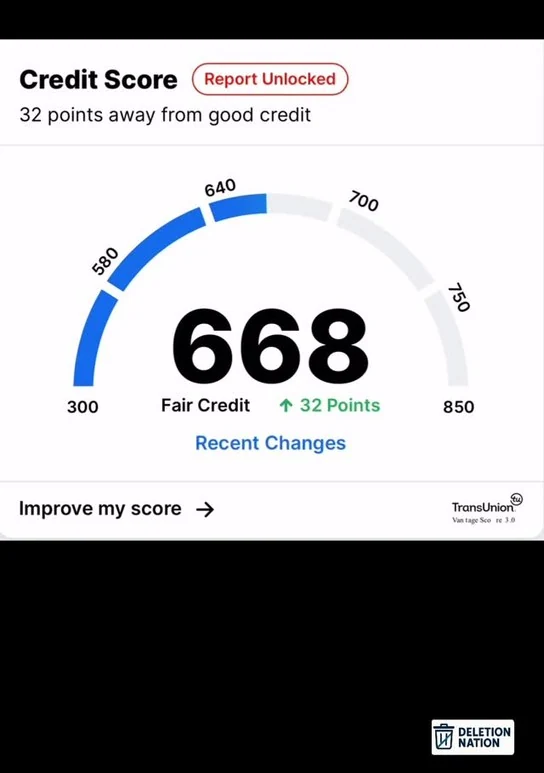
Three TransUnion clients cleared back to back in August 2025. One client had 8 inquiries deleted in a single sweep; another had Apple Card, Comenity, CareCredit, and USAA accounts removed; a third had a Synchrony account deleted. One client rose 32 points overnight, to 668.

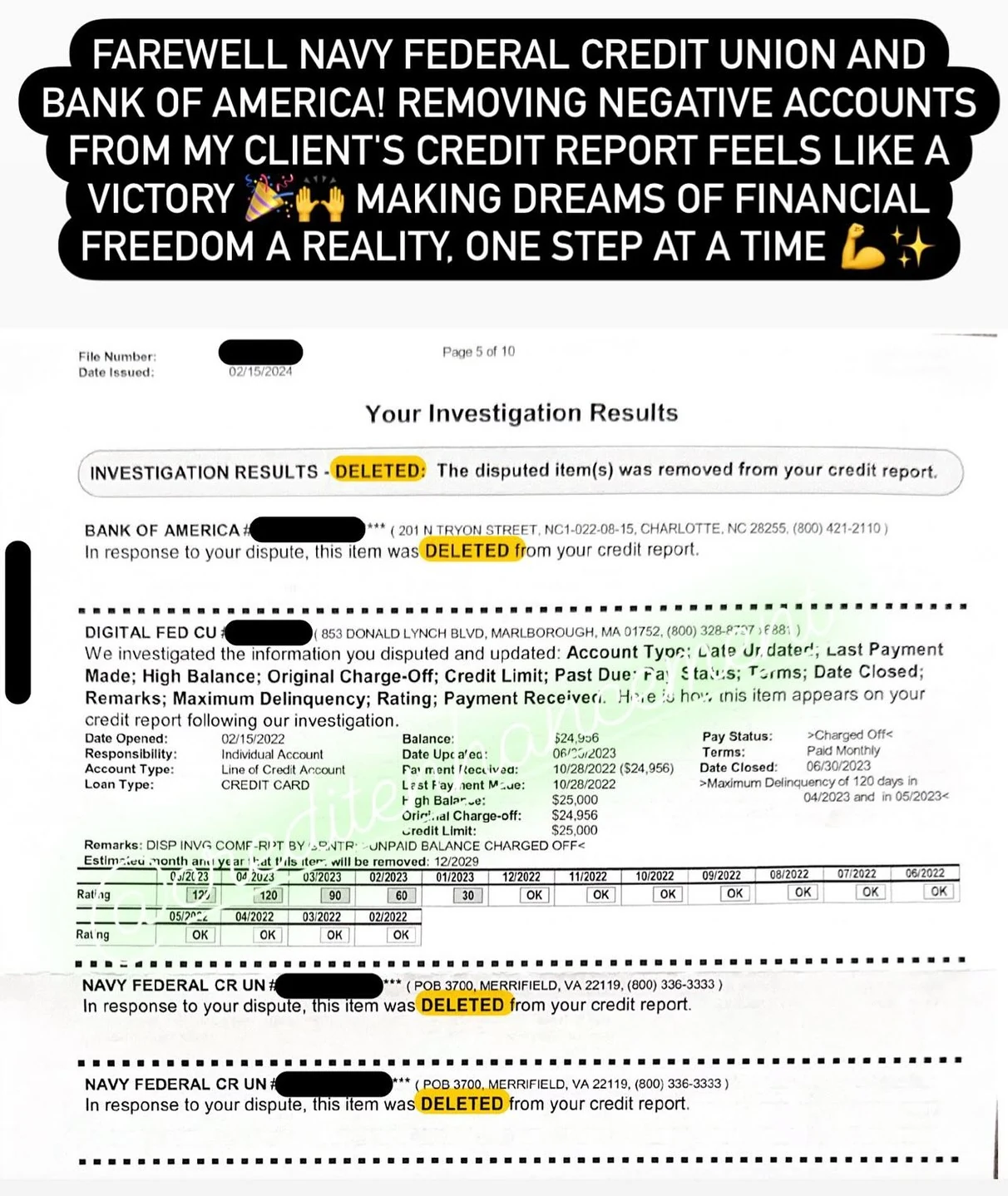
A February 2024 bureau investigation letter showing a Bank of America account and two Navy Federal accounts deleted from a client's credit report after dispute.

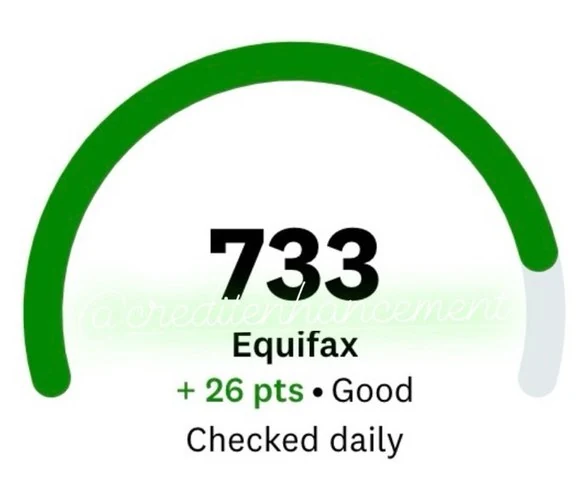
A client reached 733 on Equifax after a 26-point increase, March 2024.

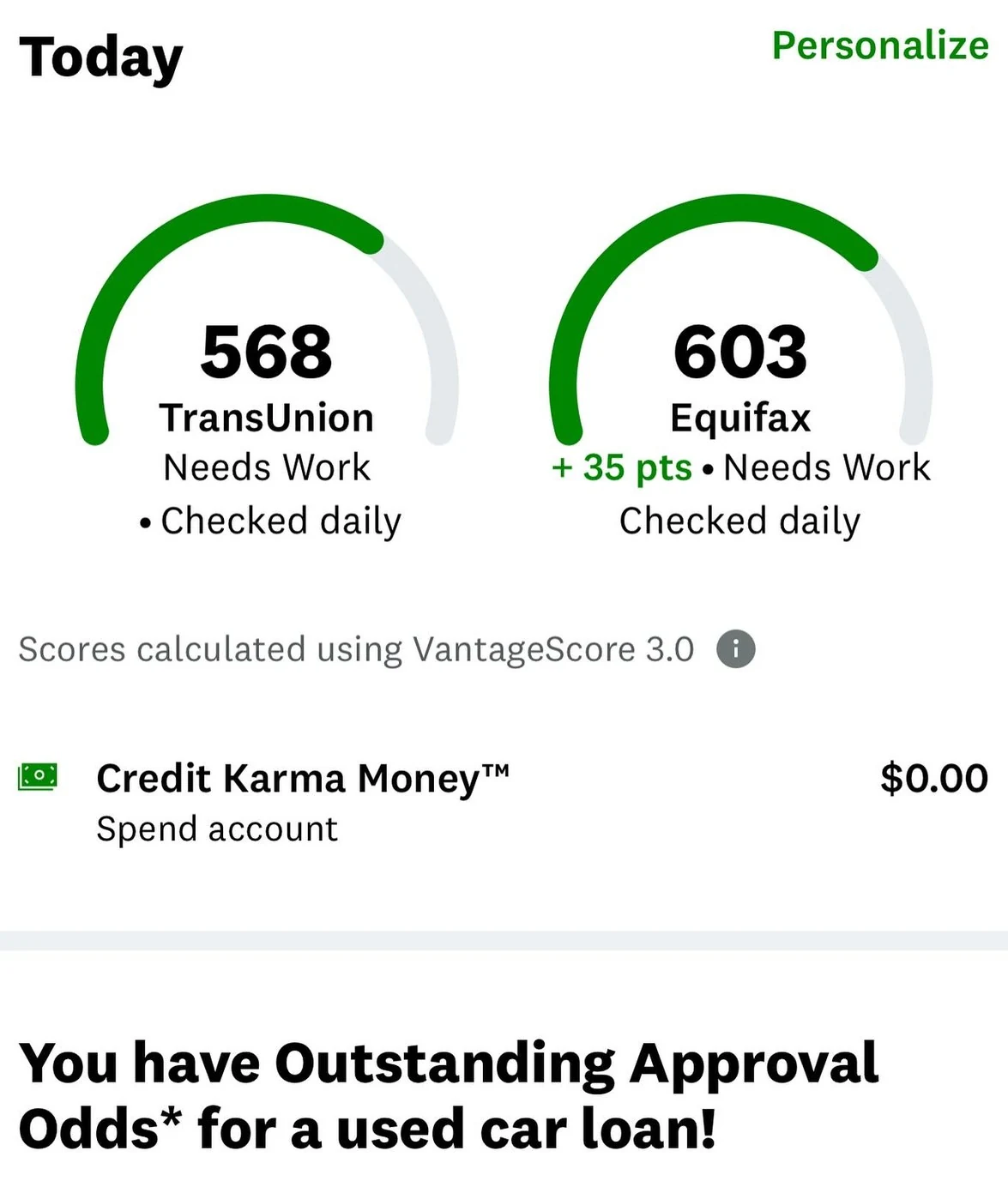
One account deletion took this client's Equifax score up 35 points, to 603, in February 2024. The same file was already showing approval odds for a used car loan.
These are real results from past clients. Results vary from person to person and depend on what is in each credit file. Nothing here promises a particular score increase or deletion, and accurate negative information generally cannot be removed. Client names and account numbers have been removed from these images.
It can help you find out whether inaccurate information is part of the problem. A review of your reports shows what lenders are seeing, so you can tell whether something on the page is wrong. Lenders also weigh income, debts, loan terms, and their own underwriting rules — and reviewing your reports doesn't guarantee the next application gets approved. Our mortgage and auto readiness service can walk you through that preparation.
It can help you spot inaccuracies and get a clear picture of outstanding obligations before you apply again. Whether a lender approves a mortgage depends on a lot more than your reports — income, debts, savings, the loan program, and the lender's own criteria all matter. Our mortgage and auto readiness service covers this preparation in detail.
Lenders set rates using their own criteria, and your credit history is often part of the mix — along with outstanding debt, payment patterns, loan terms, and market conditions. Reviewing your reports can show whether any of the information being used is inaccurate. A credit report review is the usual first step.
If a collection entry is inaccurate, it may be challenged with the reporting agency or the information provider. If the information is accurate, it generally stays — accurate entries aren't removed just because they're unfavorable. Our collections and charge-offs service explains each entry before you decide what to do.
If a late payment was reported wrong — the wrong date, the wrong account, a payment that was actually on time — you may have grounds to dispute it. If the payment was genuinely late and correctly reported, it generally can't be removed through a legitimate accuracy dispute. Our error correction service handles factual disputes of this kind.
Hard inquiries from loan applications can affect your score; soft inquiries, like checking your own reports, generally don't. Mortgage inquiries made within a short window are sometimes treated differently by scoring models. A credit report review shows every inquiry on your reports.
A repossession can appear on your credit report and influence how lenders view future applications. If the repossession is reported inaccurately — wrong dates, wrong balance, wrong account — it may be challenged. Our collections and charge-offs service can help you understand what is being reported.
Yes — student loan payment history, balances, and account status can all appear on your credit reports. If any of that information is reported inaccurately, it may be challenged through a factual dispute. If something looks wrong, error correction may be the next step.
Bankruptcy information can appear on your credit report for a period set by the reporting rules. We can help you understand what is being reported and talk about responsible credit habits for the years ahead. Our credit building service covers habits for life after a bankruptcy.
Judgment information can appear on your credit report depending on the reporting rules and what public record information is available. If the judgment information is inaccurate, it may be challenged through a factual dispute. Our error correction service handles factual disputes of this kind.
Yes. You can dispute information that looks inaccurate, incomplete, or unsupported with the credit reporting agency or the information provider. A good dispute names the specific information and explains why it may be wrong. Our error correction service prepares specific, factual disputes.
Building credit history usually means having accounts that get reported to the credit bureaus. We can talk through how different account types, payment history, and responsible habits contribute over time. Our credit building service explains how each piece fits together.
The first step is knowing what lenders see when they look at your file. Call (346) 301-6424 or request a consultation online and we'll take it from there.