Renting With Bad Credit
Bad credit can cost you an apartment, but landlords look at more than a score. Here is what they check and how to make your application stronger.
Most landlords check your credit before they hand you a lease. They are looking for late payments, collections, evictions, and unpaid rent, and they often check a tenant screening report as well as your credit reports. A low score does not always mean a no, but it does mean your application needs to be stronger in other places.
There is no single credit score that gets you an apartment. Some landlords set a minimum, often around 620 to 650, while others look at the whole picture: your income, your rental history, and whether you have ever been evicted. Knowing what they check is the first step to getting past it.
The credit score a landlord wants depends on the property. A large apartment complex with a formal screening process may require a minimum score and deny anyone below it. A private landlord renting a duplex may care more about your income and your rental history than about a number.
If your reports have errors, fix them before you apply. A collection that is not yours, or a late payment that was reported wrong, can be the difference between an approval and a denial. And if an eviction filing shows up on a tenant screening report, know that the filing itself is separate from your credit reports: an eviction has not appeared as a line item on standard credit reports since 2017, but the unpaid rent that follows it often shows up as a collection, and the filing shows up on screening reports.
If this guide helped, these pages go deeper on the topics that usually come up next.
These are actual results from past clients, previously shared on Instagram. Every credit file is different, so treat these as examples of what the process can look like, not as a promise of what yours will do.
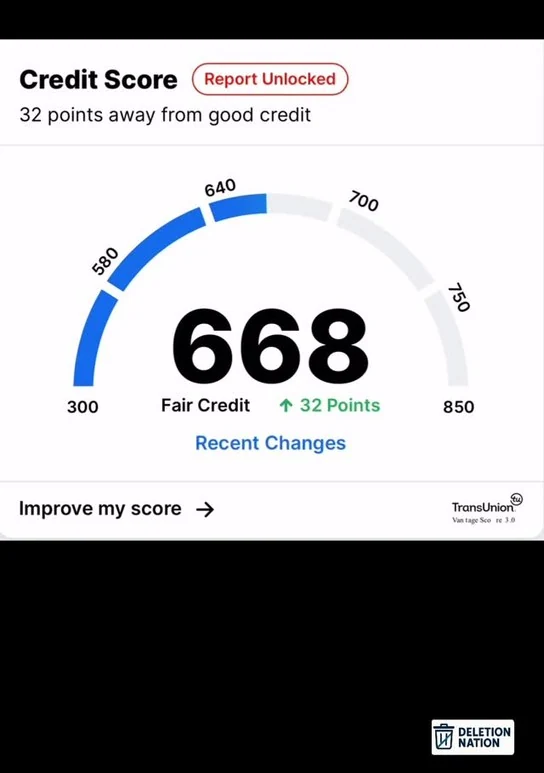
Three TransUnion clients cleared back to back in August 2025. One client had 8 inquiries deleted in a single sweep; another had Apple Card, Comenity, CareCredit, and USAA accounts removed; a third had a Synchrony account deleted. One client rose 32 points overnight, to 668.
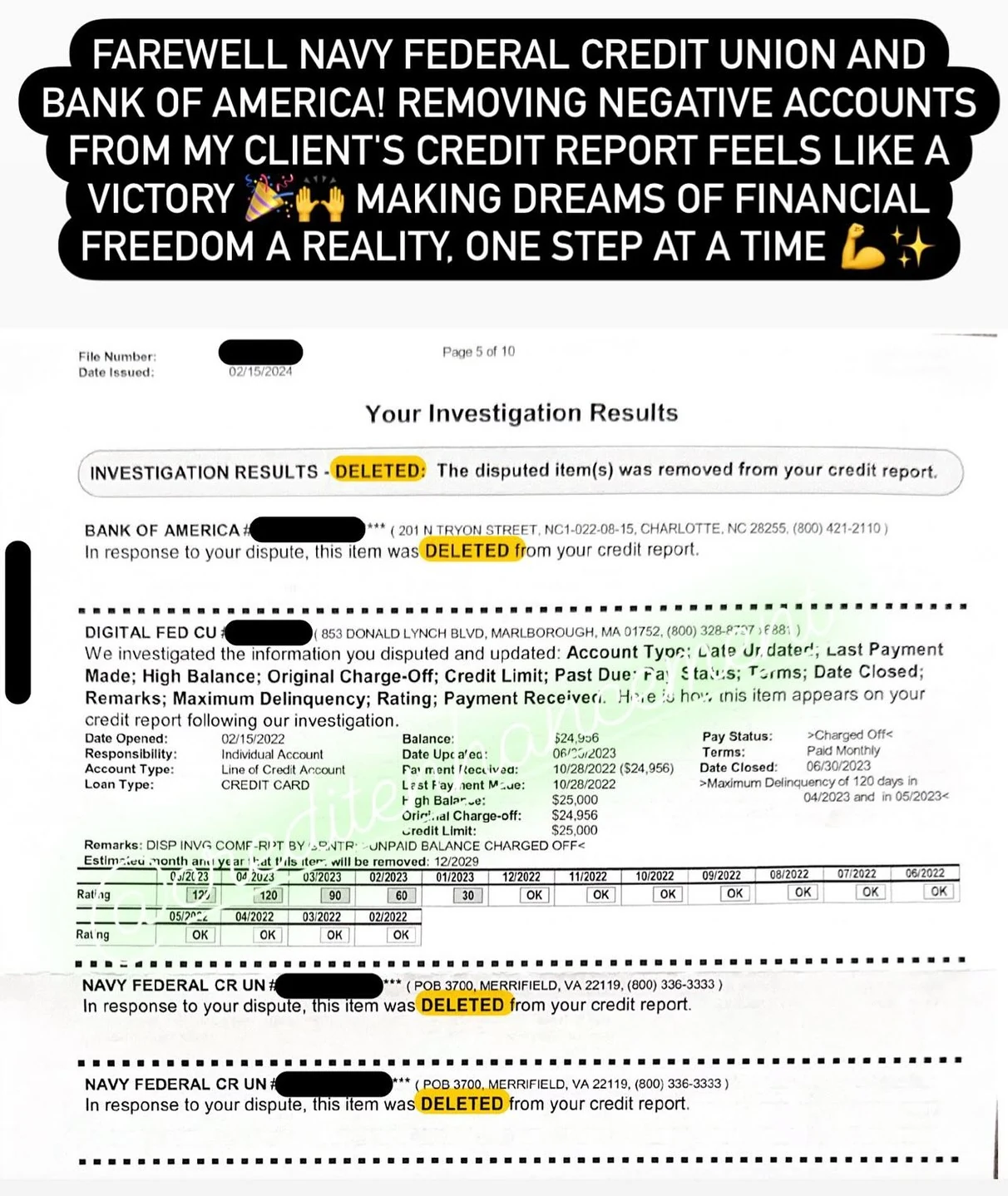
A February 2024 bureau investigation letter showing a Bank of America account and two Navy Federal accounts deleted from a client's credit report after dispute.
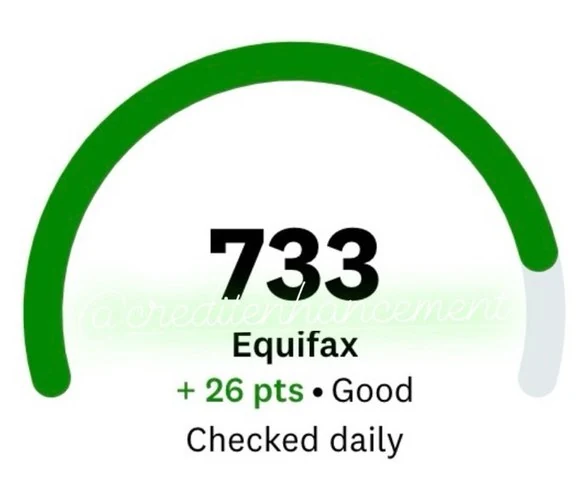
A client reached 733 on Equifax after a 26-point increase, March 2024.
Results vary from person to person and depend on what is in each credit file. Nothing here promises a particular score increase or deletion.
You can't fix what you can't see. Read your scores and entries from all three bureaus side by side and find out what is actually on your reports.
For a dollar, you can read your scores and entries from Equifax, Experian, and TransUnion before you decide what to do about them.
A dollar with MyScoreIQ opens 7 days of access to your scores, then $34.99 a month if you keep it. Cancel anytime.
Renting With Bad Credit can look different from one report to the next. We help you understand the details and spot accuracy problems.
Landlords usually pull a credit report and a tenant screening report, which can show eviction filings, rental payment history, and criminal records. Check both before you apply.
Pay stubs or bank statements showing steady income, usually three times the rent, can outweigh a weak score.
A larger security deposit lowers the landlord's risk. Some landlords will accept a higher deposit in place of a higher score.
A reference from a past landlord who can say you paid on time is worth more than a score to many property managers.
A co-signer with strong credit can get your application approved. They are responsible for the rent if you do not pay.
Small landlords who own a few units often decide for themselves, while large complexes usually follow a strict scoring system.
A Renting With Bad Credit entry feels personal, but on a report it is just data — dates, amounts, and a status. We help you read it as data first.
The same account can look different on each bureau. We help you check all three before you act on any one of them.
We explain dispute options, what records to keep, and practical habits that help you stay current going forward.
Errors on your reports can cost you an apartment. Dispute what is wrong before you start applying.
Pay stubs, ID, rental history, and references, ready to hand over, make your application look serious.
A short, honest explanation of what happened and what has changed since goes further than silence.
Some landlords will work with a larger deposit, a co-signer, or a few months of rent upfront. Ask before you assume it is a no.
There is no single number. Many landlords look for 620 to 650 or higher, but some accept lower scores with a larger deposit, a co-signer, or strong proof of income.
Yes. Private landlords, larger deposits, co-signers, and strong rental references can all help. Your income and rental history often matter as much as your score.
Most do. They usually pull a credit report and a tenant screening report, which can show eviction filings and rental payment history.
Some landlords advertise no credit check apartments, meaning they do not pull your credit reports. They usually still check your income, rental history, and references, and they may charge a larger deposit.
An eviction filing on a tenant screening report can make approval harder, but it is not an automatic denial everywhere. A strong application, references, and time since the filing all help.
Let's look at your reports together and find the moves that will actually help — and the ones that won't. Call (346) 301-6424.