Collections on Your Report
A Collection Account Doesn't Have to Sit There Unchallenged
A medical bill from a Houston ER visit, an old utility balance from an apartment in Pasadena, a store card that went to collections years ago — collection accounts are among the most common negative items on Houston credit reports. Some can be challenged, some can be settled, and some simply need time. This guide explains how to tell which is which.
When an original creditor — a hospital, a utility, a credit card company — decides it will not keep trying to collect a past-due balance itself, it often sells the account to a collection agency or hires one to collect it. The agency then reports a collection account to the credit bureaus. That account is separate from the original account, so a single unpaid bill can show up twice on your report: once as the original account and once as the collection.
A collection account can stay on a credit report for about seven years from the date of the first missed payment that led to the collection, not from the date the collector bought it. Paying a collection does not automatically remove it, and it does not restart that seven-year clock — a collector that tells you otherwise is not describing the rules correctly. What paying can do is change the account's status to paid, which some newer scoring models treat more kindly than an unpaid balance, and which some mortgage underwriters in the Houston market look at closely when they review a file by hand.
Before you pay anyone anything, verify the debt. Collectors sometimes report the wrong balance, the wrong original creditor, or an account that was already paid. In Texas, you can ask a collector for validation — proof that the debt is yours and that the amount is correct — and you should get that in writing before you send money.
Step 1 — Read the entry on all three reports. Note the collector's name, the original creditor, the balance, the date of first delinquency, and whether the same debt appears more than once. A debt reported twice by two different collectors, or with two different balances, is a red flag worth disputing.
Step 2 — Ask for validation in writing. Within 30 days of a collector's first contact, you can request validation of the debt. The collector should provide the amount, the original creditor, and documentation tying the debt to you. Do not agree that a debt is yours, and do not agree to a payment plan, until you have seen that validation.
Step 3 — Dispute anything inaccurate. If the balance is wrong, the date is wrong, the account is not yours, or the debt was already paid, dispute it with the bureau that shows it and with the collector. Bureaus generally have 30 days to investigate, and they must correct or remove information they cannot verify.
Step 4 — Decide whether to settle, and on what terms. If the debt is yours and the information is accurate, a settlement is a negotiation. Collectors often accept less than the full balance. Before you pay, get any agreement in writing — the amount, the payment date, and exactly what the collector will report afterward. Pay-for-delete, where a collector agrees to remove the account after payment, is never guaranteed, and an oral promise is not enough: get it in writing first.
Step 5 — Check the result. After payment, pull your reports again in 30 to 60 days and confirm the account shows what was agreed. Keep the written agreement and every payment receipt. If the collector reports something different from what was agreed, dispute it with the proof in hand.
Not every collection is worth settling. A small, old collection nearing the end of its seven-year reporting window may fall off on its own within a year or two, and paying it will not make it disappear any sooner. A collection for a debt you do not owe should be disputed, not paid. And a collection tied to a bill you are still fighting — a hospital charge that should have been covered by insurance, for example — is worth resolving with the provider first, because a corrected bill can make the collection disappear entirely.
Texas has its own statute of limitations on debt collection lawsuits, separate from the seven-year credit reporting window. An old debt can be past the point where a collector can sue, even while it still shows on a report. That distinction matters when you decide whether to engage with a collector at all, and it is one reason to get the dates right before you make contact: in some situations, acknowledging an old debt or making a small payment can restart the lawsuit clock, even though it cannot restart the reporting clock.
When you dispute by mail, send it to the bureau that shows the item. The mailing addresses are: Experian, P.O. Box 4500, Allen, TX 75013; Equifax, P.O. Box 740256, Atlanta, GA 30374; and TransUnion, P.O. Box 2000, Chester, PA 19016. Bureaus generally have 30 days to investigate a dispute once they receive it. Send disputes by certified mail and keep a copy of everything you send, along with the delivery confirmation.
If this guide helped, these pages go deeper on the topics that usually come up next.
These are actual results from past clients, previously shared on Instagram. Every credit file is different, so treat these as examples of what the process can look like, not as a promise of what yours will do.
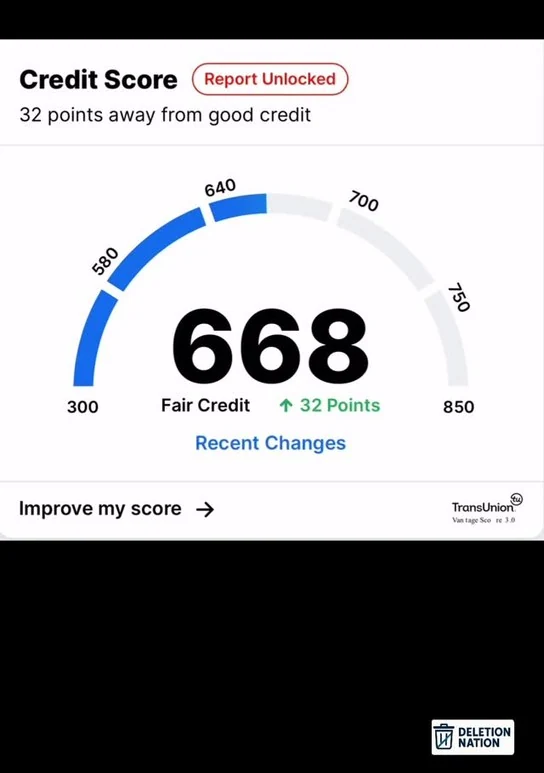
Three TransUnion clients cleared back to back in August 2025. One client had 8 inquiries deleted in a single sweep; another had Apple Card, Comenity, CareCredit, and USAA accounts removed; a third had a Synchrony account deleted. One client rose 32 points overnight, to 668.
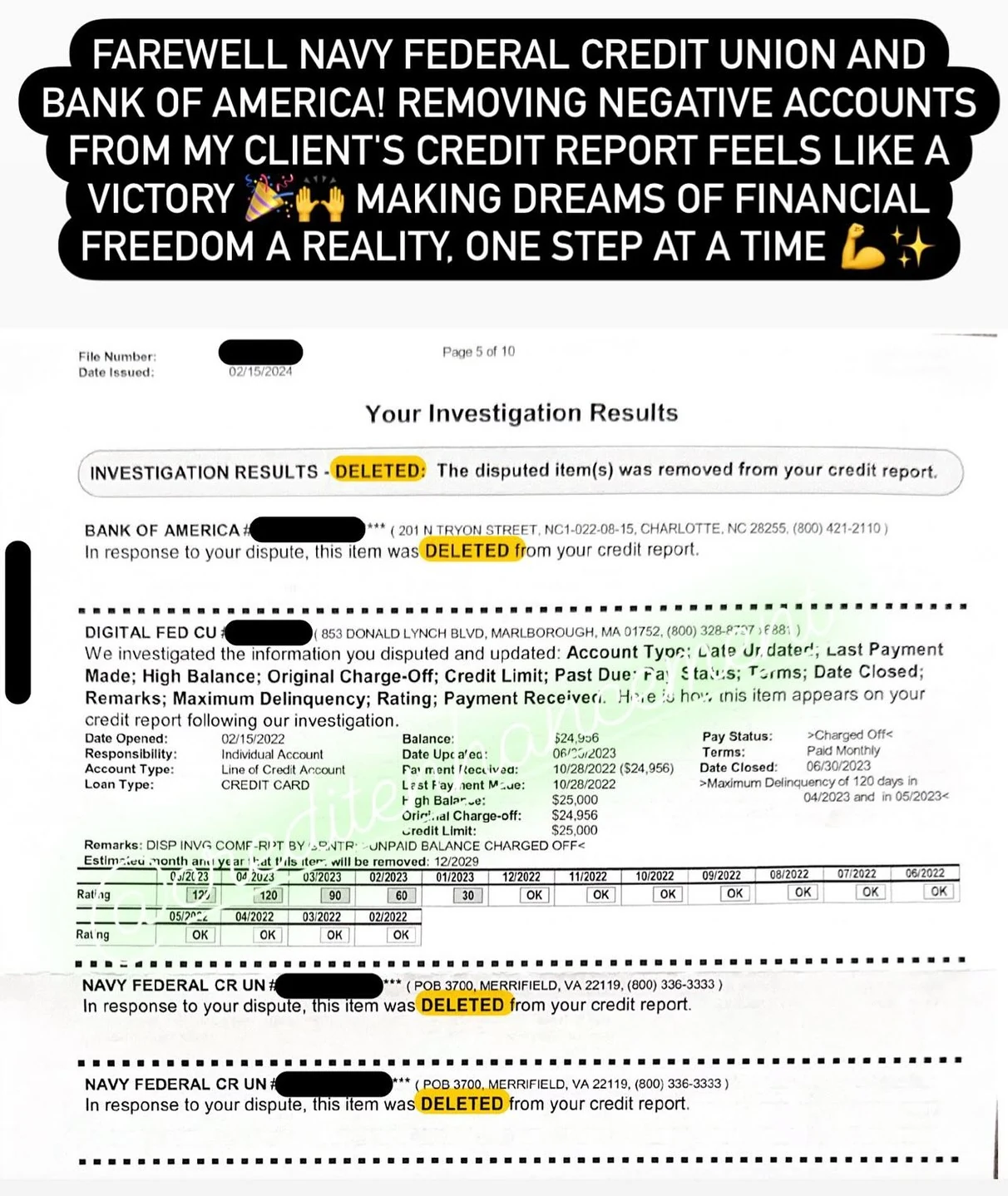
A February 2024 bureau investigation letter showing a Bank of America account and two Navy Federal accounts deleted from a client's credit report after dispute.
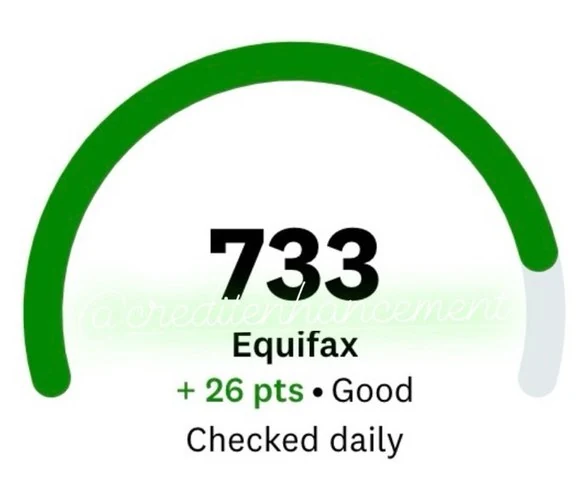
A client reached 733 on Equifax after a 26-point increase, March 2024.
Results vary from person to person and depend on what is in each credit file. Nothing here promises a particular score increase or deletion.
You can't challenge what you can't see. Read every collection entry — the collector, the balance, the date — across all three bureaus before you contact anyone.
For a dollar, you can read your scores and entries from Equifax, Experian, and TransUnion before you decide what to do about them.
A dollar with MyScoreIQ opens 7 days of access to your scores, then $34.99 a month if you keep it. Cancel anytime.
Collection Accounts can look different from one report to the next. We help you understand the details and spot accuracy problems.
We review who is reporting the collection, who the original creditor was, and whether the same debt appears twice.
We help you check the reported balance and the date of first delinquency against your own records.
We talk through asking a collector for written validation before you agree to anything.
We help you spot balances, dates, or accounts that do not match reality.
We explain what a written agreement should say before you send a payment.
A Collection Accounts entry feels personal, but on a report it is just data — dates, amounts, and a status. We help you read it as data first.
The same account can look different on each bureau. We help you check all three before you act on any one of them.
We explain dispute options, what records to keep, and practical habits that help you stay current going forward.
We talk through the collection accounts showing on your credit reports.
We help you understand what validation to ask for and what to look for in the answer.
We help you identify information that appears inaccurate or duplicated.
We explain dispute, settlement, and waiting options in plain language.
A collection generally stays for about seven years from the date of the first missed payment that led to the collection, not from the date the collector bought the account.
Paying a collection changes its status to paid, but it does not automatically remove the account. A removal after payment only happens if the collector agreed to it in writing beforehand, and that is never guaranteed.
No — not before you verify it. Ask the collector for written validation showing the amount, the original creditor, and proof the debt is yours.
A single unpaid bill can appear as the original account and as a collection account. If two different collectors report the same debt, that duplication is worth disputing.
No. Paying a collection does not restart the credit reporting window. The reporting period runs from the date of first delinquency.
Pay-for-delete is an agreement where a collector removes the account after you pay. It is never guaranteed, and any agreement should be in writing before you pay.
A collection account deserves a close look before you pay a dollar toward it. Let's go through what the bureaus are showing and talk about your options. Call (346) 301-6424.