Charge-Offs on Your Report
A Charge-Off Is Serious — and Sometimes Wrong
A charge-off is what happens when a creditor gives up on collecting an account and writes it off as a loss — usually after about six months of missed payments. It is one of the heaviest marks a Houston credit report can carry, and it can follow you through a mortgage application in Katy or a car loan on the Gulf Freeway. Here's how charge-offs work and what can actually be done about one.
A charge-off is an accounting entry. When an account goes roughly 180 days past due, the creditor writes the balance off its books as a loss for tax and accounting purposes. That does not mean the debt is forgiven, and it does not mean you no longer owe it. The creditor can still try to collect, or sell the account to a collection agency — which is how one unpaid account can end up as both a charge-off and a collection on your report.
A charge-off generally stays on a credit report for about seven years from the date of the first missed payment that led to it. It carries heavy weight in scoring because it signals a long stretch of missed payments, and it also catches the eye of any lender who reviews a file by hand — a mortgage underwriter in Houston will want to know what happened and what you did about it. Paying a charged-off account changes its status to paid, but it does not erase the history, and it does not restart the seven-year window.
The most important fact about charge-offs is also the most misunderstood: a charge-off can be challenged when the information in it is wrong. Wrong balance, wrong date, wrong account status, an account that was paid before the charge-off date — those are accuracy problems, and accuracy problems can be disputed.
Step 1 — Read the entry on all three reports. Note the creditor, the charged-off balance, the date of first delinquency, and whether a collection account for the same debt also appears. If the numbers differ between bureaus, at least one of them is wrong.
Step 2 — Check it against your records. Bank statements, payment confirmations, and any settlement or payoff letters matter here. A payment you made before the charge-off date, a balance that includes fees you never agreed to, or an account that was included in a bankruptcy are all worth documenting.
Step 3 — Dispute what is inaccurate. Dispute with the bureau that shows the error and with the creditor. Be specific about the field that is wrong and what the correct value should be, and attach copies of your proof. Bureaus generally have 30 days to investigate.
Step 4 — If it is accurate, consider settlement. Creditors and collectors often accept less than the full charged-off balance. Before you pay, get the agreement in writing: the amount, the payment date, and exactly how the account will be reported afterward — paid in full, settled for less than the full balance, or, if the creditor agrees, removed. A removal agreement is never guaranteed and should never be assumed from a phone conversation.
Step 5 — Verify the update. Pull your reports 30 to 60 days after payment and confirm the account shows what was agreed. Keep the written agreement and every receipt. If the creditor reports something different, dispute it with the proof in hand.
If you are planning to buy a home in Houston, a charge-off deserves attention before you apply. Many mortgage programs require charged-off accounts to be paid or settled, and an underwriter will ask for a written explanation of what happened. Having the settlement letter, the paid status, and a clear timeline ready before you apply makes that conversation much easier — and it is far better to handle it on your schedule than on a lender's deadline, when a closing date in Cypress or Pearland is already on the calendar.
The same logic applies to auto loans. A charge-off on your file will not always stop an approval, but it will usually raise the rate, and over the life of a car loan that rate difference is real money. Dealing with the charge-off first, even if that only means settling it and getting the status updated, can change the terms you are offered.
When you dispute by mail, send it to the bureau that shows the item. The mailing addresses are: Experian, P.O. Box 4500, Allen, TX 75013; Equifax, P.O. Box 740256, Atlanta, GA 30374; and TransUnion, P.O. Box 2000, Chester, PA 19016. Bureaus generally have 30 days to investigate a dispute once they receive it. Send disputes by certified mail and keep a copy of everything you send, along with the delivery confirmation.
If this guide helped, these pages go deeper on the topics that usually come up next.
These are actual results from past clients, previously shared on Instagram. Every credit file is different, so treat these as examples of what the process can look like, not as a promise of what yours will do.
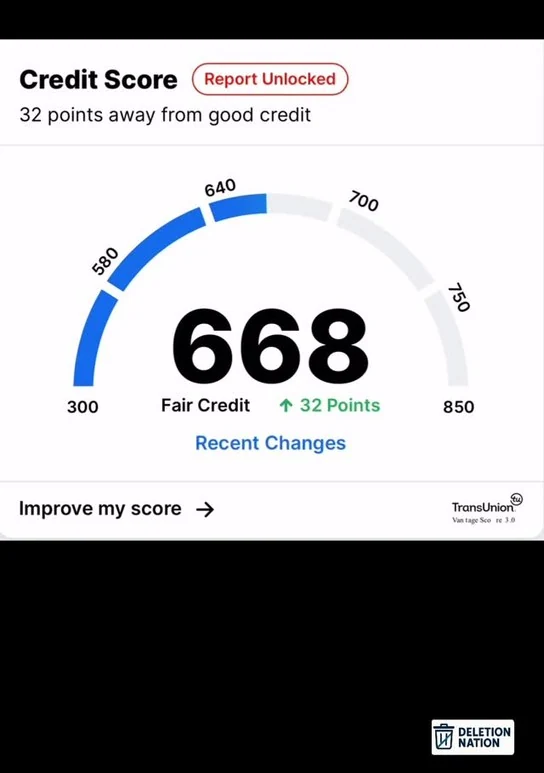
Three TransUnion clients cleared back to back in August 2025. One client had 8 inquiries deleted in a single sweep; another had Apple Card, Comenity, CareCredit, and USAA accounts removed; a third had a Synchrony account deleted. One client rose 32 points overnight, to 668.
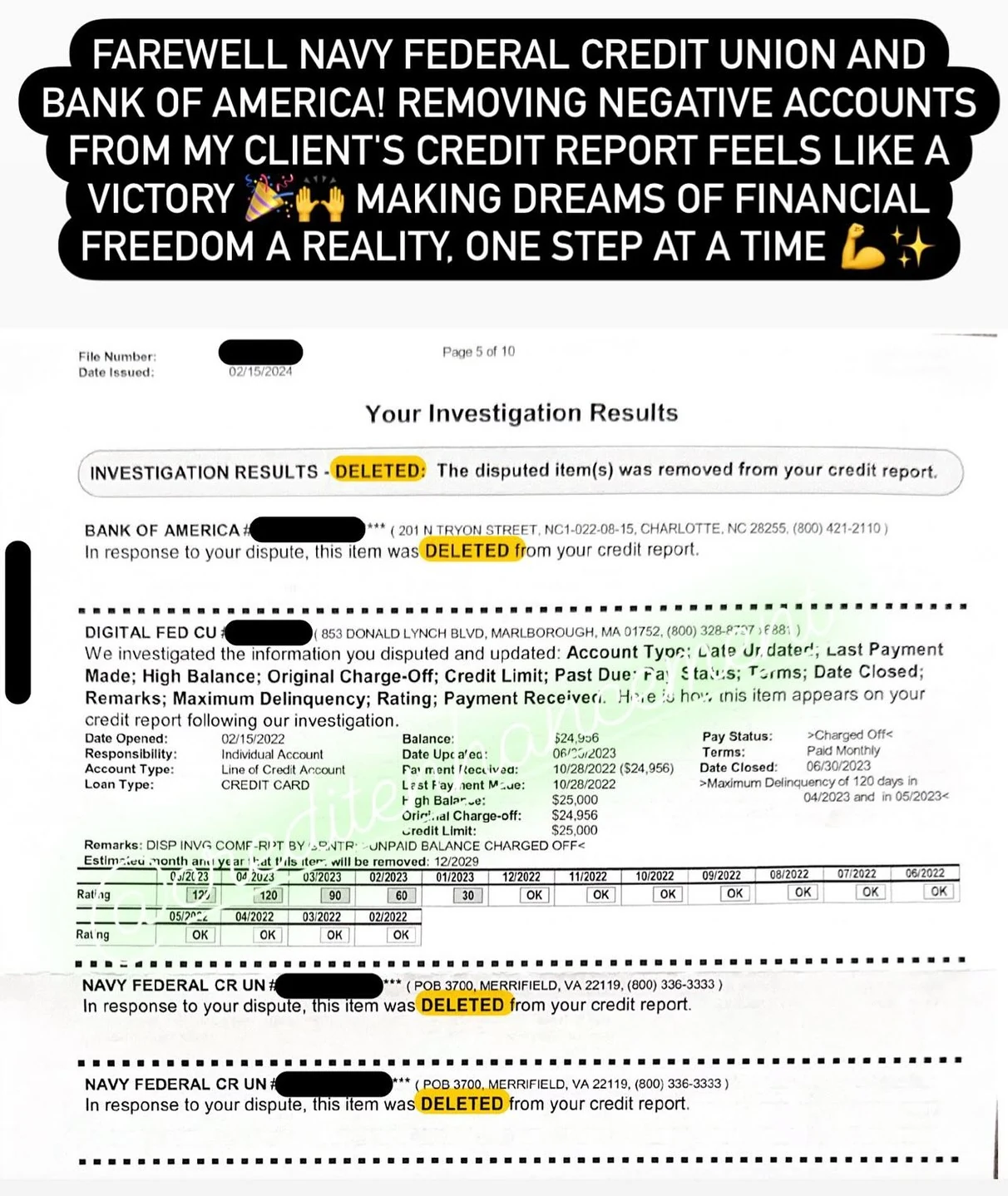
A February 2024 bureau investigation letter showing a Bank of America account and two Navy Federal accounts deleted from a client's credit report after dispute.
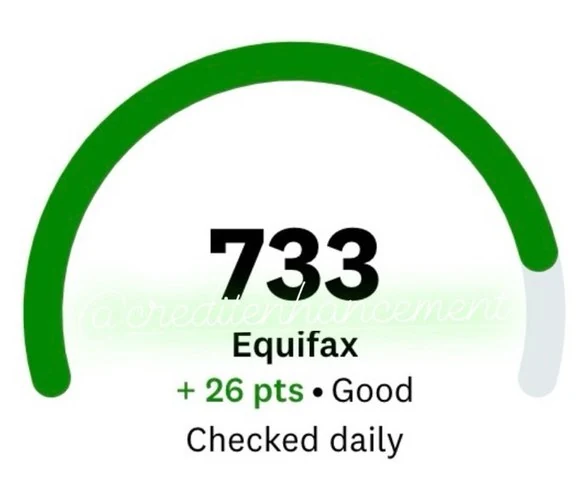
A client reached 733 on Equifax after a 26-point increase, March 2024.
Results vary from person to person and depend on what is in each credit file. Nothing here promises a particular score increase or deletion.
You can't challenge what you can't see. Read every charge-off entry — the creditor, the balance, the date — across all three bureaus before you contact anyone.
For a dollar, you can read your scores and entries from Equifax, Experian, and TransUnion before you decide what to do about them.
A dollar with MyScoreIQ opens 7 days of access to your scores, then $34.99 a month if you keep it. Cancel anytime.
Charge-Offs can look different from one report to the next. We help you understand the details and spot accuracy problems.
We review who charged the account off, the balance shown, and whether a collection for the same debt also appears.
We help you check the date that starts the seven-year reporting window against your records.
We talk through documenting any payment made before the account was charged off.
We help you spot balances, dates, or statuses that do not match reality.
We explain what a written agreement should say before you send a payment.
A Charge-Offs entry feels personal, but on a report it is just data — dates, amounts, and a status. We help you read it as data first.
The same account can look different on each bureau. We help you check all three before you act on any one of them.
We explain dispute options, what records to keep, and practical habits that help you stay current going forward.
We talk through the charge-off accounts showing on your credit reports.
We help you review the reported dates, balances, and account status tied to each entry.
We help you identify information that appears inaccurate, incomplete, or inconsistent with your records.
We explain dispute and settlement options in plain language.
A charge-off generally stays for about seven years from the date of the first missed payment that led to it.
Paying a charge-off changes its status to paid, but it does not automatically remove the account. Removal only happens if the creditor agreed to it in writing beforehand, and that is never guaranteed.
Yes. A charge-off is an accounting entry by the creditor, not forgiveness. The debt can still be collected or sold to a collection agency.
Yes, when the information in it is wrong — a wrong balance, a wrong date, a wrong status, or a payment made before the charge-off date. Accurate charge-offs generally stay.
A charge-off is the original creditor writing the account off as a loss. A collection is a separate account reported by a collection agency. One unpaid debt can appear as both.
Not always, but many mortgage programs require charged-off accounts to be paid or settled, and an underwriter will ask for a written explanation.
A charge-off deserves a close look before you pay a dollar toward it. Let's go through what the bureaus are showing and talk about your options. Call (346) 301-6424.