Charge-Offs vs Collections

Charge-Off vs Collection: What's the Difference in Houston, Texas

Two Entries, One Unpaid Debt — Here's How They Relate

A single unpaid bill can show up on your credit report twice: once as a charge-off from the original creditor, and once as a collection from the agency that bought it. They're related, but they're not the same thing — and they need different approaches. This guide explains the difference and what to do about each one.

What a Charge-Off Is

A charge-off is an accounting entry by the original creditor. When an account goes roughly 180 days past due, the creditor writes the balance off its books as a loss for tax and accounting purposes. The account is closed, the balance is reported as charged off, and the entry generally stays on a credit report for about seven years from the date of the first missed payment that led to it.

A charge-off does not mean the debt is forgiven. You still owe it, and the creditor can still try to collect it — or sell it to a collection agency. That sale is where the second entry comes from. The charge-off is the original creditor saying “we gave up collecting this ourselves.” What happens next is a separate question, and it produces a separate entry.

Charge-offs carry heavy weight in scoring because they signal a long stretch of missed payments, and they catch the eye of any lender who reviews a file by hand. A mortgage underwriter in Houston will ask about a charge-off, and will want to know whether it was paid, settled, or is still outstanding. Paying a charge-off changes its status to paid, but it does not erase the history.

What a Collection Is

A collection is a separate account, reported by a collection agency. When the original creditor sells the debt or hires an agency to collect it, the agency reports a collection account to the bureaus — with its own balance, its own dates, and its own status. The collection generally stays for about seven years from the date of the first missed payment that led to it, the same starting point as the charge-off, because both trace back to the same original delinquency.

That shared starting point is important: the seven-year window for the collection runs from the original missed payment, not from the date the collector bought the account. A collector that reports a newer date is reporting the account incorrectly, and that is worth disputing. Paying a collection does not restart the window either.

Collections and charge-offs are handled differently in practice. A charge-off is negotiated with the original creditor (or whoever holds it now), and the leverage is settlement — paying less than the full balance in exchange for a paid or settled status. A collection is negotiated with the agency, and the leverage includes settlement and, sometimes, pay-for-delete — an agreement to remove the account after payment, which is never guaranteed and must be in writing before you pay.

Why One Debt Shows Up Twice — and What to Do About It

It is normal for a single unpaid debt to appear as both a charge-off and a collection. The charge-off is the original account; the collection is the agency's account for the same debt. Both are legitimate entries, and both run the same seven-year window. What is not normal is the same debt appearing as two different collections from two different agencies, or the charge-off and the collection showing different balances that do not add up, or either entry showing a date of first delinquency that is wrong. Those are accuracy problems, and they are worth disputing.

Pull your reports from all three bureaus at annualcreditreport.com, the official site, and line up the entries for the same debt. The original creditor's name, the balance, and the date of first delinquency should be consistent across the charge-off and the collection. If they are not, write down the discrepancies — those are the specifics your dispute needs.

When you settle, settle deliberately. If you settle the collection, get in writing how the collection will be reported and whether the charge-off will be updated too. If you settle the charge-off with the original creditor, ask whether the account has been sold and who holds it now — paying the wrong party does not settle the debt. And keep every agreement and receipt: a settled debt that is reported incorrectly is a dispute you can win, but only with the paperwork in hand.

When you dispute by mail, send it to the bureau that shows the item. The mailing addresses are: Experian, P.O. Box 4500, Allen, TX 75013; Equifax, P.O. Box 740256, Atlanta, GA 30374; and TransUnion, P.O. Box 2000, Chester, PA 19016. Bureaus generally have 30 days to investigate a dispute once they receive it. Send disputes by certified mail and keep a copy of everything you send, along with the delivery confirmation.

Related Guides and Services

If this guide helped, these pages go deeper on the topics that usually come up next.

A First Look at Real Results

These are actual results from past clients, previously shared on Instagram. Every credit file is different, so treat these as examples of what the process can look like, not as a promise of what yours will do.
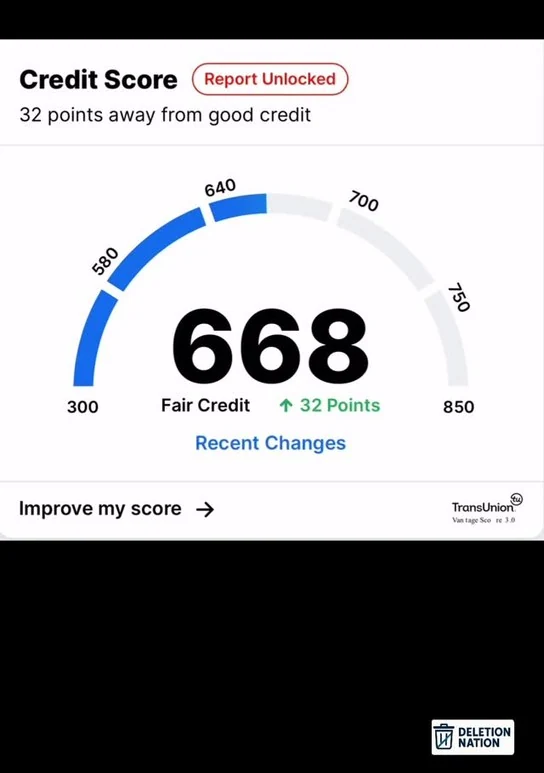
Houston credit repair result: TransUnion credit score of 668, up 32 points

Three clients, 13 deletions, one round

Three TransUnion clients cleared back to back in August 2025. One client had 8 inquiries deleted in a single sweep; another had Apple Card, Comenity, CareCredit, and USAA accounts removed; a third had a Synchrony account deleted. One client rose 32 points overnight, to 668.
See it on Instagram →

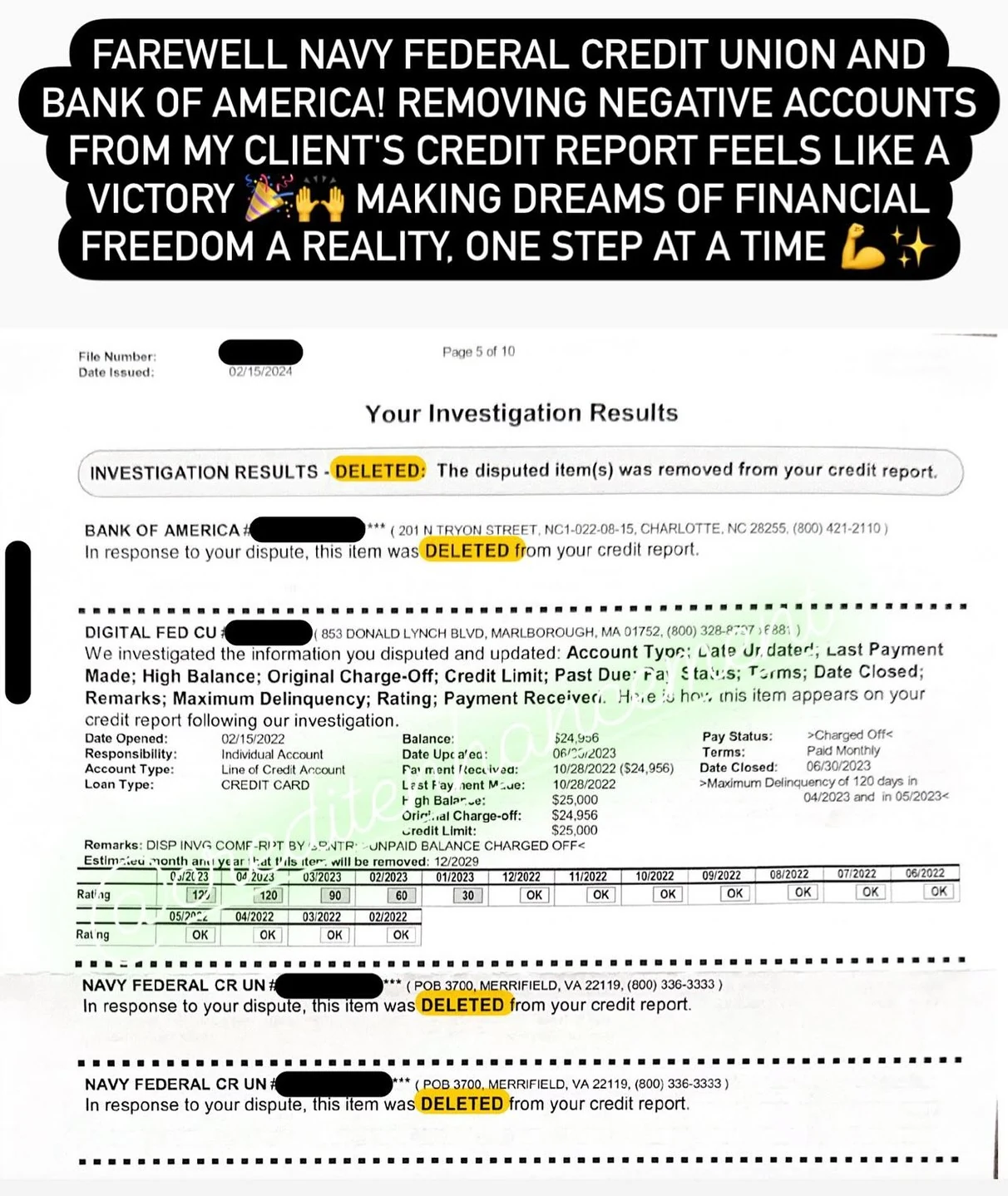
Houston credit repair result: Credit bureau investigation letter showing Bank of America and Navy Federal accounts deleted

Bank of America and Navy Federal, deleted

A February 2024 bureau investigation letter showing a Bank of America account and two Navy Federal accounts deleted from a client's credit report after dispute.
See it on Instagram →

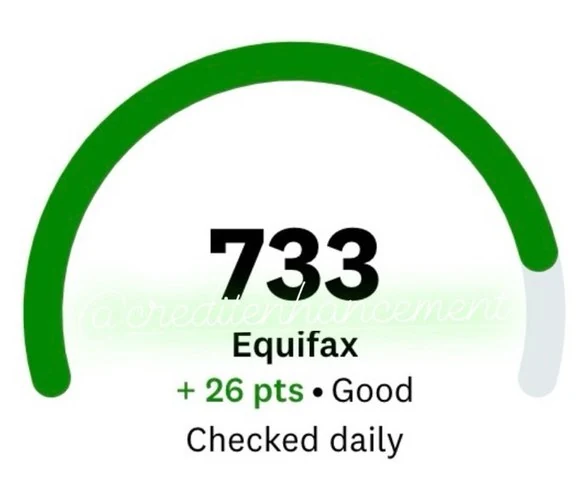
Houston credit repair result: Equifax credit score of 733, up 26 points

Equifax up 26 points

A client reached 733 on Equifax after a 26-point increase, March 2024.

See it on Instagram →

Results vary from person to person and depend on what is in each credit file. Nothing here promises a particular score increase or deletion.

See Both Entries on Your Reports for a Dollar

You can't sort out a charge-off from a collection without reading the file. Check every entry — the creditor, the collector, the balances — on all three bureaus.

For a dollar, you can read your scores and entries from Equifax, Experian, and TransUnion before you decide what to do about them.

See What's on My Reports

A dollar with MyScoreIQ opens 7 days of access to your scores, then $34.99 a month if you keep it. Cancel anytime.

Houston Credit Repair Is Proud to Serve Texas

What We Walk Through With You

Charge-Offs vs Collections can look different from one report to the next. We help you understand the details and spot accuracy problems.

The Charge-Off Entry

We review the original creditor's account — the balance, the date, and the status on each bureau.

The Collection Entry

We review the agency's account for the same debt and check it against the charge-off.

Matching the Dates

We help you check that both entries run from the same date of first delinquency.

Duplicates and Mismatches

We look for the same debt reported twice by two agencies, or balances that don't add up.

Settlement Strategy

We talk through which entry to settle first and what the agreement should say.

Why Talk Through Charge-Offs vs Collections With Us?

Start With the Facts

A Charge-Offs vs Collections entry feels personal, but on a report it is just data — dates, amounts, and a status. We help you read it as data first.

One Entry, Three Reports

The same account can look different on each bureau. We help you check all three before you act on any one of them.

A Plan You Can Follow

We explain dispute options, what records to keep, and practical habits that help you stay current going forward.

How We Help With Charge-Offs vs Collections

Go Over Both Entries

We talk through the charge-off and the collection showing on your credit reports.

Line Up the Details

We help you compare balances, dates, and creditors across both entries.

Spot What May Be Wrong

We help you identify duplicates, wrong dates, or balances that do not match.

Talk About Next Steps

We explain dispute, settlement, and pay-for-delete options in plain language.

Questions About Charge-Offs vs Collections

What is the difference between a charge-off and a collection?

A charge-off is the original creditor writing the account off as a loss. A collection is a separate account reported by a collection agency that bought or was hired to collect the debt. One unpaid debt can appear as both.

Can the same debt show up as both a charge-off and a collection?

Yes. That is normal — the charge-off is the original account and the collection is the agency's account for the same debt. Both run the same seven-year window from the date of first delinquency.

How long do a charge-off and a collection stay on my report?

Both generally stay for about seven years from the date of the first missed payment that led to them.

Do I still owe a charged-off debt?

Yes. A charge-off is an accounting entry, not forgiveness. The debt can still be collected or sold to a collection agency.

Should I pay the charge-off or the collection first?

Find out who holds the debt now. Paying the original creditor after the account has been sold does not settle it. Get the agreement in writing from whoever you pay, and confirm how both entries will be reported.

Can a collection be removed if I pay it?

Only if the collector agreed to pay-for-delete in writing before you paid — and that is never guaranteed. Otherwise, paying changes the status to paid but the account stays.

Seeing the Same Debt Twice on Your Report?

That's normal — but the details have to match. Let's line up both entries and talk about what to do with each one. Call (346) 301-6424.

Call (346) 301-6424

Our Services in Houston, Texas