Buying a House
The Score Is the Starting Point — Not the Whole Application
Buying a home in Houston — a first house in Cypress, a bigger place in Pearland, a townhome in the Heights — starts with a question: is my credit score high enough? The answer depends on the loan type, the down payment, and the rest of your file. This guide breaks down the numbers by loan program, and what to do if your score isn't there yet.
There is no single minimum credit score for buying a house in Texas — it depends on the loan program. The most common programs and their usual minimums are: conventional loans, generally around 620; FHA loans, generally 580 for a 3.5 percent down payment, and as low as 500 with a 10 percent down payment; VA loans for eligible veterans and service members, generally around 620, though the VA itself sets no minimum and lenders set their own; and USDA loans for eligible rural areas, generally around 640. These are typical lender minimums, not guarantees — a lender can set a higher bar, and the rate you are offered depends on the score, not just on clearing the minimum.
The score that matters is the mortgage score, which is not always the same number you see on a consumer site. Mortgage lenders usually pull a FICO score built for mortgage lending, and they look at all three bureaus — then, for most programs, they use the middle score of the three. That is why a single low bureau score can hold up an application even when the other two look fine, and why checking all three reports matters before you apply.
Beyond the score, lenders look at the whole file: payment history, outstanding debts, the debt-to-income ratio, employment history, and savings for the down payment and closing costs. A 640 score with clean recent history and a low debt-to-income ratio can be a stronger application than a 680 score with recent late payments and maxed-out cards. The score opens the door; the file behind it decides the rate.
The difference between a 620 and a 740 score on a Houston mortgage is not abstract — it is a monthly payment difference that adds up to tens of thousands of dollars over the life of the loan. A higher score means a lower rate, and a lower rate means a lower payment for the same house. It can also mean lower mortgage insurance costs on an FHA or conventional loan with a small down payment, and a smoother underwriting process with fewer conditions and document requests.
That is why the months before a home purchase are the most valuable time to work on a credit file. Paying down credit card balances — especially balances above 30 percent of the limit — is often the fastest way to move a score, because utilization is a large factor and it updates monthly. Disputing inaccuracies on the report, bringing any past-due accounts current, and avoiding new credit applications in the months before you apply all help. What does not help is closing old credit cards, which can shorten your history and raise your utilization in one move.
Texas also has first-time buyer programs worth knowing about: the Texas State Affordable Housing Corporation and the Texas Department of Housing and Community Affairs offer down payment assistance and mortgage credit certificates for qualifying buyers, and many Houston-area lenders work with those programs regularly. Some have their own credit requirements, so it is worth asking a lender or a housing counselor which programs fit your file before you start shopping.
Start at least three to six months before you plan to apply. Pull your reports from all three bureaus at annualcreditreport.com, the official site, and dispute anything inaccurate — bureaus generally have 30 days to investigate, and a corrected entry can change the score a lender sees. Pay down revolving balances, bring any past-due account current, and set up autopay so nothing new goes late while you are preparing.
Do not open new credit, do not close old accounts, and do not co-sign for anyone else's loan in the months before a mortgage application. Each of those moves changes the file in ways that can surprise you at underwriting. And do not make large, unexplained deposits or move money between accounts without keeping a paper trail — underwriters ask about every large movement, and a clean paper trail keeps the process moving.
Finally, get pre-approved, not just pre-qualified. A pre-approval means a lender has pulled your credit, reviewed your income and debts, and told you how much you can borrow. It makes an offer on a Houston home far stronger — sellers in competitive neighborhoods like the Heights or EaDo take pre-approved buyers more seriously — and it tells you, before you fall in love with a house, exactly what price range your file supports.
When you dispute by mail, send it to the bureau that shows the item. The mailing addresses are: Experian, P.O. Box 4500, Allen, TX 75013; Equifax, P.O. Box 740256, Atlanta, GA 30374; and TransUnion, P.O. Box 2000, Chester, PA 19016. Bureaus generally have 30 days to investigate a dispute once they receive it. Send disputes by certified mail and keep a copy of everything you send, along with the delivery confirmation.
If this guide helped, these pages go deeper on the topics that usually come up next.
These are actual results from past clients, previously shared on Instagram. Every credit file is different, so treat these as examples of what the process can look like, not as a promise of what yours will do.
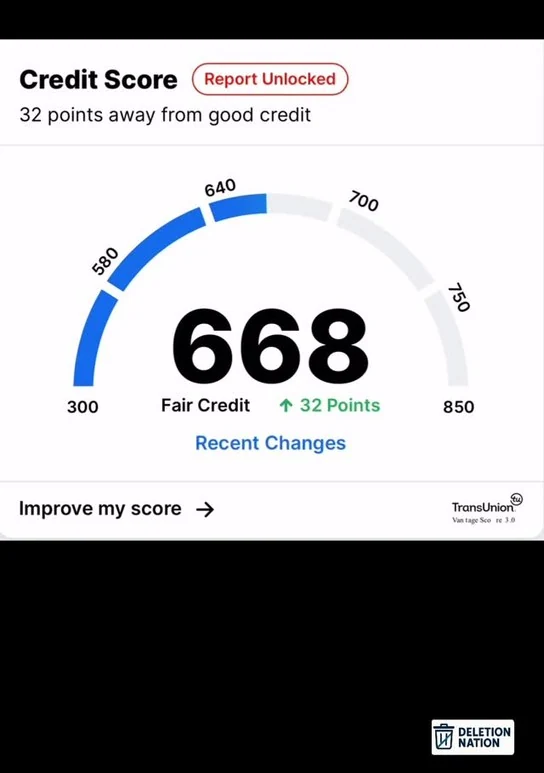
Three TransUnion clients cleared back to back in August 2025. One client had 8 inquiries deleted in a single sweep; another had Apple Card, Comenity, CareCredit, and USAA accounts removed; a third had a Synchrony account deleted. One client rose 32 points overnight, to 668.
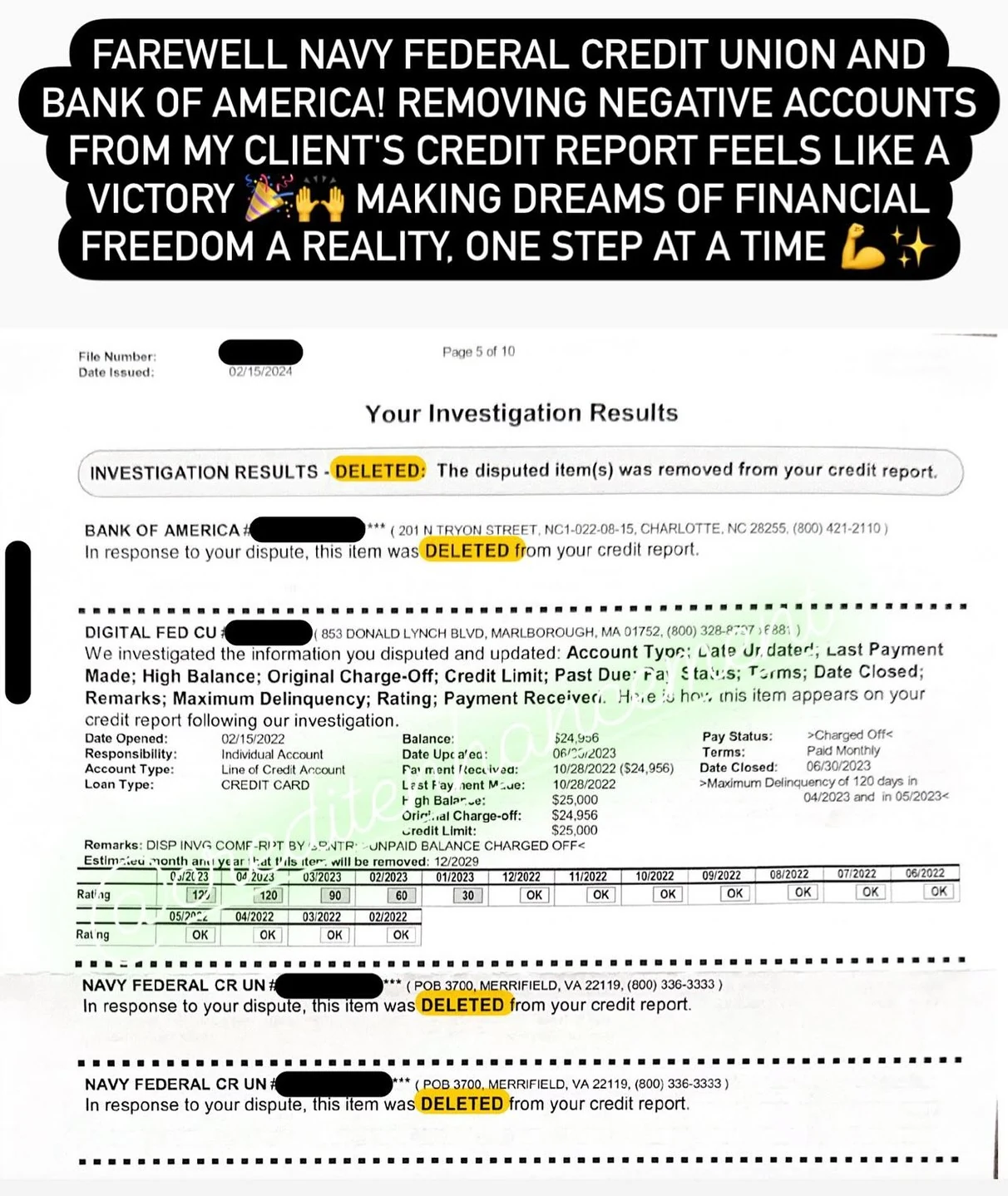
A February 2024 bureau investigation letter showing a Bank of America account and two Navy Federal accounts deleted from a client's credit report after dispute.
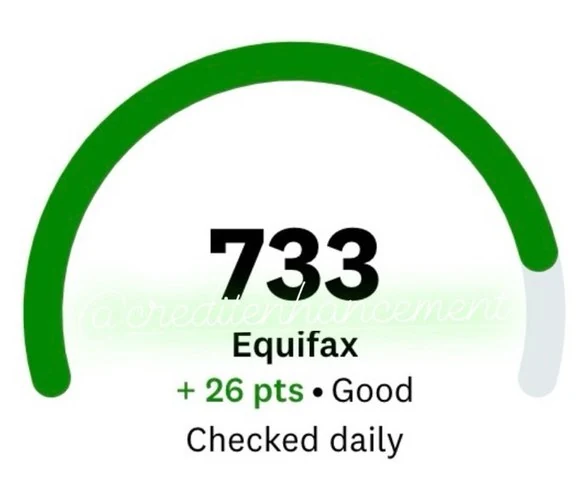
A client reached 733 on Equifax after a 26-point increase, March 2024.
Results vary from person to person and depend on what is in each credit file. Nothing here promises a particular score increase or deletion.
You can't plan a home purchase around a guess. Read your scores and entries from all three bureaus — the same ones a mortgage lender will pull — before you apply.
For a dollar, you can read your scores and entries from Equifax, Experian, and TransUnion before you decide what to do about them.
A dollar with MyScoreIQ opens 7 days of access to your scores, then $34.99 a month if you keep it. Cancel anytime.
Buying a House can look different from one report to the next. We help you understand the details and spot accuracy problems.
We help you understand which scores a lender will pull and why the middle score matters.
We talk through conventional, FHA, VA, and USDA minimums and which ones fit your situation.
We explain debt-to-income, payment history, and savings — the parts of the file beyond the score.
We talk through paying down balances and disputing inaccuracies in the months before you apply.
We explain the Texas first-time buyer programs worth asking a lender about.
A Buying a House entry feels personal, but on a report it is just data — dates, amounts, and a status. We help you read it as data first.
The same account can look different on each bureau. We help you check all three before you act on any one of them.
We explain dispute options, what records to keep, and practical habits that help you stay current going forward.
We talk through your reports and flag anything that could hold up a mortgage application.
We help you work out how much time your file needs before you apply.
We help you identify inaccuracies worth disputing before a lender sees them.
We explain the habits and moves that get a file mortgage-ready.
It depends on the loan: conventional loans generally around 620, FHA generally 580 for a 3.5 percent down payment, VA generally around 620, and USDA generally around 640. Lenders can set higher minimums.
Mortgage lenders usually pull a mortgage-specific FICO score from all three bureaus and use the middle score of the three.
Possibly, with an FHA loan at 3.5 percent down. A higher score means a lower rate and a lower monthly payment, so improving the score first is usually worth it.
A lot. The difference between a 620 and a 740 score can mean tens of thousands of dollars over the life of the loan, plus lower mortgage insurance costs.
Start at least three to six months before you plan to apply. Disputes take about 30 days, and paying down balances updates monthly.
Yes. The Texas State Affordable Housing Corporation and the Texas Department of Housing and Community Affairs offer down payment assistance and mortgage credit certificates for qualifying buyers.
The months before you apply are the most valuable time to work on your file. Let's look at what a lender will see and talk about getting it ready. Call (346) 301-6424.