Credit Repair Costs

How Much Does Credit Repair Cost in Houston, Texas

What You Pay For, What Drives the Price, and What to Avoid

Ask ten credit repair companies what they charge and you will get ten different answers — monthly fees, per-item fees, one-time setup fees, pay-after-work pricing. The range exists because the work is different from one file to the next. This guide explains what actually drives the cost, what the law says about when you can be charged, and how to compare companies on something other than the lowest number.

What Actually Drives the Cost

The biggest driver is the size and shape of the file. A file with two or three inaccurate entries takes less work than a file with a dozen collections, charge-offs, and mixed-file errors across all three bureaus. The number of dispute rounds matters too: a dispute round takes about 30 days, and most files need several rounds, because the bureaus investigate one batch at a time and results come back bureau by bureau.

The pricing model matters as much as the number. Some companies charge monthly for as long as you stay enrolled. Some charge per dispute round. Some charge a setup fee up front. And some — including how we work — charge only after work is done, in stages tied to the audit and each dispute round. The model changes what you pay and when, so compare models, not just monthly numbers.

Monitoring is a separate cost that is easy to miss. Dispute work depends on current reports, and staying on top of a case means keeping monitoring active so updated reports and bureau letters arrive on time. Some companies include monitoring in their price; others expect you to hold your own. Ask which it is before you sign anything.

What the Law Says About Fees

Federal law — the Credit Repair Organizations Act — puts real limits on how credit repair companies can charge. A company may not charge you before it has performed the services it promised, and it may not promise to remove accurate information or guarantee a score increase. In Texas, a credit services organization also has registration and bonding rules it must follow before taking a client.

Those rules are a useful screen. A company that demands a large payment before doing any work, or that promises to delete accurate items, is not describing how the system works. A company that explains its pricing in stages, puts it in writing, and gives you a cancellation window is behaving the way the law expects.

Before you sign, ask for the full price in writing: the audit, each dispute round, monitoring, and any setup fee. Ask when each payment is due and what happens if you cancel. A company that cannot answer those questions plainly is not one to trust with your file.

How to Compare Companies on Price

Compare the total, not the monthly number. A low monthly fee that runs for a year costs more than a staged price that ends when the work ends. Ask how long a typical file takes and what the total comes to.

Ask what a round includes. One round can mean a few letters or a full review of all three reports with documentation. The cheaper round is not cheaper if it does half the work.

Ask about monitoring. If monitoring is not included, add its cost to the total before you compare.

Ask what happens if an item is verified accurate. A dispute that comes back verified is still work done — the answer should be about the next step, not a promise that it will come off next time.

Start with the dollar look. Reading your own reports first tells you how many items are even worth challenging, which is the fastest way to judge whether hiring help makes sense at all.

Related Guides and Services

If this guide helped, these pages go deeper on the topics that usually come up next.

A First Look at Real Results

These are actual results from past clients, previously shared on Instagram. Every credit file is different, so treat these as examples of what the process can look like, not as a promise of what yours will do.
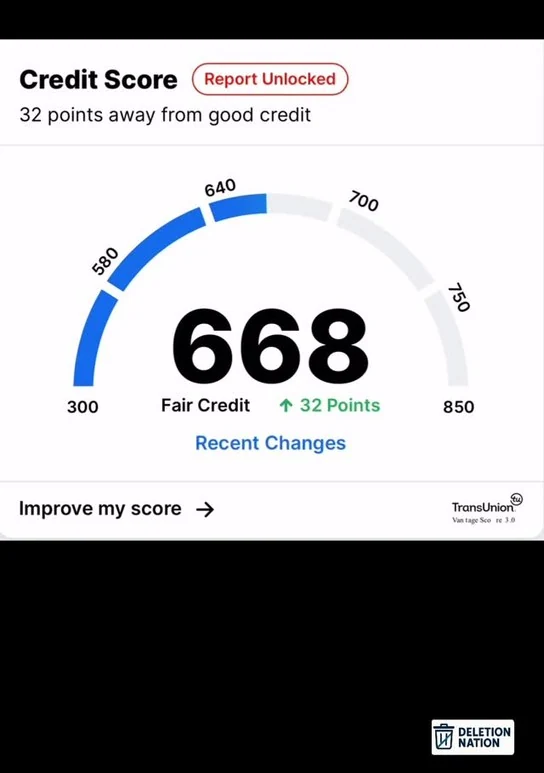
Houston credit repair result: TransUnion credit score of 668, up 32 points

Three clients, 13 deletions, one round

Three TransUnion clients cleared back to back in August 2025. One client had 8 inquiries deleted in a single sweep; another had Apple Card, Comenity, CareCredit, and USAA accounts removed; a third had a Synchrony account deleted. One client rose 32 points overnight, to 668.
See it on Instagram →

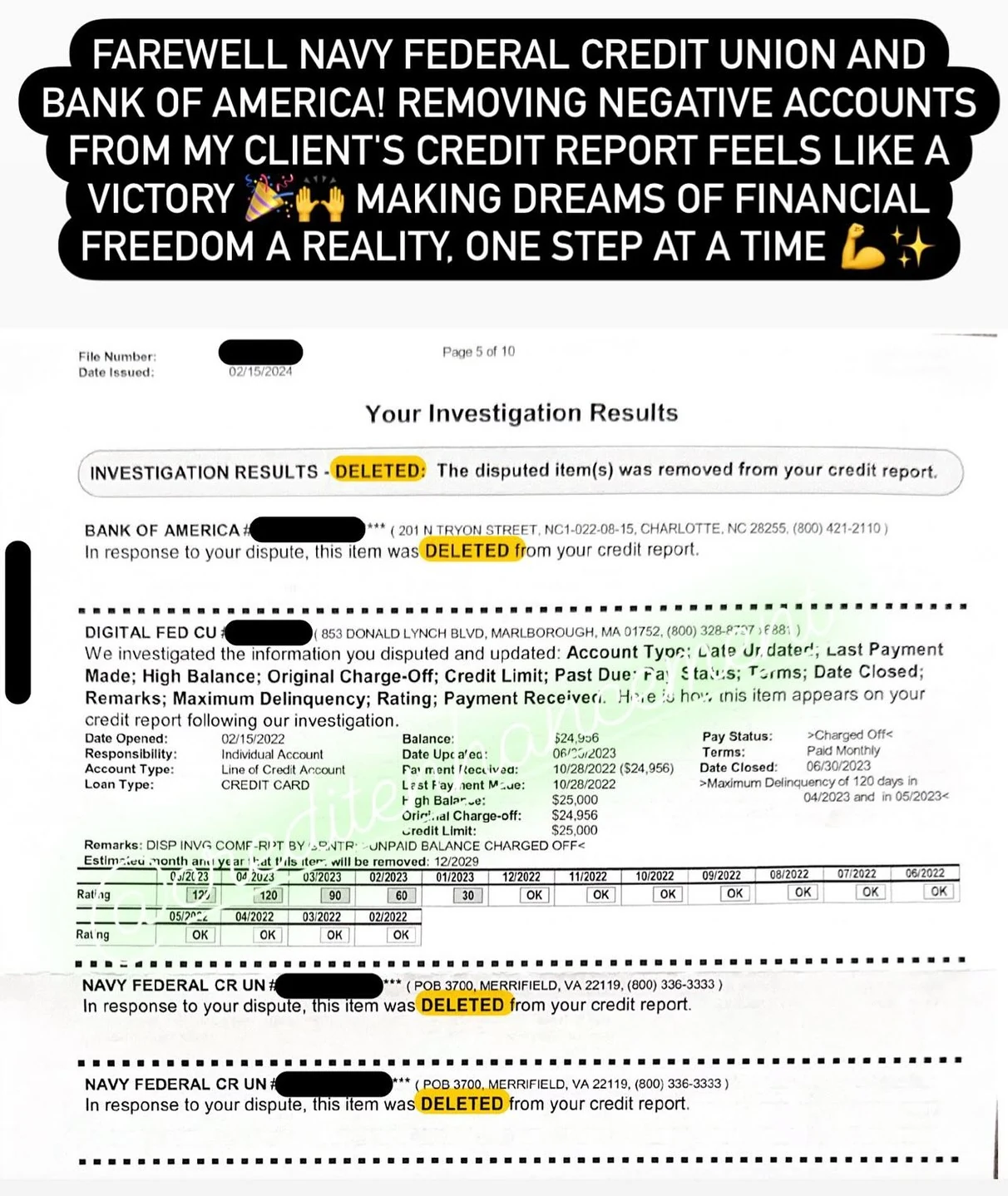
Houston credit repair result: Credit bureau investigation letter showing Bank of America and Navy Federal accounts deleted

Bank of America and Navy Federal, deleted

A February 2024 bureau investigation letter showing a Bank of America account and two Navy Federal accounts deleted from a client's credit report after dispute.
See it on Instagram →

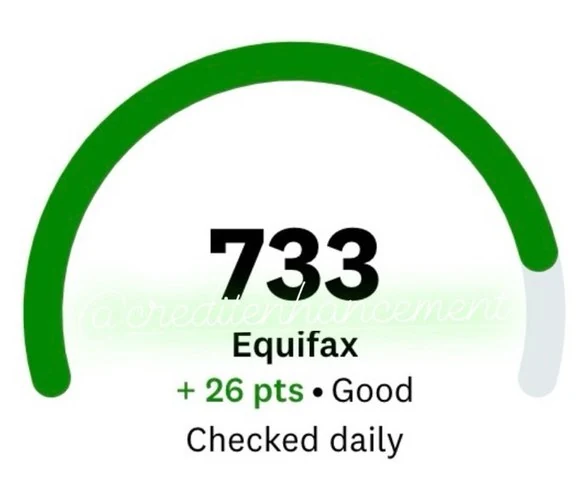
Houston credit repair result: Equifax credit score of 733, up 26 points

Equifax up 26 points

A client reached 733 on Equifax after a 26-point increase, March 2024.

See it on Instagram →

Results vary from person to person and depend on what is in each credit file. Nothing here promises a particular score increase or deletion.

Start With a Dollar Look at Your Own Reports

Before you pay anyone anything, it helps to know what is actually on your file. Read your scores and entries from all three bureaus and see how many items are even worth challenging.

For a dollar, you can read your scores and entries from Equifax, Experian, and TransUnion before you decide what to do about them.

See What's on My Reports

A dollar with MyScoreIQ opens 7 days of access to your scores, then $34.99 a month if you keep it. Cancel anytime.

Houston Credit Repair Is Proud to Serve Texas

What We Walk Through With You

Credit Repair Costs can look different from one report to the next. We help you understand the details and spot accuracy problems.

How Many Items Are Worth Challenging

We review how many entries on your reports actually have inaccurate information.

How Many Rounds Your File May Need

We talk through how dispute rounds work and why most files need more than one.

The Pricing Model

We explain staged pay-after-work pricing and how it compares to monthly billing.

Monitoring Costs

We explain why monitoring stays active during a case and what it covers.

Your Cancellation Rights

We explain the cancellation window and what happens if you decide to stop.

Why Talk Through Credit Repair Costs With Us?

Start With the Facts

A Credit Repair Costs entry feels personal, but on a report it is just data — dates, amounts, and a status. We help you read it as data first.

One Entry, Three Reports

The same account can look different on each bureau. We help you check all three before you act on any one of them.

A Plan You Can Follow

We explain dispute options, what records to keep, and practical habits that help you stay current going forward.

How We Help With Credit Repair Costs

Go Over Your Reports

We talk through what is on your file and how much of it is worth challenging.

Explain the Pricing

We lay out the full price in writing — audit, rounds, and monitoring — before you decide.

Answer Your Questions

We answer questions about timing, rounds, and what happens at each step.

Talk About Next Steps

We explain your options, including doing the disputes yourself.

Questions About Credit Repair Costs

How much does credit repair usually cost?

It varies widely by file and by pricing model — monthly billing, per-round pricing, and pay-after-work pricing all exist. The total depends on how many items are worth challenging and how many rounds the file needs.

Can a company charge me before doing any work?

Federal law limits advance fees for credit repair services. A company should explain its pricing in stages and put it in writing before you sign.

Is there a setup fee?

Some companies charge one, some do not. Ask whether a setup fee exists, what it covers, and when it is due.

Do I have to keep paying for monitoring?

Dispute work depends on current reports, so monitoring usually stays active during a case. Ask whether monitoring is included in the price or separate.

What if I cancel?

You have a cancellation window under the law, and a company should explain it in writing before you sign. Ask how cancellation works and what, if anything, is owed.

Is it cheaper to dispute errors myself?

Yes — the dispute process is available to you directly, and the bureaus must investigate a dispute you file yourself. Hiring help pays for the review, the letters, and the follow-up, not for access to a process you cannot use alone.

Wondering What Your File Would Cost to Work On?

Start with a look at your own reports — then we can talk about what the work would actually involve. Call (346) 301-6424.

Call (346) 301-6424

Our Services in Houston, Texas