Disputing With Equifax

How to Dispute an Error With Equifax in Houston, Texas

Equifax Has Its Own Process — Here's How to Use It

Equifax is one of the three major credit bureaus, and if an error shows on your Equifax report — a wrong balance, an account that isn't yours, a late payment you never missed — you dispute it with Equifax directly. This guide walks through Equifax's online, phone, and mail options, what to send, and what to expect.

Before You Dispute With Equifax

Start by pulling your Equifax report and reading it closely. The official site for all three bureaus is annualcreditreport.com, and Equifax also offers its own report and dispute center online. Read every entry: the creditor, the balance, the dates, the status, and the payment history. Write down each error with the exact details — the account name, the account number as shown, what is wrong, and what the correct value should be.

Check your other two reports as well. An error often appears on only one bureau, and if the same error shows on Experian or TransUnion too, you will need to dispute it with each bureau separately. A correction at Equifax does not automatically carry to the other two.

Gather your proof before you file. Bank statements, payment confirmations, payoff letters, account closure letters, or a police report and identity theft affidavit if the account is not yours — whatever proves the correction you are asking for. A dispute with documents attached is far stronger than a dispute that only says an entry is wrong.

Three Ways to Dispute With Equifax

Online — the fastest option. Equifax's online dispute center lets you file a dispute, upload supporting documents, and track the investigation. You will need to create an account and verify your identity. Online disputes are usually the quickest to file and the easiest to track, and the results arrive online as well as by mail. For a clear-cut error with strong documents, online is the best choice.

By phone. Equifax's dispute phone line lets you file a dispute with a representative. Phone disputes are useful when the online system will not accept your dispute or when you need to explain something complicated. Write down the confirmation number and the name of the representative, and follow up in writing with your documents — a phone dispute without documents is weaker than one with them.

By mail — the strongest paper trail. Send your dispute to Equifax, P.O. Box 740256, Atlanta, GA 30374. Your letter should identify you (name, address, date of birth, and the last four of your Social Security number), identify the account and the specific error, explain what should be corrected, and include copies — never originals — of your supporting documents. Send it by certified mail and keep the delivery confirmation. Mail takes longer, but it creates a paper trail that is hard to argue with.

Whichever method you choose, Equifax generally has 30 days to investigate once it receives your dispute. It contacts the creditor, reviews what comes back, and sends you the results in writing, along with an updated report if anything changed.

If Equifax Says the Information Is Verified

A “verified” result means the creditor confirmed the information as reported, and Equifax is keeping the entry. That is not necessarily the end of the road. First, read the result notice carefully — it should tell you how the information was verified and give you the creditor's contact details. Then consider your next move: dispute again with stronger or different documentation, dispute directly with the creditor (the furnisher) with the same evidence, or add a brief statement of dispute to your Equifax file explaining your side in a few sentences.

Direct disputes with the creditor are worth trying when the bureau route stalls, because the creditor sees your evidence directly instead of through the bureau's summary. Send the creditor a letter naming the account and the error, attach your proof, and ask it to correct the information it reports to all three bureaus. A creditor that corrects the information must update every bureau it reports to.

Keep every letter, confirmation number, and result notice in one folder. If the same error comes back on a later report, that folder is what lets you re-dispute quickly — and it is the record you would need if the error ever has to be taken further.

When you dispute by mail, send it to the bureau that shows the item. The mailing addresses are: Experian, P.O. Box 4500, Allen, TX 75013; Equifax, P.O. Box 740256, Atlanta, GA 30374; and TransUnion, P.O. Box 2000, Chester, PA 19016. Bureaus generally have 30 days to investigate a dispute once they receive it. Send disputes by certified mail and keep a copy of everything you send, along with the delivery confirmation.

Related Guides and Services

If this guide helped, these pages go deeper on the topics that usually come up next.

A First Look at Real Results

These are actual results from past clients, previously shared on Instagram. Every credit file is different, so treat these as examples of what the process can look like, not as a promise of what yours will do.
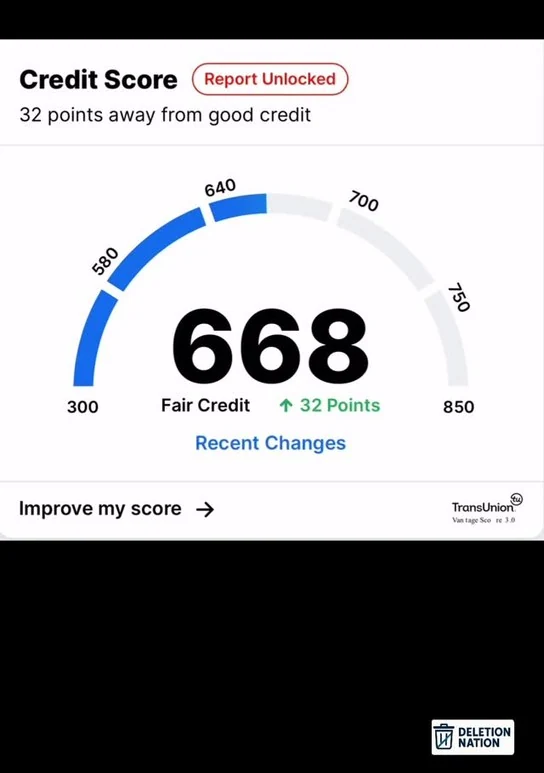
Houston credit repair result: TransUnion credit score of 668, up 32 points

Three clients, 13 deletions, one round

Three TransUnion clients cleared back to back in August 2025. One client had 8 inquiries deleted in a single sweep; another had Apple Card, Comenity, CareCredit, and USAA accounts removed; a third had a Synchrony account deleted. One client rose 32 points overnight, to 668.
See it on Instagram →

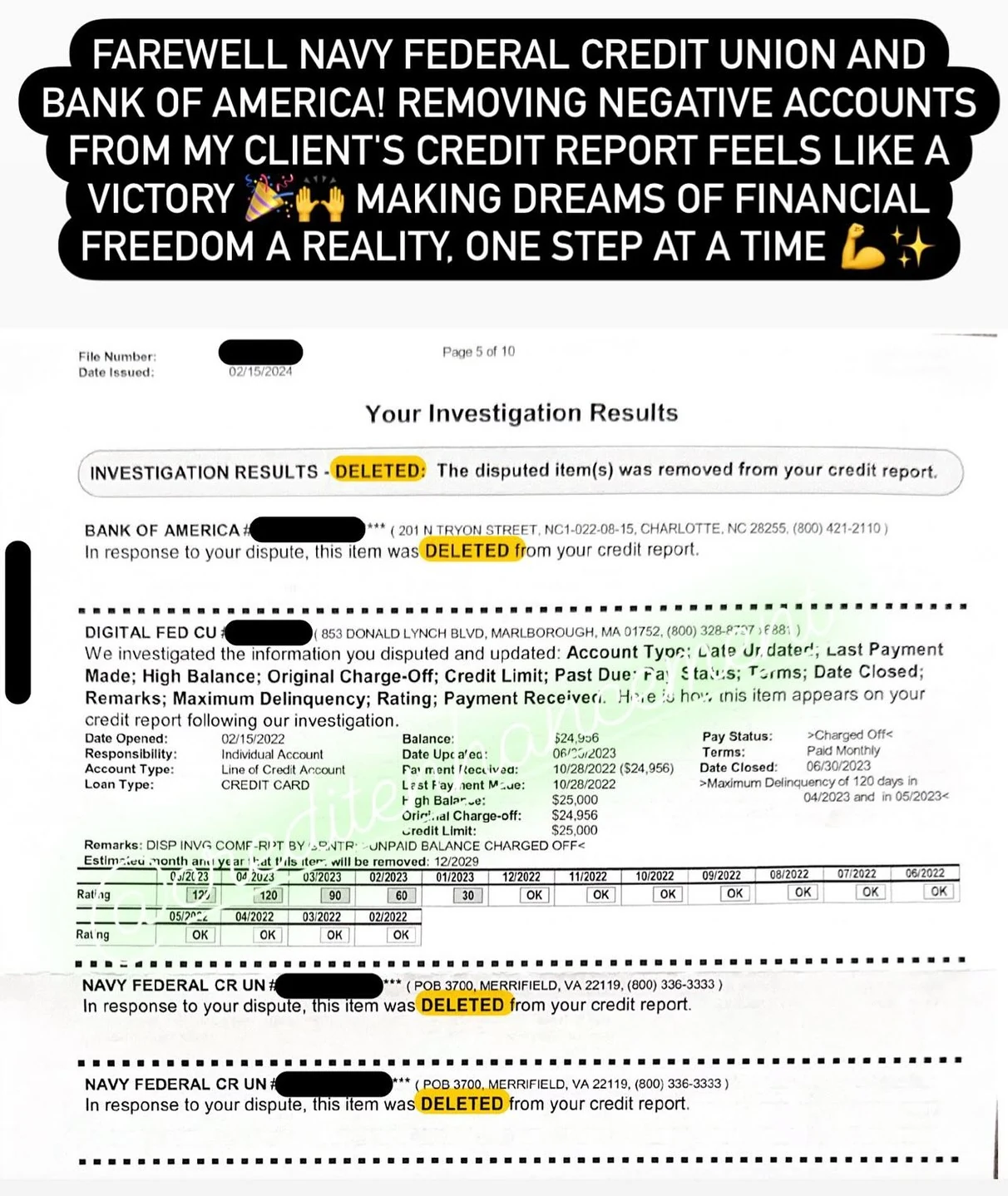
Houston credit repair result: Credit bureau investigation letter showing Bank of America and Navy Federal accounts deleted

Bank of America and Navy Federal, deleted

A February 2024 bureau investigation letter showing a Bank of America account and two Navy Federal accounts deleted from a client's credit report after dispute.
See it on Instagram →

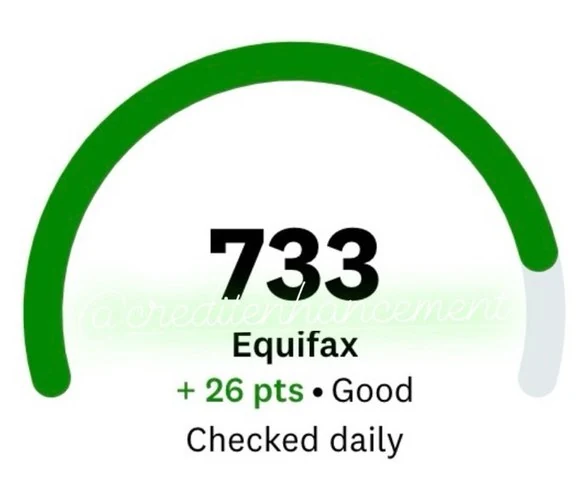
Houston credit repair result: Equifax credit score of 733, up 26 points

Equifax up 26 points

A client reached 733 on Equifax after a 26-point increase, March 2024.

See it on Instagram →

Results vary from person to person and depend on what is in each credit file. Nothing here promises a particular score increase or deletion.

See What Equifax Is Showing for a Dollar

You can't dispute what you haven't read. Check your Equifax entries side by side with the other two bureaus first — the error may only be on one of them.

For a dollar, you can read your scores and entries from Equifax, Experian, and TransUnion before you decide what to do about them.

See What's on My Reports

A dollar with MyScoreIQ opens 7 days of access to your scores, then $34.99 a month if you keep it. Cancel anytime.

Houston Credit Repair Is Proud to Serve Texas

What We Walk Through With You

Disputing With Equifax can look different from one report to the next. We help you understand the details and spot accuracy problems.

The Error on Your Equifax Report

We review exactly what is wrong on Equifax — the account, the field, and how it differs from your records.

Online, Phone, or Mail

We help you choose the dispute method that fits your error and your documents.

Your Supporting Documents

We talk through which records prove the correction you are asking for.

The 30-Day Investigation

We explain what happens after you file and what the results mean.

If It Comes Back Verified

We talk through re-disputing, going to the creditor directly, and adding a statement of dispute.

Why Talk Through Disputing With Equifax With Us?

Start With the Facts

A Disputing With Equifax entry feels personal, but on a report it is just data — dates, amounts, and a status. We help you read it as data first.

One Entry, Three Reports

The same account can look different on each bureau. We help you check all three before you act on any one of them.

A Plan You Can Follow

We explain dispute options, what records to keep, and practical habits that help you stay current going forward.

How We Help With Disputing With Equifax

Review Your Equifax Report

We talk through the entries showing on your Equifax report.

Identify the Specific Error

We help you name the exact field and the correct value for each dispute.

Prepare Your Dispute

We talk through what to send Equifax and how to send it.

Track the Investigation

We explain the 30-day window and what to do with the results when they arrive.

Questions About Disputing With Equifax

How do I dispute an error with Equifax?

Online through Equifax's dispute center, by phone, or by mail to Equifax, P.O. Box 740256, Atlanta, GA 30374. Include your identification, the account and the specific error, and copies of your supporting documents.

How long does an Equifax dispute take?

Equifax generally has 30 days to investigate a dispute once it receives it, and it sends the results in writing.

Do I need to dispute with all three bureaus?

Only with the bureaus that show the error. Check all three reports first, because an error often appears on just one or two.

What if Equifax says the information is verified?

You can dispute again with stronger documentation, dispute directly with the creditor, or add a brief statement of dispute to your file.

Is it better to dispute online or by mail?

Online is faster and easier to track. Mail creates a stronger paper trail. For a clear-cut error with good documents, either works.

What should I include in a dispute letter to Equifax?

Your name, address, date of birth, and the last four of your Social Security number; the account name and number; the specific error and the correct value; and copies — never originals — of your proof.

Found an Error on Your Equifax Report?

Don't let it sit there. Let's go through what Equifax is showing and talk about the dispute that fits. Call (346) 301-6424.

Call (346) 301-6424

Our Services in Houston, Texas