Medical Collections
A Hospital Bill Shouldn't Haunt Your Credit for Years
Houston has some of the largest hospitals in the country, and a single ER visit — at the Medical Center, a Memorial Hermann, a Methodist — can turn into a bill that goes to collections before you ever understood what you owed. Medical collections have their own rules, and some of them work in your favor. This guide explains them.
Medical collections are treated differently from other collections, and the differences matter. The three major bureaus do not report medical collections under $500, and paid medical collections are removed from credit reports rather than left to age out. There is also a waiting period: a medical debt generally does not appear on a credit report until it has been in collections for a year, giving you time to sort out insurance and billing before the account can hurt your file.
Those rules make medical collections one of the most fixable items on a report. If a medical collection under $500 is showing, it should not be there. If a medical collection you already paid is still showing, it should be removed. And if a bill went to collections while your insurance claim was still being processed, the underlying billing error may be the real problem — not the collection itself.
The first step with any medical collection is not the bureau. It is the provider and the insurer. Hospital billing in Houston is complicated: a single visit can generate separate bills from the hospital, the physician group, the lab, and radiology, and insurance may cover some and not others. Before you dispute or pay a medical collection, ask the provider for an itemized bill and check with your insurer whether the charge was processed, denied, or never submitted. A surprising number of medical collections trace back to a claim that was never filed or a coding error on the bill.
Step 1 — Read the entry on all three reports. Note the collector, the original provider, the balance, and the date. A medical collection under $500 should not be reported at all, and a paid medical collection should have been removed — both are worth disputing on those grounds alone.
Step 2 — Ask the provider for an itemized bill. Call the hospital or clinic's billing department and ask for a line-by-line statement. Check it against your insurance explanation of benefits. Look for duplicate charges, services you did not receive, and charges your insurance should have covered.
Step 3 — Contact your insurer. If a claim was denied or never processed, ask why and whether it can be reprocessed. A corrected claim can wipe out the balance entirely — and when the balance goes away, the collection has nothing to stand on.
Step 4 — Dispute what is inaccurate or unreportable. Dispute with the bureau that shows the entry and with the collector. A medical collection under $500, a paid medical collection still showing, a balance that does not match the itemized bill, or a debt that is not yours are all strong disputes. Bureaus generally have 30 days to investigate.
Step 5 — If you owe it, settle it and confirm removal. If the balance is real and accurate, paying it should lead to removal, because paid medical collections are removed from reports. Get the agreement in writing before you pay, keep the receipt, and check your reports 30 to 60 days later to confirm the account is gone.
Most large Houston hospitals have financial assistance or charity care programs, and many patients who qualify never apply. If a bill went to collections because you could not pay it, ask the hospital's billing department about financial assistance — including retroactive assistance for a bill that has already gone to collections. Approval can reduce or eliminate the balance, and a reduced balance can change what the collector can report.
Also ask about payment plans directly with the provider before a bill goes to collections. A hospital payment plan that keeps the account with the provider — instead of with a collector — keeps the account off your credit report entirely. Once an account is with a collector, the damage is already done; the best time to deal with a medical bill is before that handoff happens.
When you dispute by mail, send it to the bureau that shows the item. The mailing addresses are: Experian, P.O. Box 4500, Allen, TX 75013; Equifax, P.O. Box 740256, Atlanta, GA 30374; and TransUnion, P.O. Box 2000, Chester, PA 19016. Bureaus generally have 30 days to investigate a dispute once they receive it. Send disputes by certified mail and keep a copy of everything you send, along with the delivery confirmation.
If this guide helped, these pages go deeper on the topics that usually come up next.
These are actual results from past clients, previously shared on Instagram. Every credit file is different, so treat these as examples of what the process can look like, not as a promise of what yours will do.

Three TransUnion clients cleared back to back in August 2025. One client had 8 inquiries deleted in a single sweep; another had Apple Card, Comenity, CareCredit, and USAA accounts removed; a third had a Synchrony account deleted. One client rose 32 points overnight, to 668.
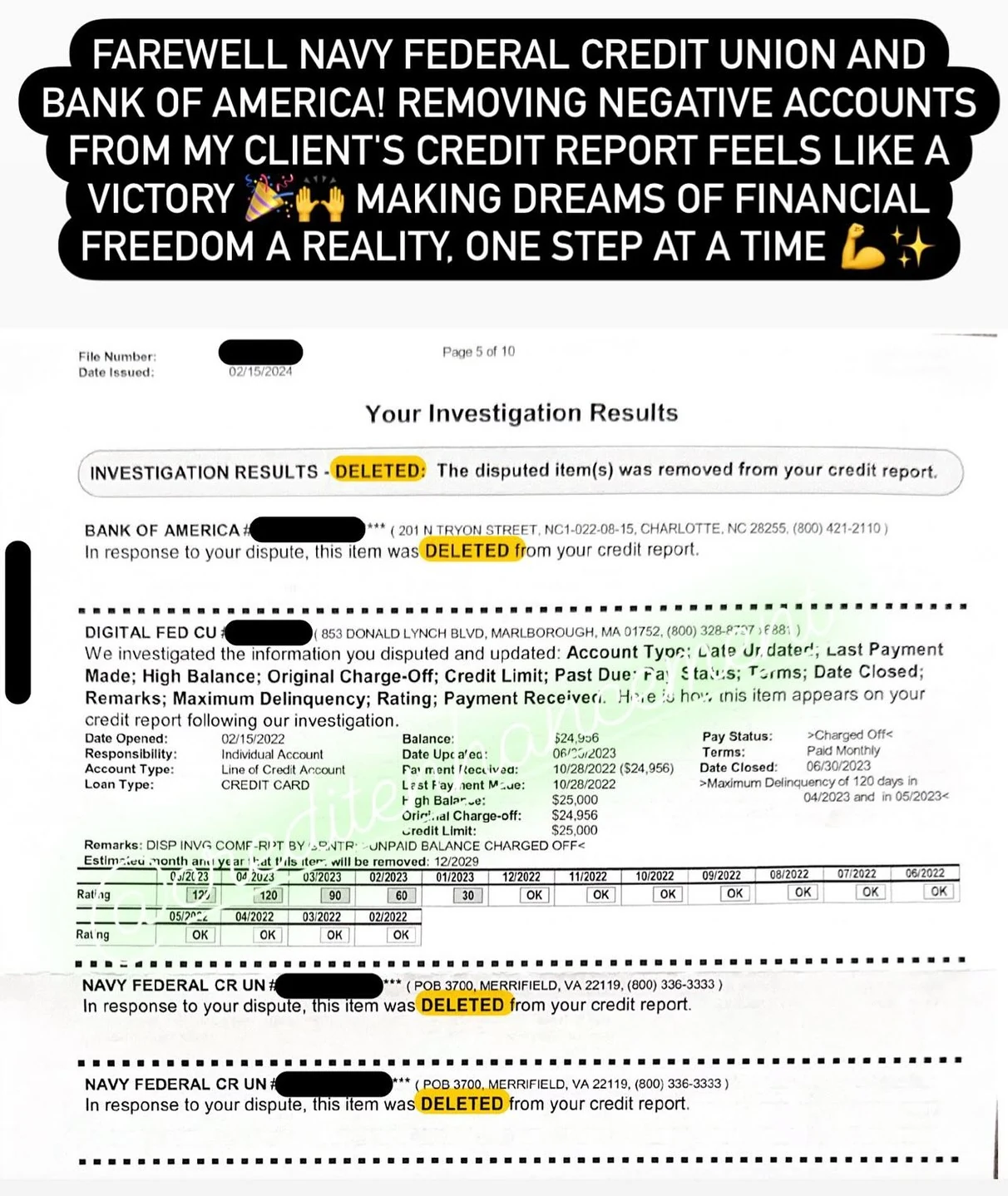
A February 2024 bureau investigation letter showing a Bank of America account and two Navy Federal accounts deleted from a client's credit report after dispute.
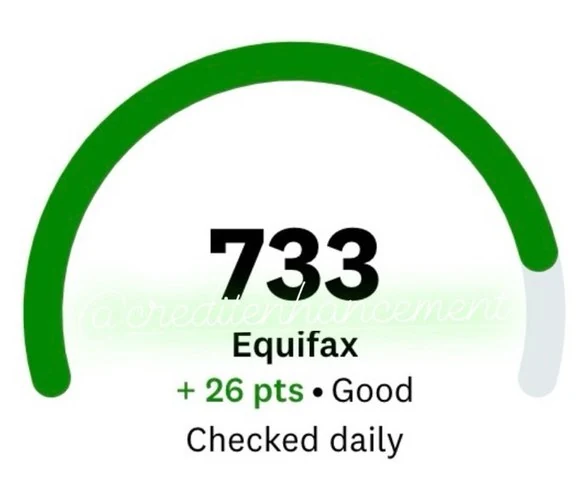
A client reached 733 on Equifax after a 26-point increase, March 2024.
Results vary from person to person and depend on what is in each credit file. Nothing here promises a particular score increase or deletion.
You can't challenge what you can't see. Read every medical collection entry — the collector, the balance, the provider — across all three bureaus before you contact anyone.
For a dollar, you can read your scores and entries from Equifax, Experian, and TransUnion before you decide what to do about them.
A dollar with MyScoreIQ opens 7 days of access to your scores, then $34.99 a month if you keep it. Cancel anytime.
Medical Collections can look different from one report to the next. We help you understand the details and spot accuracy problems.
We review who is reporting the collection and which hospital or clinic the bill came from.
We help you compare the reported balance with the itemized bill and your insurance explanation of benefits.
We check whether a medical collection that should not be reported is still showing.
We help you spot balances, providers, or accounts that do not match reality.
We explain what a written agreement should say before you pay a medical collection.
A Medical Collections entry feels personal, but on a report it is just data — dates, amounts, and a status. We help you read it as data first.
The same account can look different on each bureau. We help you check all three before you act on any one of them.
We explain dispute options, what records to keep, and practical habits that help you stay current going forward.
We talk through the medical collection accounts showing on your credit reports.
We help you understand what to ask the provider and the insurer before you dispute or pay.
We help you identify information that appears inaccurate or that should not be reported.
We explain dispute, settlement, and financial assistance options in plain language.
A medical collection generally stays for about seven years from the date of first delinquency — but paid medical collections are removed, and medical collections under $500 are not reported.
Paid medical collections are removed from credit reports. Get the agreement in writing before you pay, and check your reports 30 to 60 days later to confirm it is gone.
Medical collections under $500 are not reported by the three major bureaus. If one is showing, dispute it with the bureau that lists it.
No. Check the itemized bill and your insurance explanation of benefits first — a claim that was never filed or wrongly denied may wipe out the balance entirely.
Many Houston hospitals have financial assistance programs, and some can apply assistance retroactively. Ask the billing department before you settle with the collector.
A medical debt generally does not appear on a credit report until it has been in collections for about a year, which gives you time to sort out insurance and billing first.
A medical bill deserves a close look at the billing trail before you pay a dollar toward it. Let's go through what the bureaus are showing and talk about your options. Call (346) 301-6424.