How Credit Repair Works
Credit repair is the work of finding errors on your reports and challenging them. You can do it yourself, or a company can do it for you. Here is how it actually works.
Credit repair is the process of finding information on your credit reports that is inaccurate, unverifiable, or past its reporting time, and challenging it through the dispute process. That is the whole job. There is no secret method and no shortcut. The work is reading reports, writing disputes, tracking responses, and following up.
You can do this work yourself. You have the right to dispute errors with the bureaus at no cost to you beyond your time and postage, and the bureaus must investigate. A credit repair company does the same work for you, for a fee. The question is not whether the work is real. It is whether you want to do it yourself or hire someone to do it.
The honest limit of credit repair is that it only works on information that should not be there. Accurate, verified negative items stay on your reports for their full reporting period, no matter who disputes them or how many times. Any company that promises to remove accurate items is promising something it cannot deliver.
The law sets the rules for companies that do this work. The Credit Repair Organizations Act says a company cannot charge you before it performs work, must give you a written contract, and must give you three business days to cancel. A company that follows those rules is doing legitimate work. A company that asks for payment upfront, or that promises results it cannot guarantee, is not.
If this guide helped, these pages go deeper on the topics that usually come up next.
These are actual results from past clients, previously shared on Instagram. Every credit file is different, so treat these as examples of what the process can look like, not as a promise of what yours will do.

Three TransUnion clients cleared back to back in August 2025. One client had 8 inquiries deleted in a single sweep; another had Apple Card, Comenity, CareCredit, and USAA accounts removed; a third had a Synchrony account deleted. One client rose 32 points overnight, to 668.
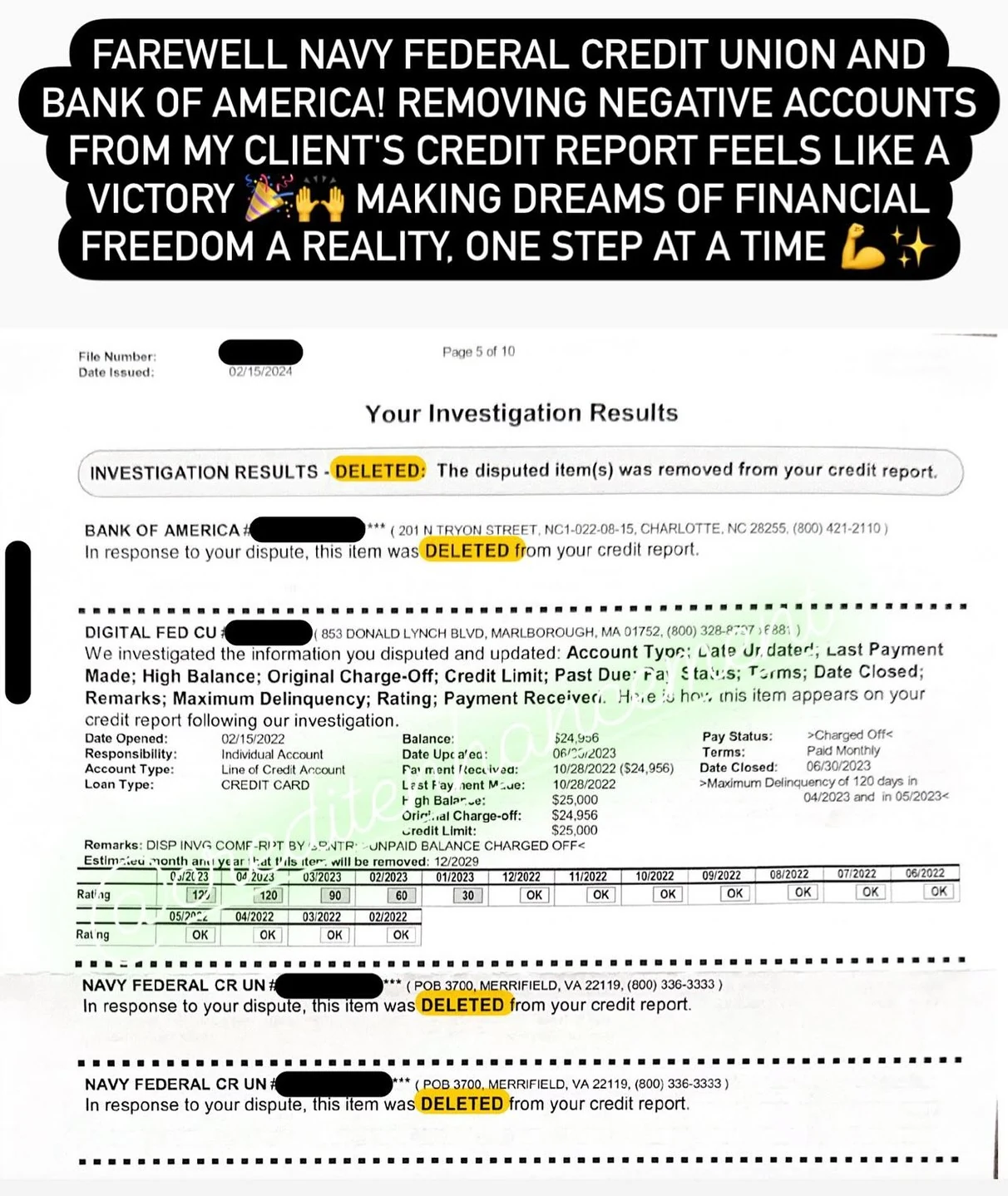
A February 2024 bureau investigation letter showing a Bank of America account and two Navy Federal accounts deleted from a client's credit report after dispute.
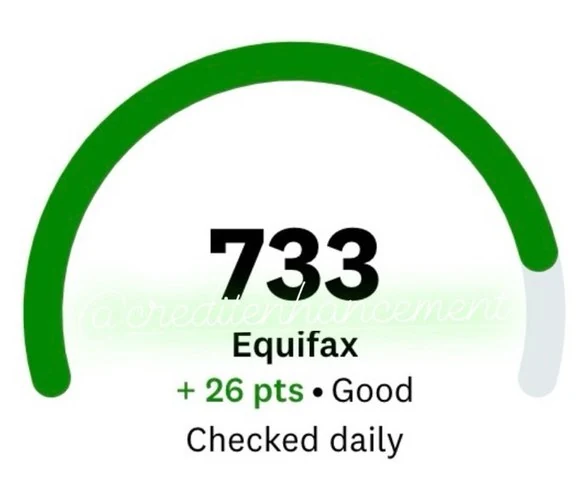
A client reached 733 on Equifax after a 26-point increase, March 2024.
Results vary from person to person and depend on what is in each credit file. Nothing here promises a particular score increase or deletion.
You can't fix what you can't see. Read your scores and entries from all three bureaus side by side and find out what is actually on your reports.
For a dollar, you can read your scores and entries from Equifax, Experian, and TransUnion before you decide what to do about them.
A dollar with MyScoreIQ opens 7 days of access to your scores, then $34.99 a month if you keep it. Cancel anytime.
How Credit Repair Works can look different from one report to the next. We help you understand the details and spot accuracy problems.
The work starts with your reports from Experian, Equifax, and TransUnion. Each bureau keeps its own file, and each one needs to be checked.
Look for accounts that are not yours, balances that are wrong, dates that are wrong, and items that are past their reporting time.
Send a written dispute to the bureau for each error, explaining what is wrong and including copies of any proof. The bureau generally has 30 days to investigate.
The bureau sends your dispute to the company that reported the information, which checks its records and answers. That answer usually decides the outcome.
Some items get corrected or removed. Others come back verified. Verified items can be disputed again with new documentation, or disputed directly with the furnisher.
Once the errors are addressed, the work shifts to building: on-time payments, low balances, and time. A clean file with good habits is what moves a score.
A How Credit Repair Works entry feels personal, but on a report it is just data — dates, amounts, and a status. We help you read it as data first.
The same account can look different on each bureau. We help you check all three before you act on any one of them.
We explain dispute options, what records to keep, and practical habits that help you stay current going forward.
The bureaus must investigate your disputes, and disputing costs you nothing but time and postage. A company is a convenience, not a requirement.
If an item is accurate and verified, it stays. That is the limit of what any company or any letter can do.
Under the Credit Repair Organizations Act, a company cannot charge you before it does work. Ask for the contract in writing.
Each dispute round generally takes about 30 days, and some files need more than one round. There is no overnight version of this work.
Credit repair is the work of finding errors on your credit reports and challenging them through the dispute process. You can do it yourself, or a company can do it for you. The work is the same either way.
Yes. You have the right to dispute errors with the bureaus at no cost to you beyond your time and postage. A company does the work for you.
Each dispute round generally takes about 30 days, and some files need more than one round. It depends on what is on your reports and how the bureaus respond.
No. Accurate, verified information stays on your reports for its full reporting period. Credit repair only addresses information that is inaccurate, unverifiable, or past its reporting time.
Yes. The Fair Credit Reporting Act gives you the right to dispute inaccurate information, and the Credit Repair Organizations Act sets the rules companies must follow.
Let's look at your reports together and find the moves that will actually help — and the ones that won't. Call (346) 301-6424.