Bankruptcies on Your Report

How to Remove a Bankruptcy From Your Credit Report in Houston, Texas

A Bankruptcy Is a Fresh Start — and a Long Entry

A bankruptcy filing is one of the most serious entries a credit report can carry, and in Houston — where a medical bill, a failed business, or a stretch of lost work can push a family to the edge — it is also one of the most common. This guide explains how long a bankruptcy stays, when it can be challenged, and how to rebuild after one.

How Long a Bankruptcy Stays — and Which Kind Matters

A Chapter 7 bankruptcy can stay on a credit report for up to 10 years from the filing date. A Chapter 13 bankruptcy generally stays for up to seven years from the filing date. Those are the maximums; the entry itself is a public record, and the bureaus report it for the full window unless there is an accuracy problem with the entry itself.

Here is the part many people miss: the bankruptcy is only one entry. The individual accounts included in the bankruptcy — the credit cards, the medical bills, the personal loans — each have their own reporting. Those accounts should show a zero balance and a status indicating they were included in or discharged in bankruptcy, and they generally fall off about seven years from the date of first delinquency, which is often sooner than the bankruptcy entry itself. An included account that still shows a balance, or still shows as past due, is an error worth disputing.

That distinction is where most of the useful work happens. The bankruptcy entry itself is rarely removable if it is accurate — it is a court record, and the bureaus report court records. But the accounts around it are frequently wrong, and correcting them can change the file substantially even while the bankruptcy entry remains.

Step by Step: Cleaning Up a Bankruptcy File

Step 1 — Pull all three reports. Get your reports from Equifax, Experian, and TransUnion at annualcreditreport.com, the official site. Find the bankruptcy entry and every account that was included in the filing.

Step 2 — Check the bankruptcy entry itself. The filing date, the chapter, the court, and the discharge date should all be correct. A wrong filing date can extend the reporting window; a Chapter 13 reported as a Chapter 7 can add years. If the entry itself is wrong, dispute it with the bureau.

Step 3 — Audit every included account. Each account included in the bankruptcy should show a zero balance and a discharged or included-in-bankruptcy status. Accounts that still show a balance, still show as past due, or still show a monthly payment are the most common errors in a post-bankruptcy file, and each one is worth disputing with the bureau and the creditor.

Step 4 — Dispute in writing. For each error, name the account, state the correct status, and attach proof — your discharge papers and a list of the accounts included in the filing. Bureaus generally have 30 days to investigate, and they must correct or remove information they cannot verify.

Step 5 — Rebuild deliberately. A bankruptcy does not have to mean a decade without credit. A secured credit card with a small limit, used lightly and paid in full each month, is the standard first step. A credit-builder loan from a Houston-area credit union is another. The goal is a new, clean payment history that grows alongside the aging bankruptcy entry — and over time, that new history carries more and more of the weight.

What Bankruptcy Does Not Do

A bankruptcy does not erase every debt. Student loans, most tax debts, child support, and debts from fraud generally survive a discharge, and those accounts keep their own reporting rules. If one of those accounts is still showing a balance after your bankruptcy, that may be correct — check it against your discharge papers before you dispute it.

A bankruptcy also does not stop a lender from asking about it. Mortgage applications in Texas ask about bankruptcy history directly, and a lender will see the entry even after it falls off a credit report if the application asks for it. That is not a reason to avoid rebuilding — it is a reason to rebuild well, so that when the question comes up, the file behind the answer shows years of on-time payments since the discharge.

Finally, no one can promise to remove an accurate bankruptcy from your report early. Companies that charge a fee to do it are selling a dispute process you can use yourself, aimed at an entry that is a public record. The real work is in the accounts around the bankruptcy — and in the rebuilding that follows.

When you dispute by mail, send it to the bureau that shows the item. The mailing addresses are: Experian, P.O. Box 4500, Allen, TX 75013; Equifax, P.O. Box 740256, Atlanta, GA 30374; and TransUnion, P.O. Box 2000, Chester, PA 19016. Bureaus generally have 30 days to investigate a dispute once they receive it. Send disputes by certified mail and keep a copy of everything you send, along with the delivery confirmation.

Related Guides and Services

If this guide helped, these pages go deeper on the topics that usually come up next.

A First Look at Real Results

These are actual results from past clients, previously shared on Instagram. Every credit file is different, so treat these as examples of what the process can look like, not as a promise of what yours will do.
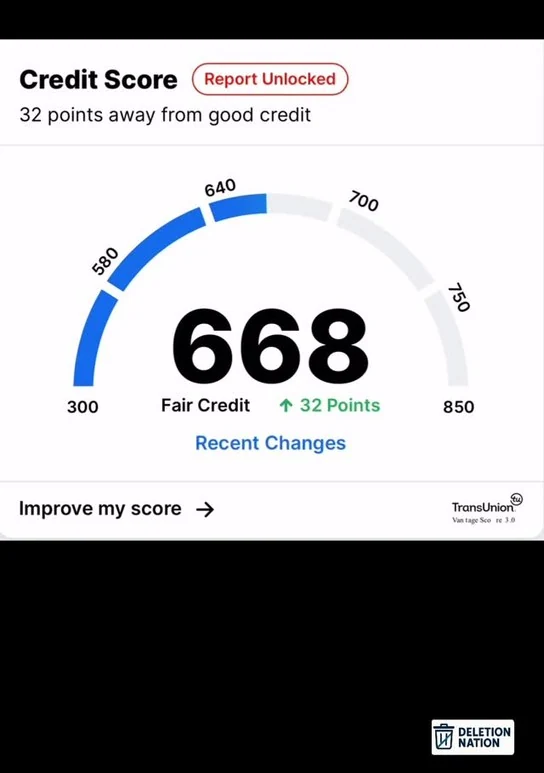
Houston credit repair result: TransUnion credit score of 668, up 32 points

Three clients, 13 deletions, one round

Three TransUnion clients cleared back to back in August 2025. One client had 8 inquiries deleted in a single sweep; another had Apple Card, Comenity, CareCredit, and USAA accounts removed; a third had a Synchrony account deleted. One client rose 32 points overnight, to 668.
See it on Instagram →

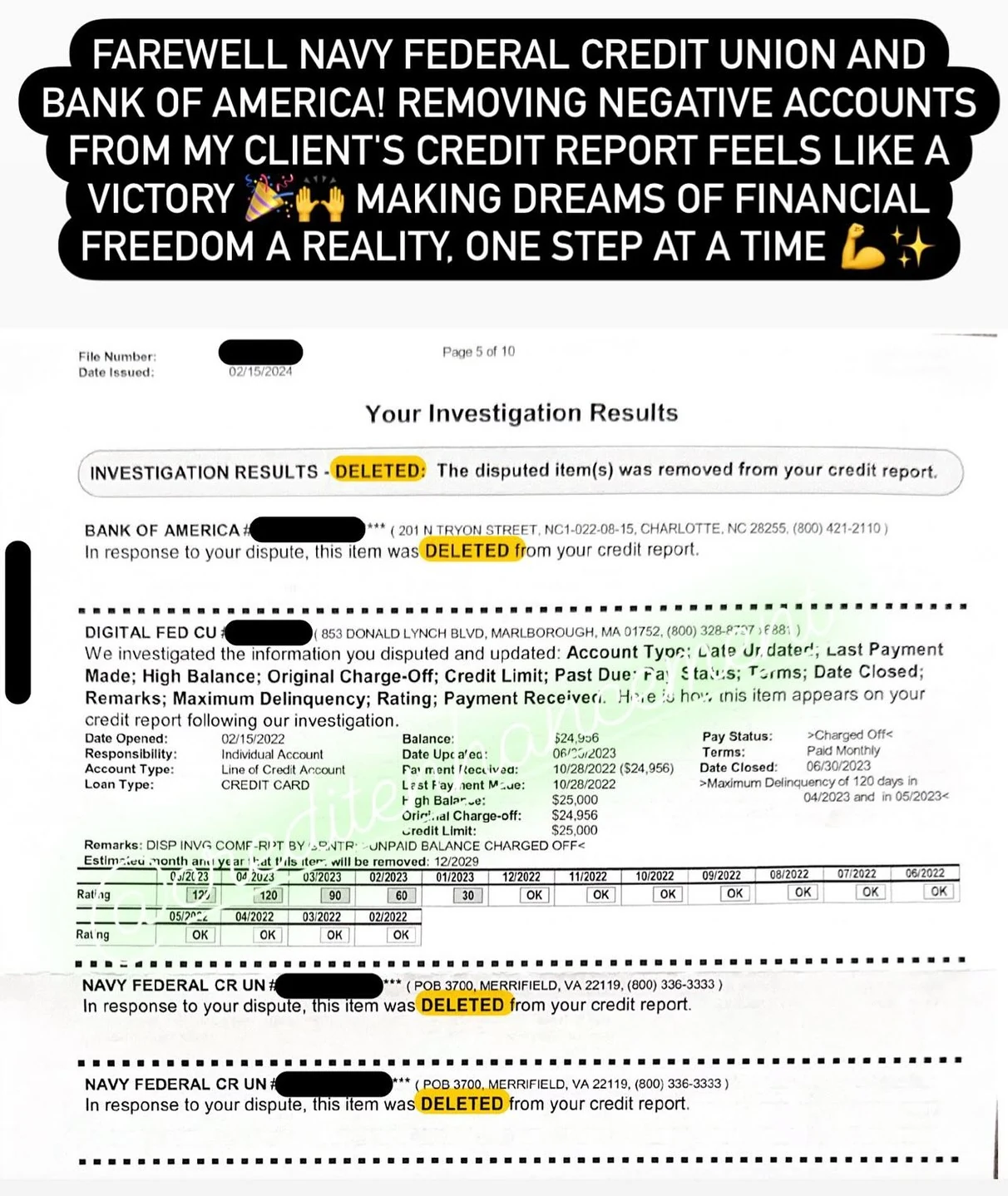
Houston credit repair result: Credit bureau investigation letter showing Bank of America and Navy Federal accounts deleted

Bank of America and Navy Federal, deleted

A February 2024 bureau investigation letter showing a Bank of America account and two Navy Federal accounts deleted from a client's credit report after dispute.
See it on Instagram →

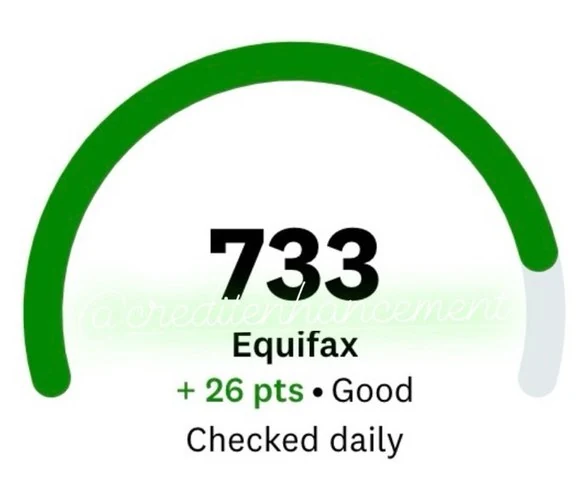
Houston credit repair result: Equifax credit score of 733, up 26 points

Equifax up 26 points

A client reached 733 on Equifax after a 26-point increase, March 2024.

See it on Instagram →

Results vary from person to person and depend on what is in each credit file. Nothing here promises a particular score increase or deletion.

See the Bankruptcy on Your Reports for a Dollar

You can't challenge what you can't see. Read the bankruptcy entry and every account tied to it across all three bureaus before you contact anyone.

For a dollar, you can read your scores and entries from Equifax, Experian, and TransUnion before you decide what to do about them.

See What's on My Reports

A dollar with MyScoreIQ opens 7 days of access to your scores, then $34.99 a month if you keep it. Cancel anytime.

Houston Credit Repair Is Proud to Serve Texas

What We Walk Through With You

Bankruptcies can look different from one report to the next. We help you understand the details and spot accuracy problems.

The Bankruptcy Entry Itself

We review the filing date, the chapter, the court, and the discharge date for accuracy.

Every Included Account

We check each account from the filing for a zero balance and a discharged status.

Accounts That Should Not Be There

We look for accounts that were not part of the filing but are reported as if they were.

Disputes Worth Filing

We help you spot balances and statuses that do not match your discharge papers.

The Rebuilding Plan

We talk through secured cards, credit-builder loans, and the habits that rebuild a file.

Why Talk Through Bankruptcies With Us?

Start With the Facts

A Bankruptcies entry feels personal, but on a report it is just data — dates, amounts, and a status. We help you read it as data first.

One Entry, Three Reports

The same account can look different on each bureau. We help you check all three before you act on any one of them.

A Plan You Can Follow

We explain dispute options, what records to keep, and practical habits that help you stay current going forward.

How We Help With Bankruptcies

Go Over Your Bankruptcy Entries

We talk through the bankruptcy entry and every account tied to it.

Check Balances and Statuses

We help you review whether included accounts show zero balances and discharged statuses.

Spot What May Be Wrong

We help you identify information that appears inaccurate or inconsistent with your discharge.

Talk About Next Steps

We explain dispute options and the practical steps for rebuilding.

Questions About Bankruptcies

How long does a bankruptcy stay on my credit report?

A Chapter 7 bankruptcy can stay for up to 10 years from the filing date. A Chapter 13 generally stays for up to seven years from the filing date.

Can a bankruptcy be removed early?

If the bankruptcy entry itself is accurate, it generally stays for the full window. What can often be corrected are the individual accounts included in the bankruptcy, which should show zero balances and discharged statuses.

Why does an account from my bankruptcy still show a balance?

That is one of the most common post-bankruptcy errors. Accounts included in a bankruptcy should show a zero balance. If one still shows a balance, dispute it with the bureau and the creditor, using your discharge papers as proof.

Does bankruptcy erase student loans?

Usually not. Student loans, most tax debts, child support, and debts from fraud generally survive a discharge and keep their own reporting rules.

Can I rebuild credit after bankruptcy?

Yes. A secured credit card used lightly and paid in full each month, or a credit-builder loan, builds a new on-time payment history that grows in weight as the bankruptcy entry ages.

Will a mortgage lender ask about a bankruptcy after it falls off my report?

Mortgage applications often ask about bankruptcy history directly, so the answer may still matter even after the entry leaves your report. A strong rebuilding history helps when that question comes up.

Ready to Clean Up a Post-Bankruptcy File?

The bankruptcy entry itself may stay, but the accounts around it are often wrong — and fixing them changes the file. Let's go through what the bureaus are showing. Call (346) 301-6424.

Call (346) 301-6424

Our Services in Houston, Texas