Credit Utilization
Credit utilization is how much of your available credit you are using. It is about 30 percent of a FICO score, and it is the fastest-moving factor on your file.
Credit utilization is the percentage of your available credit that you are using. If you have $10,000 in total credit limits and you owe $3,000, your utilization is 30 percent. The lower the number, the better it looks to scoring models. Utilization is about 30 percent of a FICO score, which makes it the second-largest factor after payment history, and it is the fastest-moving one.
The key detail is timing. Your utilization is calculated from the balance your creditor reports, which is usually your statement balance, not what you owe today. Paying a balance down before the statement date is the one legitimate fast lever on a credit score.
Utilization is calculated both per card and across all your cards. A single card maxed out hurts even if your overall utilization looks fine, because scoring models look at both numbers. The cleanest file has low balances on every card, not just a low total.
The other thing to know is that utilization has no memory in most scoring models. A high balance last month does not hurt you once the balance comes down. That is what makes utilization the fastest lever: the improvement shows up as soon as the lower balance is reported, usually within one billing cycle.
If this guide helped, these pages go deeper on the topics that usually come up next.
These are actual results from past clients, previously shared on Instagram. Every credit file is different, so treat these as examples of what the process can look like, not as a promise of what yours will do.
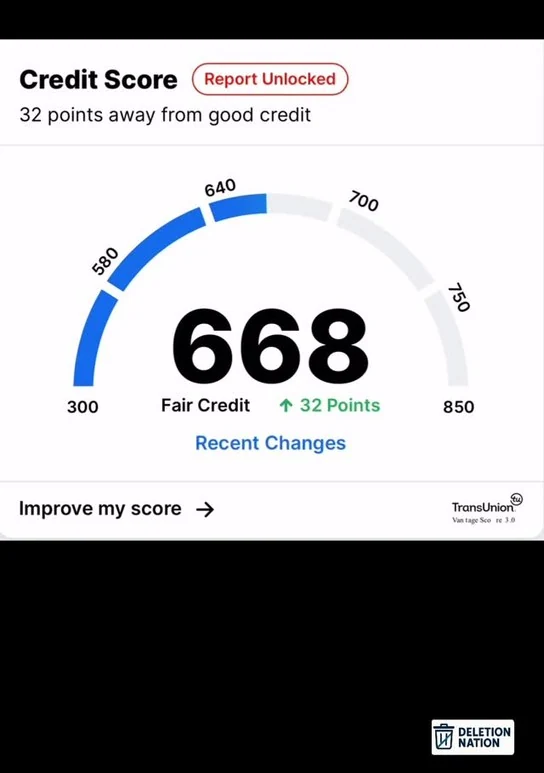
Three TransUnion clients cleared back to back in August 2025. One client had 8 inquiries deleted in a single sweep; another had Apple Card, Comenity, CareCredit, and USAA accounts removed; a third had a Synchrony account deleted. One client rose 32 points overnight, to 668.
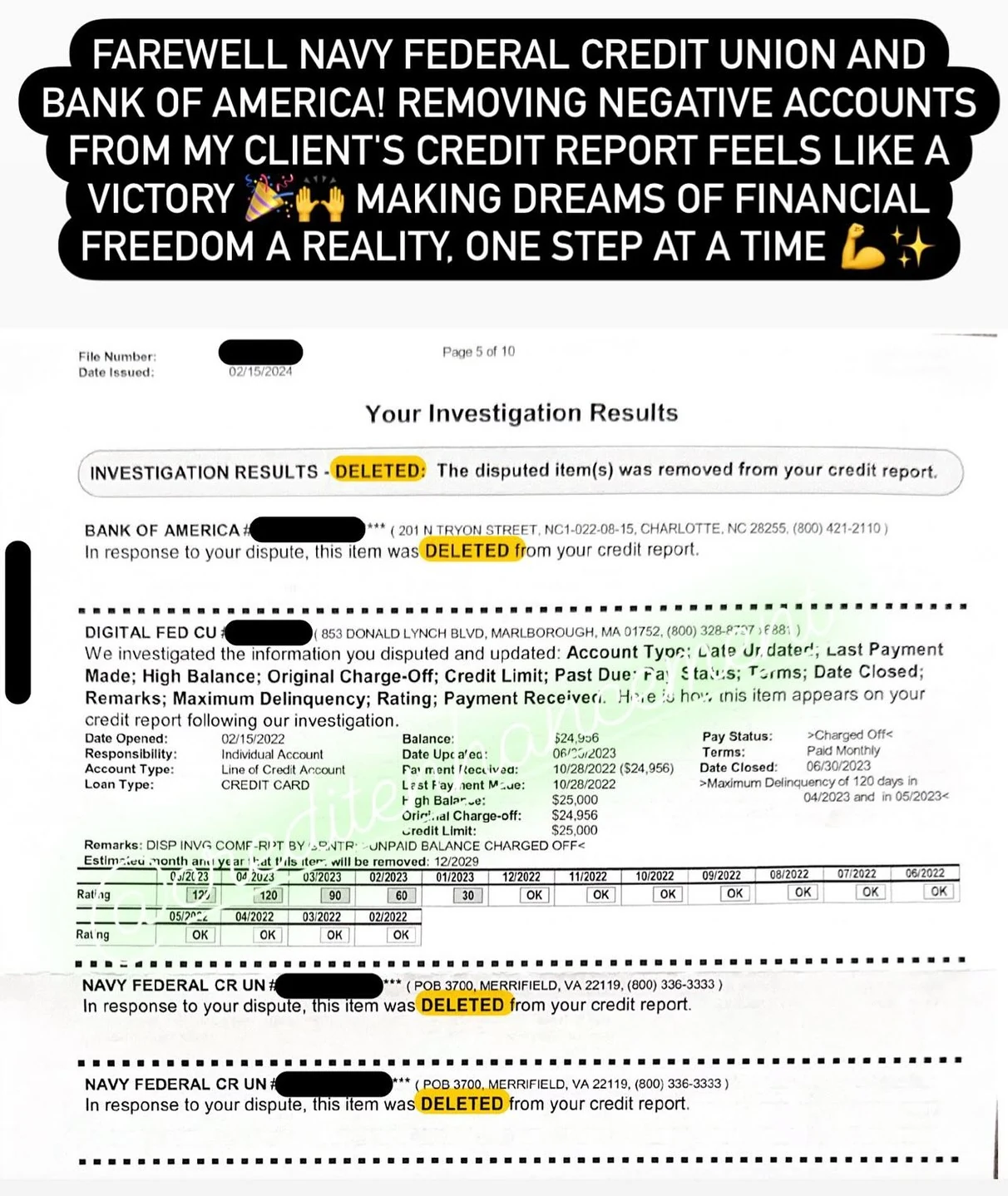
A February 2024 bureau investigation letter showing a Bank of America account and two Navy Federal accounts deleted from a client's credit report after dispute.
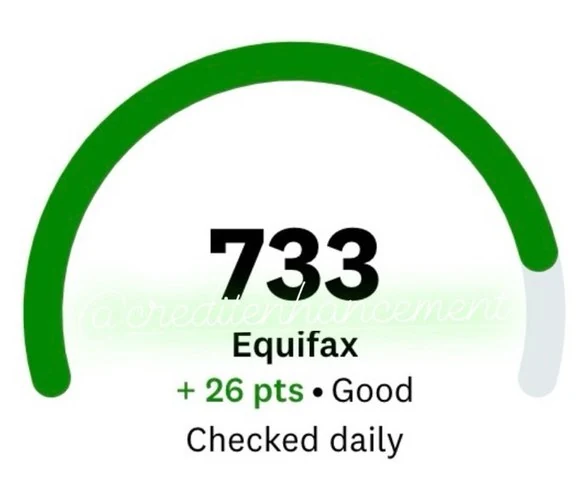
A client reached 733 on Equifax after a 26-point increase, March 2024.
Results vary from person to person and depend on what is in each credit file. Nothing here promises a particular score increase or deletion.
You can't fix what you can't see. Read your scores and entries from all three bureaus side by side and find out what is actually on your reports.
For a dollar, you can read your scores and entries from Equifax, Experian, and TransUnion before you decide what to do about them.
A dollar with MyScoreIQ opens 7 days of access to your scores, then $34.99 a month if you keep it. Cancel anytime.
Credit Utilization can look different from one report to the next. We help you understand the details and spot accuracy problems.
Your creditor reports your statement balance. Paying the balance down before the statement closes lowers the number that gets reported.
Paying down a balance mid-cycle, even a partial payment, keeps the reported balance lower than waiting for the due date.
Below 30 percent utilization is the standard guidance. Below 10 percent is where the best scores live.
Closing a card removes its limit from your total available credit, which raises your utilization even if your balances do not change.
A higher limit lowers your utilization without changing your spending, as long as you do not spend more. Ask only if you can do it without a hard inquiry, or accept the inquiry if the limit matters more.
A Credit Utilization entry feels personal, but on a report it is just data — dates, amounts, and a status. We help you read it as data first.
The same account can look different on each bureau. We help you check all three before you act on any one of them.
We explain dispute options, what records to keep, and practical habits that help you stay current going forward.
Your statement date is when the balance gets reported. Pay before that date, not just before the due date.
Putting everything on one card maxes it out. Spreading purchases keeps each card's utilization lower.
An old card with a zero balance adds its limit to your total available credit, which lowers your overall utilization.
Your utilization changes every month. Checking it when your statements arrive keeps surprises from building up.
Credit utilization is the percentage of your available credit that you are using. If you have $10,000 in total limits and owe $3,000, your utilization is 30 percent.
Utilization is about 30 percent of a FICO score, the second-largest factor after payment history. It is also the fastest-moving factor.
Below 30 percent is the standard guidance. Below 10 percent is where the best scores tend to live.
Yes. Your creditor usually reports your statement balance, so paying before the statement closes lowers the balance that gets reported.
In most scoring models, no. A high balance last month does not hurt you once the balance comes down. The improvement usually shows within one billing cycle.
Let's look at your reports together and find the moves that will actually help — and the ones that won't. Call (346) 301-6424.