Identity Theft

What to Do About Identity Theft on Your Credit Report in Houston, Texas

Accounts You Never Opened Don't Belong on Your Report

A credit card from a store you've never visited, a loan in a city you've never lived in, an address in Houston you've never heard of — identity theft often announces itself on a credit report before it announces itself anywhere else. If you find accounts that aren't yours, act in the right order. This guide lays it out.

How to Tell It's Identity Theft — and How to Tell It Isn't

Not every unfamiliar account is identity theft. A store credit card you opened for a discount and forgot about, a loan servicer that changed names, or a medical bill from a Houston hospital group with an unfamiliar name can all look strange at first. Before you conclude theft, check the details: the account number, the opening date, the address on file, and your own records. An account with your name and address, opened on a date you remember applying for credit, is probably yours.

Identity theft looks different: accounts opened in cities you have never lived in, addresses you have never used, inquiries from lenders you never contacted, or several accounts appearing in a short window. A mixed file — another person's accounts on your report because of a similar name or a data error — can look similar, and the fix is similar too: dispute the accounts as not yours. The difference is that true identity theft also needs the protective steps below, because a thief who opened one account may open another.

Pull your reports from all three bureaus at annualcreditreport.com, the official site, and read them line by line. Write down every account, inquiry, and address you do not recognize. That list is the starting point for everything that follows.

The Right Order: Freeze, Report, Dispute

Step 1 — Freeze your credit. Place a credit freeze with Equifax, Experian, and TransUnion. A freeze blocks new accounts from being opened in your name, and it is the single most effective step you can take. You can place and lift a freeze yourself, and lifting it temporarily when you need to apply for credit takes a few minutes. A fraud alert is a lighter option — it tells lenders to verify your identity before opening an account — but a freeze is stronger, and after identity theft it is the better choice.

Step 2 — File an identity theft report. Go to identitytheft.gov, the federal site, and complete the recovery plan. It produces an identity theft affidavit and a personal recovery plan. Take that affidavit to your local police department — Houston PD or your local department in Katy, Pearland, or wherever you live — and file a police report. The combination of the federal affidavit and the police report is your identity theft report, and it carries weight with creditors and bureaus.

Step 3 — Dispute every fraudulent account. Send a dispute to each bureau that shows a fraudulent account, and to each creditor. Include a copy of your identity theft report, a copy of your government-issued ID, and a letter stating the account is not yours and asking for it to be blocked and removed. Under federal law, a bureau must block fraudulent information once you provide an identity theft report and proper identification. Bureaus generally have 30 days to investigate a dispute, but a block request with an identity theft report is handled on a faster track.

Step 4 — Work the creditor side too. Each creditor with a fraudulent account should close it, stop collection on it, and send you written confirmation. If a fraudulent debt has already gone to collections, send the collector a copy of your identity theft report and a letter stating the debt is not yours. Keep copies of everything.

After the Accounts Are Gone

Once the fraudulent accounts are removed, the work is not quite done. Check your reports again in 30 to 60 days to confirm every fraudulent account is gone from all three bureaus — a removal at one bureau does not always carry to the others. Keep your credit freeze in place, and lift it only when you need to apply for credit, then put it back. Consider a fraud alert as an additional layer, and review your reports regularly for the next year, because identity thieves sometimes return to a file they have already used.

Also check the places beyond the credit bureaus: your bank and card statements for unauthorized charges, your tax records, and your medical bills. Identity theft that reaches a credit report often reaches other places too, and the recovery plan at identitytheft.gov covers those steps as well. If a fraudulent account involved a tax refund or a medical bill, those need their own reports — the IRS and the provider each have their own process.

When you dispute by mail, send it to the bureau that shows the item. The mailing addresses are: Experian, P.O. Box 4500, Allen, TX 75013; Equifax, P.O. Box 740256, Atlanta, GA 30374; and TransUnion, P.O. Box 2000, Chester, PA 19016. Bureaus generally have 30 days to investigate a dispute once they receive it. Send disputes by certified mail and keep a copy of everything you send, along with the delivery confirmation.

Related Guides and Services

If this guide helped, these pages go deeper on the topics that usually come up next.

A First Look at Real Results

These are actual results from past clients, previously shared on Instagram. Every credit file is different, so treat these as examples of what the process can look like, not as a promise of what yours will do.
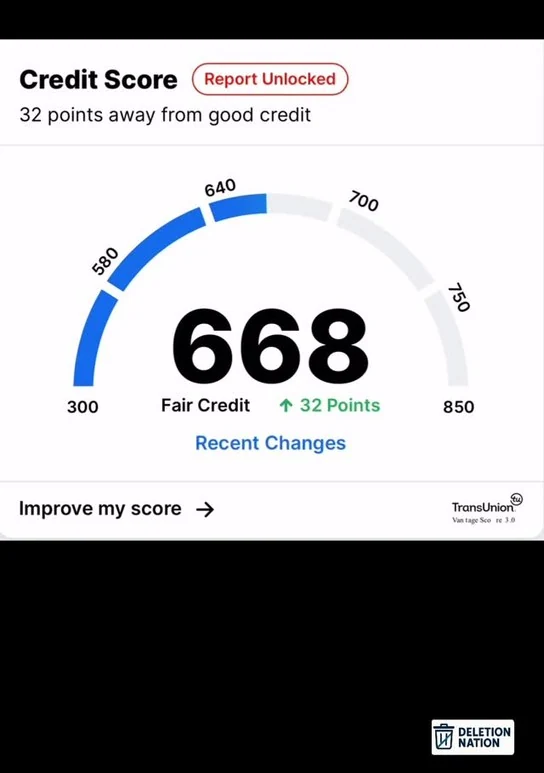
Houston credit repair result: TransUnion credit score of 668, up 32 points

Three clients, 13 deletions, one round

Three TransUnion clients cleared back to back in August 2025. One client had 8 inquiries deleted in a single sweep; another had Apple Card, Comenity, CareCredit, and USAA accounts removed; a third had a Synchrony account deleted. One client rose 32 points overnight, to 668.
See it on Instagram →

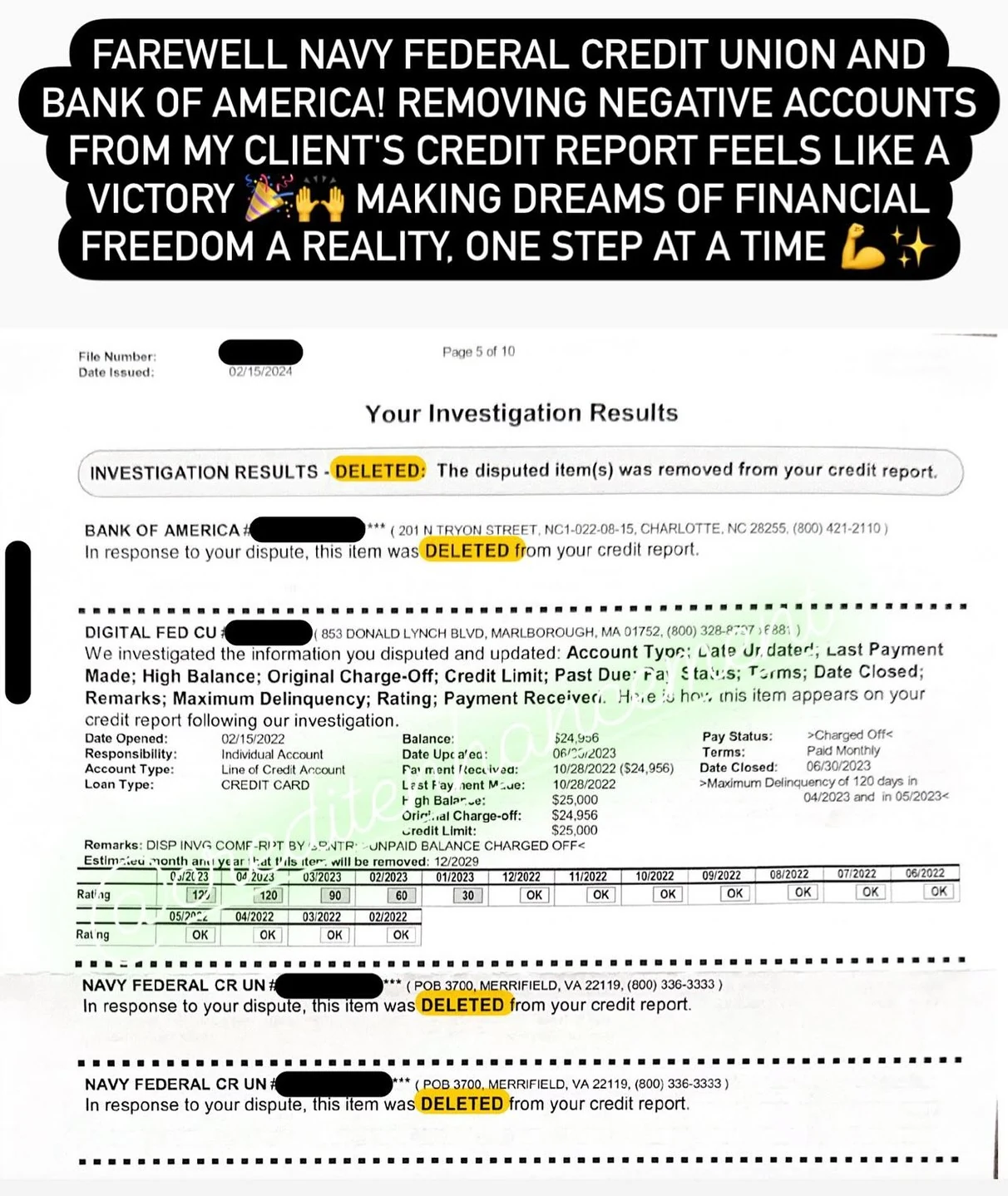
Houston credit repair result: Credit bureau investigation letter showing Bank of America and Navy Federal accounts deleted

Bank of America and Navy Federal, deleted

A February 2024 bureau investigation letter showing a Bank of America account and two Navy Federal accounts deleted from a client's credit report after dispute.
See it on Instagram →

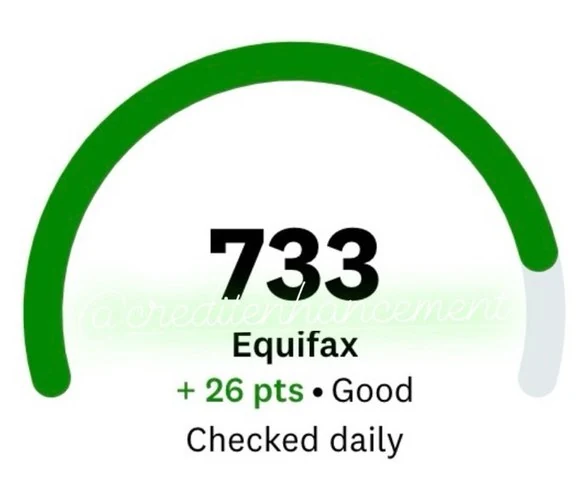
Houston credit repair result: Equifax credit score of 733, up 26 points

Equifax up 26 points

A client reached 733 on Equifax after a 26-point increase, March 2024.

See it on Instagram →

Results vary from person to person and depend on what is in each credit file. Nothing here promises a particular score increase or deletion.

See Every Account on Your Reports for a Dollar

You can't challenge what you can't see. Read every account on all three reports — including ones you don't recognize — before you dispute anything.

For a dollar, you can read your scores and entries from Equifax, Experian, and TransUnion before you decide what to do about them.

See What's on My Reports

A dollar with MyScoreIQ opens 7 days of access to your scores, then $34.99 a month if you keep it. Cancel anytime.

Houston Credit Repair Is Proud to Serve Texas

What We Walk Through With You

Identity Theft can look different from one report to the next. We help you understand the details and spot accuracy problems.

Every Unfamiliar Account

We review each account, inquiry, and address you do not recognize, across all three bureaus.

Theft vs Mixed File

We help you tell a true identity theft problem from a data error that put someone else's account on your file.

Freezes and Fraud Alerts

We explain how a credit freeze works and why it is the strongest first step.

The Identity Theft Report

We talk through the federal affidavit and the police report, and what to send with each dispute.

Follow-Up Checks

We explain how to confirm every fraudulent account is gone from all three bureaus.

Why Talk Through Identity Theft With Us?

Start With the Facts

A Identity Theft entry feels personal, but on a report it is just data — dates, amounts, and a status. We help you read it as data first.

One Entry, Three Reports

The same account can look different on each bureau. We help you check all three before you act on any one of them.

A Plan You Can Follow

We explain dispute options, what records to keep, and practical habits that help you stay current going forward.

How We Help With Identity Theft

Go Over Your Reports for Fraud

We talk through the unfamiliar accounts and inquiries showing on your credit reports.

Set Up Protection

We explain credit freezes and fraud alerts in plain language.

Prepare Your Disputes

We talk through what to send the bureaus and the creditors, and how to send it.

Track the Cleanup

We explain what to check after the disputes, and when to check again.

Questions About Identity Theft

What should I do first if I find identity theft on my credit report?

Freeze your credit with all three bureaus first — that stops new accounts from being opened. Then file an identity theft report and dispute the fraudulent accounts.

How do I file an identity theft report?

Complete the recovery plan at identitytheft.gov, which produces an identity theft affidavit. Take it to your local police department and file a police report. Together they form your identity theft report.

Will the bureaus remove fraudulent accounts?

Yes. Once you provide an identity theft report and proper identification, a bureau must block fraudulent information. Dispute each fraudulent account with the bureau and the creditor.

Should I freeze my credit or place a fraud alert?

A freeze is stronger — it blocks new accounts entirely. A fraud alert tells lenders to verify your identity first. After identity theft, a freeze is the better choice.

How long does it take to remove fraudulent accounts?

Bureaus generally have 30 days to investigate a dispute, and a block request with an identity theft report is handled on a faster track. Check all three reports again in 30 to 60 days.

What if the fraudulent account already went to collections?

Send the collector a copy of your identity theft report and a letter stating the debt is not yours. The collector should stop collection and remove the account.

Found Accounts That Aren't Yours?

Don't let a thief's accounts sit on your file. Freeze first, then dispute — and let's go through what the bureaus are showing together. Call (346) 301-6424.

Call (346) 301-6424

Our Services in Houston, Texas