Credit Cards for Bad Credit
Cards for bad credit come in three kinds: secured, subprime unsecured, and store cards. Here is how they differ and which one is worth having.
If your credit is damaged, you still have card options. They are narrower than the cards available to strong borrowers, and the terms are worse, but the right card can rebuild your file. The wrong card can cost you fees every month and do nothing for your credit.
The three kinds of cards for bad credit are secured cards, unsecured cards built for low scores, and store cards. They work differently, and the best choice depends on whether you can put down a deposit and how much you are willing to pay in fees.
Store cards deserve a warning. They are often easier to get, but they usually carry high interest rates and can only be used at one retailer. A store card can help your file if it reports to the bureaus and you pay it on time, but it is rarely the best rebuilding tool on its own.
The other warning is about cards that charge a fee just to apply, or that ask for money before you get the card. A legitimate card issuer does not charge an application fee. If a card wants money upfront beyond a secured card deposit, walk away.
If this guide helped, these pages go deeper on the topics that usually come up next.
These are actual results from past clients, previously shared on Instagram. Every credit file is different, so treat these as examples of what the process can look like, not as a promise of what yours will do.
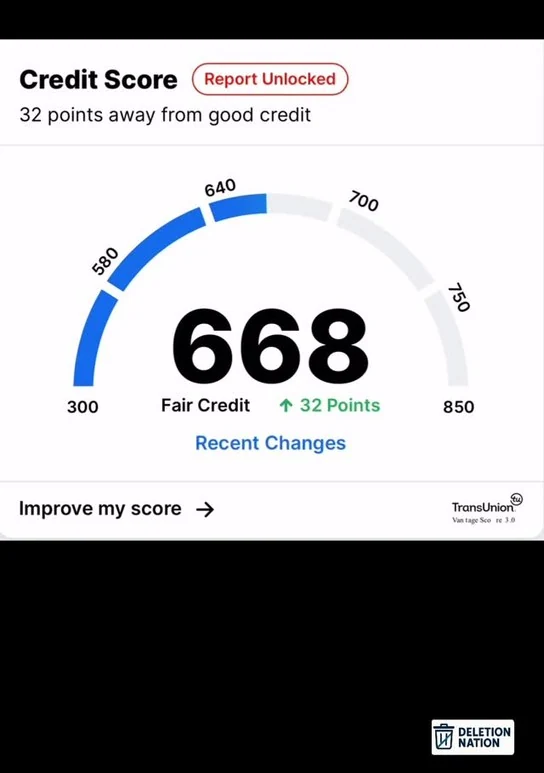
Three TransUnion clients cleared back to back in August 2025. One client had 8 inquiries deleted in a single sweep; another had Apple Card, Comenity, CareCredit, and USAA accounts removed; a third had a Synchrony account deleted. One client rose 32 points overnight, to 668.
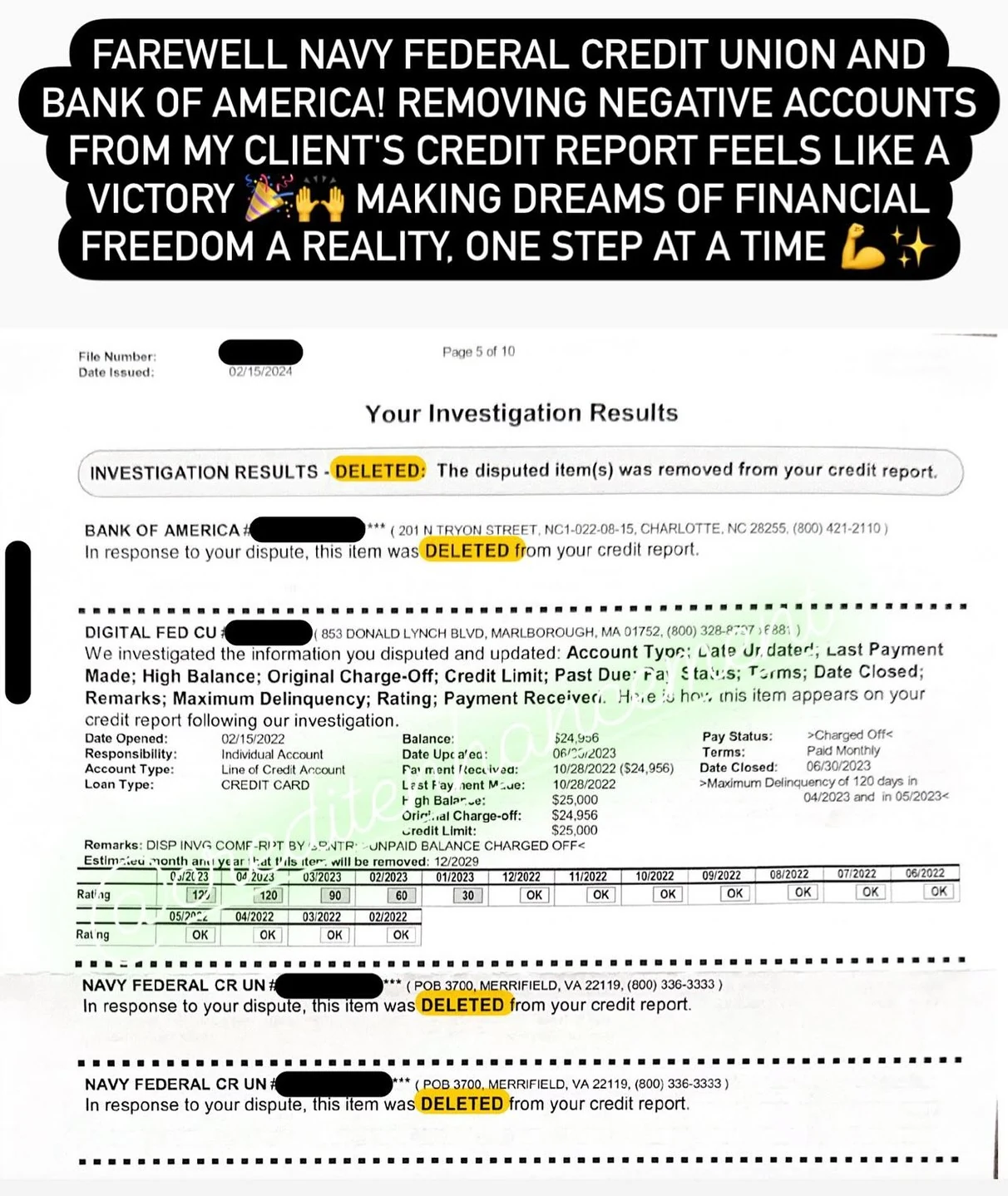
A February 2024 bureau investigation letter showing a Bank of America account and two Navy Federal accounts deleted from a client's credit report after dispute.
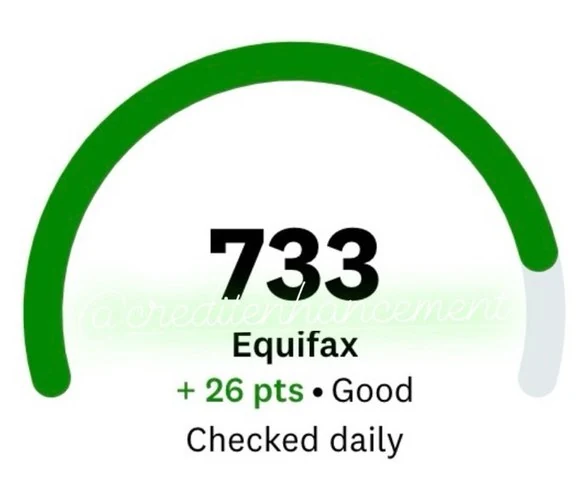
A client reached 733 on Equifax after a 26-point increase, March 2024.
Results vary from person to person and depend on what is in each credit file. Nothing here promises a particular score increase or deletion.
You can't fix what you can't see. Read your scores and entries from all three bureaus side by side and find out what is actually on your reports.
For a dollar, you can read your scores and entries from Equifax, Experian, and TransUnion before you decide what to do about them.
A dollar with MyScoreIQ opens 7 days of access to your scores, then $34.99 a month if you keep it. Cancel anytime.
Credit Cards for Bad Credit can look different from one report to the next. We help you understand the details and spot accuracy problems.
A secured card backed by a deposit is usually the best rebuilding tool. It reports to the bureaus, it has lower fees, and many graduate to unsecured cards.
Unsecured cards for bad credit often charge annual fees, monthly fees, and high interest. Add up the yearly cost before you apply.
Small purchases paid off each month build the same history as large ones, and they keep your utilization low.
On-time payments are the whole point of a rebuilding card. Set up autopay for at least the minimum.
A card that only reports to one bureau only helps one file. Confirm all three before you apply.
A Credit Cards for Bad Credit entry feels personal, but on a report it is just data — dates, amounts, and a status. We help you read it as data first.
The same account can look different on each bureau. We help you check all three before you act on any one of them.
We explain dispute options, what records to keep, and practical habits that help you stay current going forward.
Payments only build your credit if they are reported. Confirm Experian, Equifax, and TransUnion before you apply.
Add up the annual fee, any monthly fees, and the interest rate. A rebuilding card should not cost hundreds a year to hold.
For secured cards, ask whether it upgrades to unsecured and when. A card that never graduates is a dead end.
A very low limit makes it hard to keep utilization down. A secured card with a larger deposit gives you more room.
For most people, a secured card is the best rebuilding tool: low fees, reports to all three bureaus, and a path to an unsecured card. See our guide on secured credit cards.
Yes, but unsecured cards for low scores usually charge higher fees and interest. Read the full fee table before you apply.
They can, if they report to the bureaus and you pay on time. But they usually carry high rates and can only be used at one store.
One or two cards used well are enough. More cards mean more payments to manage and more chances to miss one.
Each application usually adds a hard inquiry, which can lower your score slightly for a short time. Apply for cards you actually plan to use.
Let's look at your reports together and find the moves that will actually help — and the ones that won't. Call (346) 301-6424.