Hard Inquiries

How to Remove Hard Inquiries From Your Credit Report in Houston, Texas

Some Inquiries Belong There — Some Don't

Every time you apply for a credit card, an auto loan, or an apartment in Houston, the lender usually pulls your credit — and that pull shows up as a hard inquiry. A few are normal. A cluster of them can drag a score down. And an inquiry you never authorized is an error worth disputing. Here's how to tell the difference.

What a Hard Inquiry Is — and How Long It Matters

A hard inquiry happens when a lender or other company checks your credit report because you applied for credit or asked for a rate. It shows on your report for about two years, but it only affects most scoring models for about one year, and a single inquiry usually moves a score by only a few points. The damage comes from volume: a dozen inquiries in a short period can look like someone scrambling for credit, and scoring models notice.

There is an important exception for rate shopping. When you apply for a mortgage or an auto loan with several lenders in a short window — generally 14 to 45 days depending on the scoring model — those inquiries are usually counted as one for scoring purposes, because the model understands you are comparing rates on a single loan, not taking out five loans. That is how car shopping on the Gulf Freeway or mortgage shopping across Houston lenders is supposed to work, and it is one reason to do your rate shopping in a concentrated window rather than spread across months.

Soft inquiries — when you check your own credit, when a lender pre-screens you for an offer, when an employer runs a background check — do not affect your score and are not the subject of this guide. If you are not sure which kind you are looking at, our guide on soft versus hard inquiries explains the difference.

Which Hard Inquiries Can Be Removed

The honest answer is: only the ones that should not be there. A hard inquiry from a lender you applied with is accurate, and it stays for about two years. No dispute, no letter, and no company can remove an accurate inquiry early — anyone who promises otherwise is not describing how the system works.

What can be disputed is an inquiry you never authorized. That includes a pull by a lender you never applied with, a duplicate inquiry from the same lender for the same application, and an inquiry tied to an account opened in your name without your knowledge — which is an identity theft issue, not just an inquiry issue. Inquiries from a creditor you do business with can also be questionable: a credit card company you already have an account with generally does not need a hard pull to review your account, and an unexpected hard inquiry from an existing creditor is worth asking about.

Before you dispute, gather the facts. Pull your reports from all three bureaus at annualcreditreport.com, the official site, and write down each inquiry: the company name, the date, and the bureau that shows it. Then check your own records — applications you submitted, dealerships you visited, apartments you applied for in the last two years. An inquiry that matches an application you remember is accurate. An inquiry from a company you have never dealt with is the one to dispute.

Step by Step: Disputing an Unauthorized Inquiry

Step 1 — Contact the company that pulled your credit. Call the lender or business named on the inquiry and ask why it pulled your report. Sometimes there is a simple explanation — a dealership that ran your credit when you only asked for a test drive, for example. Ask the company to remove the inquiry if it was made without your permission, and ask for that in writing.

Step 2 — Dispute with the bureau. If the company will not remove it, or will not answer, dispute the inquiry with the bureau that shows it. State clearly that you did not authorize the inquiry and that you have no application or account with the company. Bureaus generally have 30 days to investigate, and they must remove an inquiry they cannot verify as authorized.

Step 3 — Check the other bureaus. An unauthorized inquiry often appears on only one or two bureaus. Dispute it everywhere it shows, and keep copies of every letter and confirmation number.

Step 4 — If the inquiry is tied to identity theft, act on that too. An inquiry from a company you have never dealt with can be the first sign of identity theft. Place a fraud alert, consider a credit freeze, and read our identity theft guide for the full process. Removing the inquiry matters, but stopping the underlying theft matters more.

Going forward, the best protection is boring: apply for credit only when you need it, do your rate shopping in a tight window, and check your reports regularly so an unauthorized inquiry gets caught in weeks, not years.

When you dispute by mail, send it to the bureau that shows the item. The mailing addresses are: Experian, P.O. Box 4500, Allen, TX 75013; Equifax, P.O. Box 740256, Atlanta, GA 30374; and TransUnion, P.O. Box 2000, Chester, PA 19016. Bureaus generally have 30 days to investigate a dispute once they receive it. Send disputes by certified mail and keep a copy of everything you send, along with the delivery confirmation.

Related Guides and Services

If this guide helped, these pages go deeper on the topics that usually come up next.

A First Look at Real Results

These are actual results from past clients, previously shared on Instagram. Every credit file is different, so treat these as examples of what the process can look like, not as a promise of what yours will do.
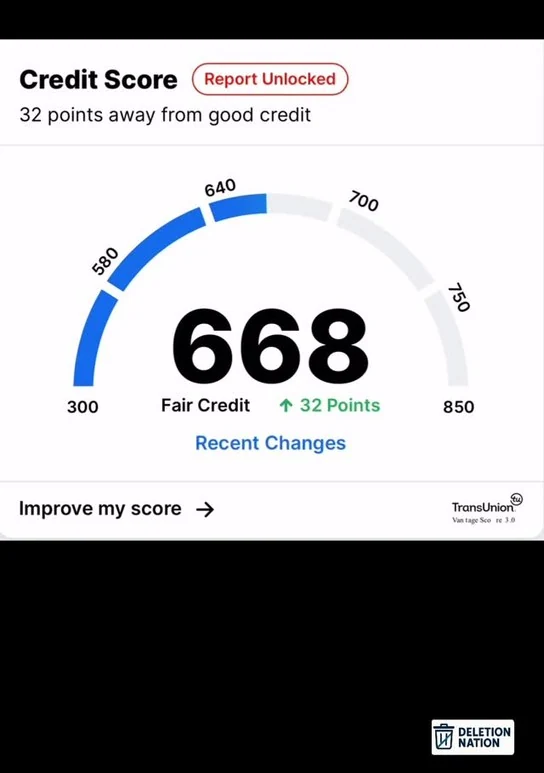
Houston credit repair result: TransUnion credit score of 668, up 32 points

Three clients, 13 deletions, one round

Three TransUnion clients cleared back to back in August 2025. One client had 8 inquiries deleted in a single sweep; another had Apple Card, Comenity, CareCredit, and USAA accounts removed; a third had a Synchrony account deleted. One client rose 32 points overnight, to 668.
See it on Instagram →

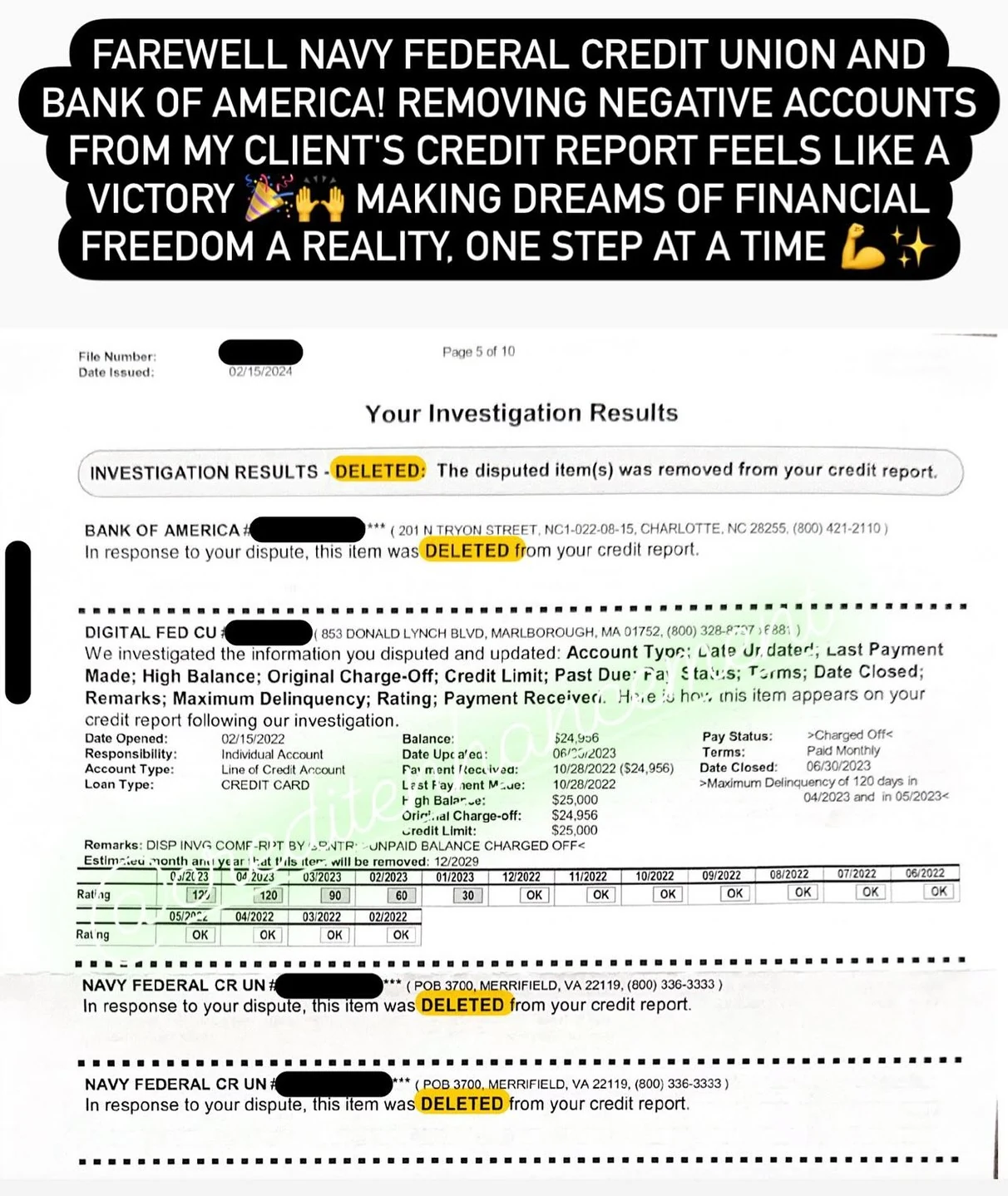
Houston credit repair result: Credit bureau investigation letter showing Bank of America and Navy Federal accounts deleted

Bank of America and Navy Federal, deleted

A February 2024 bureau investigation letter showing a Bank of America account and two Navy Federal accounts deleted from a client's credit report after dispute.
See it on Instagram →

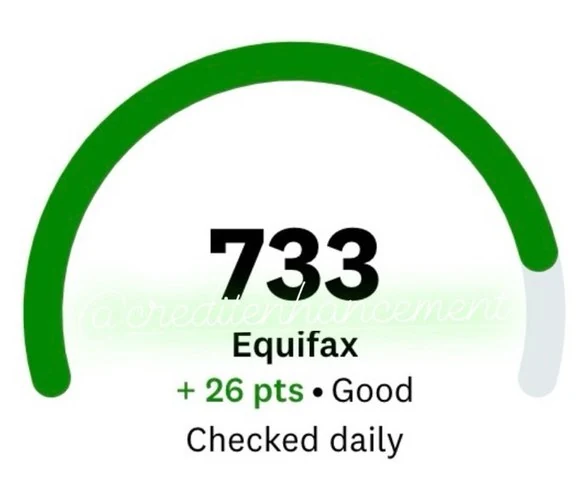
Houston credit repair result: Equifax credit score of 733, up 26 points

Equifax up 26 points

A client reached 733 on Equifax after a 26-point increase, March 2024.

See it on Instagram →

Results vary from person to person and depend on what is in each credit file. Nothing here promises a particular score increase or deletion.

See the Inquiries on Your Reports for a Dollar

You can't challenge what you can't see. Read every hard inquiry — who pulled your credit and when — across all three bureaus before you dispute anything.

For a dollar, you can read your scores and entries from Equifax, Experian, and TransUnion before you decide what to do about them.

See What's on My Reports

A dollar with MyScoreIQ opens 7 days of access to your scores, then $34.99 a month if you keep it. Cancel anytime.

Houston Credit Repair Is Proud to Serve Texas

What We Walk Through With You

Hard Inquiries can look different from one report to the next. We help you understand the details and spot accuracy problems.

Every Inquiry on the File

We review each hard inquiry — who pulled your credit, when, and on which bureau.

Authorized vs Unauthorized

We help you match inquiries against applications you actually submitted.

Rate Shopping Clusters

We look at whether several inquiries from one shopping window are being counted together.

Disputes Worth Filing

We help you spot inquiries from companies you never dealt with.

Identity Theft Signals

We talk through what to do when an inquiry points to an account you never opened.

Why Talk Through Hard Inquiries With Us?

Start With the Facts

A Hard Inquiries entry feels personal, but on a report it is just data — dates, amounts, and a status. We help you read it as data first.

One Entry, Three Reports

The same account can look different on each bureau. We help you check all three before you act on any one of them.

A Plan You Can Follow

We explain dispute options, what records to keep, and practical habits that help you stay current going forward.

How We Help With Hard Inquiries

Go Over Your Inquiry Entries

We talk through the hard inquiries showing on your credit reports.

Match Inquiries to Applications

We help you compare each pull against your own application history.

Spot What May Be Wrong

We help you identify inquiries you never authorized.

Talk About Next Steps

We explain dispute options and how to protect your file going forward.

Questions About Hard Inquiries

How long do hard inquiries stay on my credit report?

Hard inquiries stay on a credit report for about two years, though they usually affect scoring for about one year.

Can I remove a hard inquiry I authorized?

No. An inquiry from a lender you applied with is accurate and stays for about two years. Only unauthorized inquiries can be disputed.

What is an unauthorized inquiry?

A hard inquiry from a company you never applied with, a duplicate pull for the same application, or a pull tied to an account opened without your knowledge.

Do multiple auto loan inquiries hurt my score?

When you shop for an auto loan or mortgage with several lenders in a short window — generally 14 to 45 days — those inquiries are usually counted as one for scoring purposes.

How do I dispute an unauthorized inquiry?

Contact the company that pulled your credit first and ask it to remove the inquiry. If it won't, dispute it with the bureau that shows it. Bureaus generally have 30 days to investigate.

Do soft inquiries affect my score?

No. Soft inquiries — checking your own credit, pre-screened offers, employer background checks — do not affect your score.

See an Inquiry You Don't Recognize?

An inquiry you never authorized is an error worth disputing. Let's go through what the bureaus are showing and talk about your options. Call (346) 301-6424.

Call (346) 301-6424

Our Services in Houston, Texas