Late Payment Timelines
Seven Years Is the Rule — With a Few Things Worth Knowing
If a late payment is sitting on your Houston credit report, the first question is usually how long it will stay there. The short answer is up to seven years. The longer answer — when the clock starts, what makes it fade, and what can shorten it — is what this guide covers.
A late payment generally stays on a credit report for up to seven years from the date of the late payment itself — the date you missed the payment, not the date the account was closed, not the date you paid it, and not the date the creditor reported it. If you were 30 days late on a credit card in March 2023, that mark generally falls off around March 2030. Paying the account, closing the account, or settling it does not restart the clock and does not shorten it either.
The seven-year window is set by federal reporting rules, and it applies the same way in Houston as it does anywhere else in the country. No creditor, collector, or credit repair company can extend it by reporting the same late payment again, and a late payment that is still showing after its seven years have passed is an error worth disputing. That is one reason to keep your own records: if you know the date of the late payment, you can tell when it should be gone.
Different negative items have different clocks. Most negative information, including late payments, collections, and charge-offs, runs about seven years. A Chapter 7 bankruptcy can stay for up to ten years. Hard inquiries fade after about two years. Knowing which clock applies to each item on your report keeps you from waiting on the wrong date.
Seven years sounds like a long time, and it is — but the damage is not flat across those seven years. A late payment from last month weighs far more heavily in scoring than a late payment from five years ago. Scoring models treat recent behavior as the best predictor of future behavior, so as months of on-time payments pile up after the late mark, its influence shrinks. A single 30-day late payment from three years ago, surrounded by clean history since, is a very different file from a 90-day late payment from three months ago.
Severity matters too. A 30-day late payment hurts less than a 60-day late, and a 60-day hurts less than a 90-day. The number of late payments matters as well: one isolated late payment on an otherwise clean file recovers faster than a pattern of lates across several accounts. That is why the most useful thing you can do after a late payment is also the simplest — pay everything on time from here on, every month, without exception. Each clean month is a month further from the late mark.
For Houstonians juggling shift work at the refineries, the Medical Center, or the Port, autopay is the practical answer. Set every account to autopay at least the minimum, set a calendar reminder a few days before each due date, and keep a small buffer in the checking account the payments draw from. A missed payment caused by a forgotten due date is the most avoidable kind there is.
There are only a few ways a late payment comes off before its seven years are up. The first is accuracy: if the entry is wrong — the wrong date, the wrong number of days late, a payment that was actually made on time — it can be disputed with the bureau or the creditor, and a dispute that the creditor cannot verify can lead to a correction or removal. Bureaus generally have 30 days to investigate.
The second is a goodwill letter: a polite request asking the creditor for a courtesy removal of an accurate late payment. Goodwill letters work best for a one-off late payment on an account with an otherwise on-time history, and best when you have stayed current since. The creditor is under no obligation to agree, and many never answer — but for a single late payment on a long, clean account, it is the one avenue worth trying.
The third is simply time. Late payments fall off on their own when the window expires, and the bureaus remove them automatically. If a late payment is still showing past its date, dispute it as outdated information. And beware of anyone who promises to remove an accurate late payment on a schedule — no one can promise that, and the promise itself is the warning sign.
When you dispute by mail, send it to the bureau that shows the item. The mailing addresses are: Experian, P.O. Box 4500, Allen, TX 75013; Equifax, P.O. Box 740256, Atlanta, GA 30374; and TransUnion, P.O. Box 2000, Chester, PA 19016. Bureaus generally have 30 days to investigate a dispute once they receive it. Send disputes by certified mail and keep a copy of everything you send, along with the delivery confirmation.
If this guide helped, these pages go deeper on the topics that usually come up next.
These are actual results from past clients, previously shared on Instagram. Every credit file is different, so treat these as examples of what the process can look like, not as a promise of what yours will do.
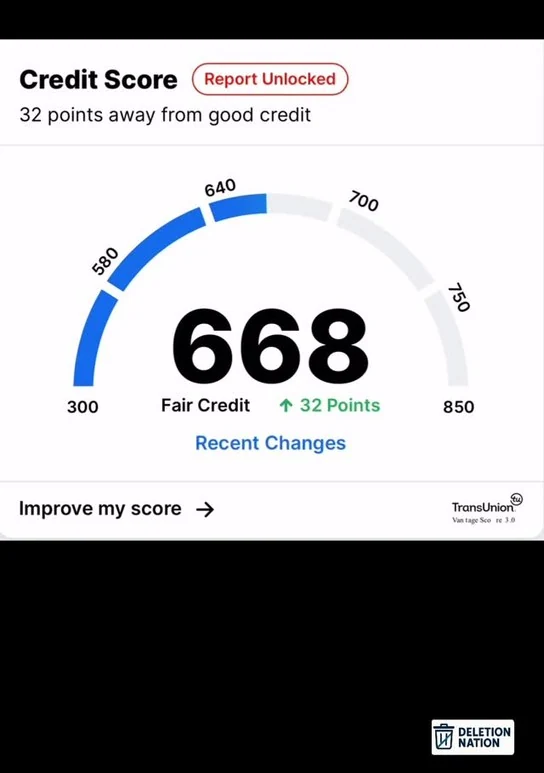
Three TransUnion clients cleared back to back in August 2025. One client had 8 inquiries deleted in a single sweep; another had Apple Card, Comenity, CareCredit, and USAA accounts removed; a third had a Synchrony account deleted. One client rose 32 points overnight, to 668.
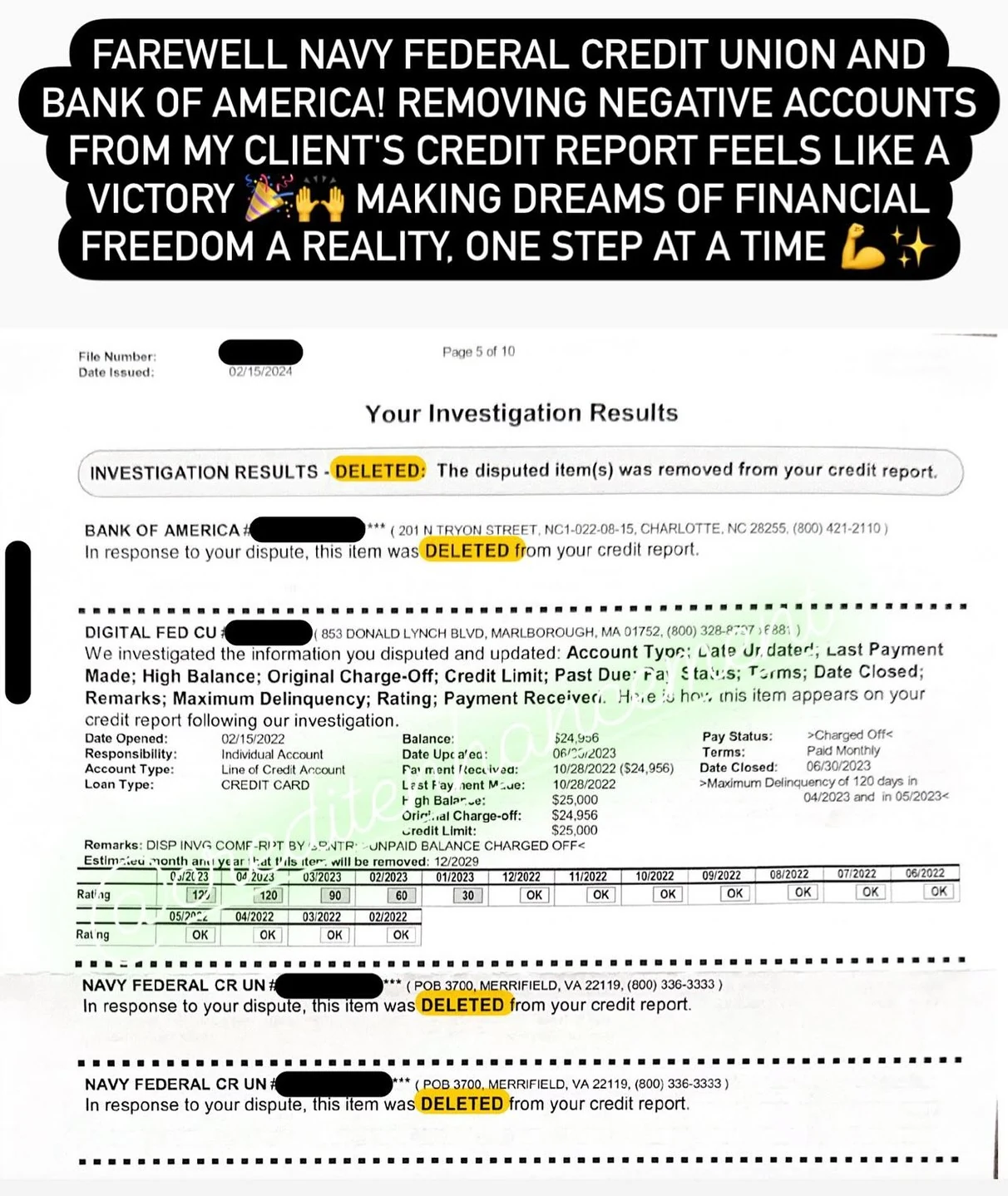
A February 2024 bureau investigation letter showing a Bank of America account and two Navy Federal accounts deleted from a client's credit report after dispute.
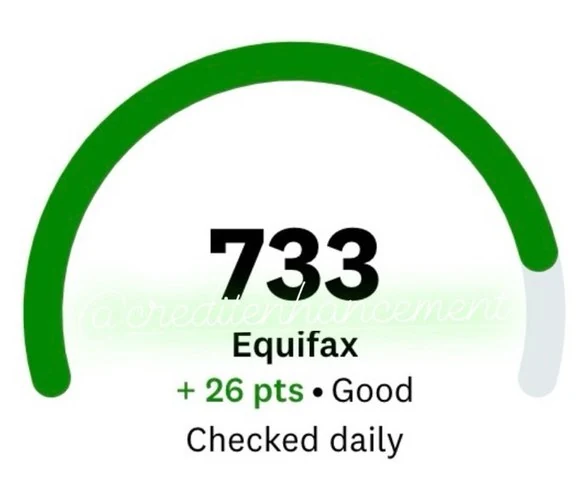
A client reached 733 on Equifax after a 26-point increase, March 2024.
Results vary from person to person and depend on what is in each credit file. Nothing here promises a particular score increase or deletion.
You can't plan around what you can't see. Read every late payment entry and its date across all three bureaus, and you'll know exactly where the clock stands.
For a dollar, you can read your scores and entries from Equifax, Experian, and TransUnion before you decide what to do about them.
A dollar with MyScoreIQ opens 7 days of access to your scores, then $34.99 a month if you keep it. Cancel anytime.
Late Payment Timelines can look different from one report to the next. We help you understand the details and spot accuracy problems.
We help you pin down the date the seven-year window runs from, so you know when the mark should fall off.
We review how severe the late payment was marked, because severity shapes how much it weighs on a file.
We compare the entry across Equifax, Experian, and TransUnion, because the same late payment can be reported differently by each one.
We help you spot dates and days-late figures that do not match your records.
We talk through when a goodwill letter to the creditor is worth sending.
A Late Payment Timelines entry feels personal, but on a report it is just data — dates, amounts, and a status. We help you read it as data first.
The same account can look different on each bureau. We help you check all three before you act on any one of them.
We explain dispute options, what records to keep, and practical habits that help you stay current going forward.
We talk through the late payment entries showing on your credit reports.
We help you calculate when each late payment should fall off.
We help you identify information that appears inaccurate or outdated.
We explain dispute options, goodwill letters, and habits that help the file recover.
A late payment generally stays for up to seven years from the date of the late payment, even if the account is later brought current.
No. Paying the account changes its current status, but the late payment history stays for the same seven-year window.
Yes. Scoring models weigh recent behavior most heavily, so a late payment from years ago, surrounded by on-time payments since, carries far less weight than a recent one.
If the entry is inaccurate, it can be disputed and possibly corrected or removed. A goodwill letter asking the creditor for a courtesy removal is another option, though the creditor is under no obligation to agree.
A late payment that remains past its reporting window is outdated information and worth disputing with the bureau that shows it.
No. A 30-day late payment carries less weight than a 60-day or 90-day late payment, and one isolated late payment recovers faster than a pattern of them.
Let's go through what the bureaus are showing, work out when each mark should fall off, and talk about your options. Call (346) 301-6424.